19 Low-Calorie Breakfast Ideas for Mom That Actually Taste Like Real Food
Quick, filling, and under 350 calories — because nobody has time for sad diet plates at 7am.
Let me be real with you for a second. Most “diet breakfast” content on the internet is either aggressively boring — hello, plain oatmeal with zero joy — or completely unrealistic, like someone suggesting you spend 45 minutes at the stove before the school run. Neither of those is happening in my kitchen, and I am guessing neither is happening in yours.
This list exists because moms — and honestly, any busy adult trying to eat a little lighter — deserve breakfast options that are actually satisfying, genuinely low in calories, and fast enough to fit a real morning. These 19 ideas cover everything from three-minute smoothies to proper meal-prep bakes you can set up on Sunday and enjoy all week without thinking twice.
I have been eating in a calorie deficit on and off for years now, and the biggest game-changer for me was getting breakfast right. When that first meal of the day is filling and protein-forward, everything else falls into line. If you are already curious about how a full day of lighter eating comes together, check out these calorie deficit breakfasts that actually keep hunger at bay — they pair beautifully with this list.
Why Breakfast Matters More Than You Think (Especially for Moms)
Here is the thing about skipping breakfast to “save calories” — it usually backfires spectacularly. By 10:30am you are ravenous, and suddenly the granola bar you grabbed off the counter counts as a reasonable meal. Research published by Healthline on breakfast foods that support weight loss consistently points to high-protein, high-fiber morning meals as the most effective way to regulate appetite throughout the day.
The goal with low-calorie breakfasts is not restriction — it is smart composition. You want protein to anchor you, fiber to slow digestion, and enough volume that your brain registers a real meal. Get those three things right, and you will not be staring down a bag of chips before lunch.
For moms specifically, there is another layer: you are probably feeding other people at the same time you are trying to eat something yourself. That means speed and simplicity are non-negotiable. Every single idea on this list can be made in 15 minutes or less — most in under 10.
Prep your overnight oats, smoothie packs, and portioned toppings every Sunday evening. Your Monday-through-Friday self will be genuinely grateful.
The 19 Low-Calorie Breakfast Ideas
These are organized loosely by style — quick-grab options, egg-based ideas, make-ahead meals, and lighter takes on classic comfort. Each comes in at roughly 150–350 calories depending on portion and toppings, which leaves plenty of room in your daily budget for meals and snacks you actually enjoy. For the full calorie breakdown across a whole day, the 1200 calorie meal plan for beginners is a great companion read.
Blueberry Overnight Oats
Rolled oats, Greek yogurt, chia seeds, and blueberries assembled the night before. Grab and go, zero morning effort.
Get Full RecipeSpinach & Egg White Scramble
Four egg whites with a big handful of baby spinach, cherry tomatoes, and a pinch of smoked paprika. Takes five minutes.
Get Full RecipeCottage Cheese Berry Bowl
Full-fat cottage cheese topped with strawberries, a drizzle of honey, and a sprinkle of flaxseed. Surprisingly creamy and filling.
Get Full RecipeAvocado Toast on Rye
One slice of rye bread, half a small avocado, a squeeze of lemon, chili flakes, and a soft-boiled egg on top. Classic for a reason.
Get Full RecipeGreek Yogurt Parfait
Plain 0% Greek yogurt layered with granola, sliced banana, and frozen raspberries. The frozen berries thaw slightly and act like a sauce. IMO, this is peak breakfast.
Get Full RecipeBanana Protein Smoothie
One frozen banana, one scoop of vanilla protein powder, unsweetened almond milk, and a handful of spinach. You cannot taste the spinach. I promise.
Get Full RecipeVeggie Egg Muffins
Baked in a muffin tin with diced peppers, onion, and feta. Make a dozen on Sunday and reheat all week — the true mom power move.
Get Full RecipeChia Pudding with Mango
Chia seeds soaked overnight in coconut milk with fresh mango chunks. The texture is oddly satisfying and the mango makes it feel almost tropical and indulgent.
Get Full RecipeSmoked Salmon & Cucumber Toast
Whole grain crispbread, whipped cream cheese, smoked salmon, and thin cucumber slices. Feels fancy, takes about three minutes.
Get Full RecipeApple Cinnamon Oatmeal
Steel-cut oats cooked with diced apple, cinnamon, and a tiny bit of maple syrup. Warm, cozy, and genuinely filling through the whole morning.
Get Full RecipeRicotta & Peach Toast
Whole grain toast spread with part-skim ricotta, topped with sliced fresh peach and a crack of black pepper. Sounds odd, tastes incredible.
Get Full RecipePeanut Butter Banana Wrap
A small whole wheat tortilla spread with natural peanut butter and sliced banana, rolled tight. Great for eating in the car, not that I recommend that.
Get Full RecipeLow-Calorie Shakshuka
Eggs poached in a spiced tomato sauce with peppers and cumin. High volume, big flavor, surprisingly low calorie. Excellent for weekend mornings.
Get Full RecipeStrawberry Protein Smoothie Bowl
A thick blended base of frozen strawberries, protein powder, and a splash of oat milk, topped with granola and sliced kiwi. Spoonable, not drinkable.
Get Full RecipeTurkey & Cheese Breakfast Wrap
Lean turkey slices, one egg, reduced-fat cheese, and baby spinach in a small whole wheat wrap. More filling than it looks on paper.
Get Full RecipeBaked Oat Cups
Oats, egg, mashed banana, and a handful of dark chocolate chips baked in a muffin tin. These taste like a cookie but eat like breakfast. Win-win.
Get Full RecipeWatermelon Feta Mint Plate
Cubed watermelon, crumbled feta, and fresh mint. Sounds like a salad, works beautifully as a refreshing warm-weather breakfast. Pair with a boiled egg for more protein.
Get Full RecipeAlmond Butter Rice Cake Stack
Two plain rice cakes spread with almond butter (not peanut butter — slightly lower in calories and a little earthier in flavor) and topped with banana slices and a pinch of sea salt.
Get Full RecipeZucchini & Herb Egg Bake
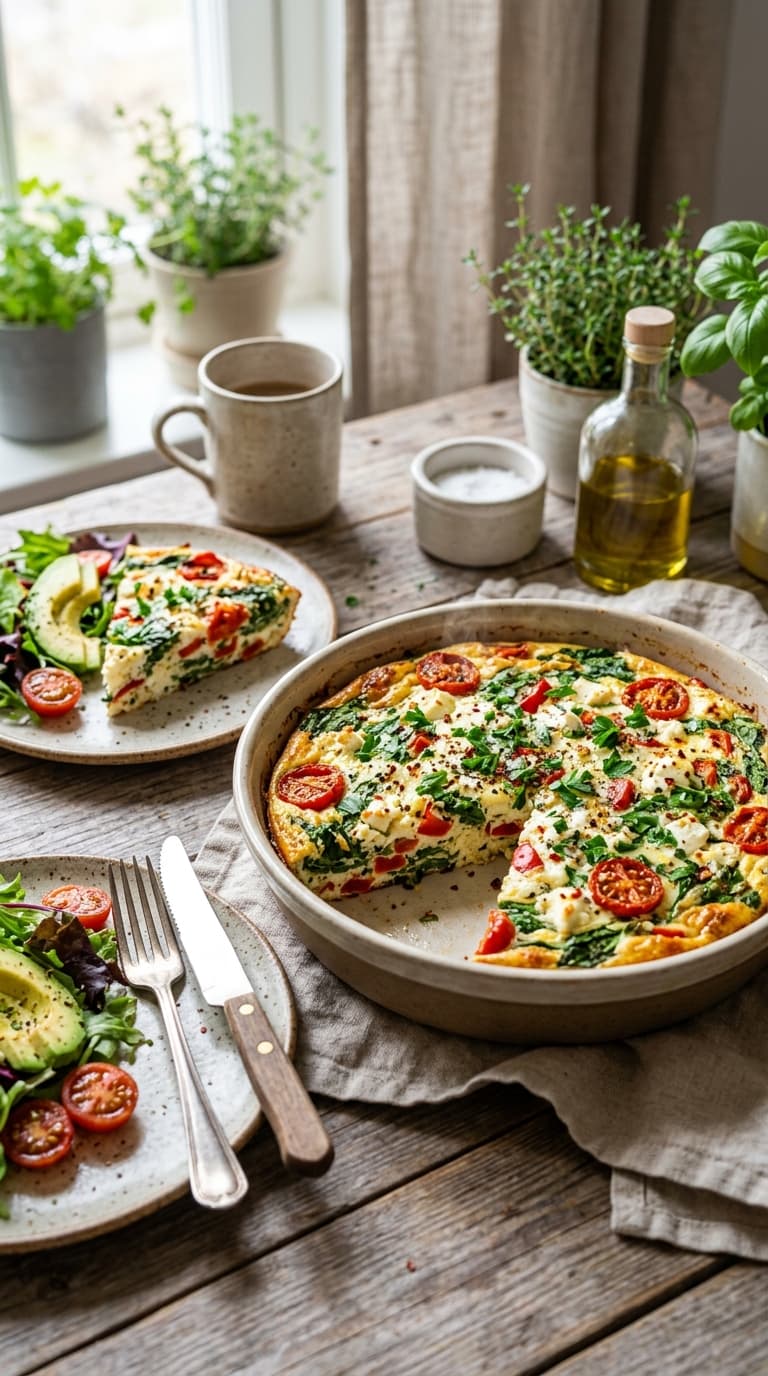
Shredded zucchini, two whole eggs, fresh dill, and a sprinkle of parmesan baked until set. Make it in a small dish on Sunday and slice throughout the week.
Get Full RecipeMaking These Breakfasts Work for a Busy Mom Schedule
The recipes above are designed to be easy, but easy still requires a tiny bit of intention. The biggest shift I made was treating breakfast like a non-negotiable task on Sunday, not a decision I make at 6:45 on a Tuesday. When the overnight oats are already in the fridge and the egg muffins are portioned in the freezer, breakfast stops being a source of stress and starts being the one part of the morning that actually goes smoothly.
FYI — if you want to organize your whole week of eating around these breakfasts, the 7-day 1200 calorie meal plan is a structured way to do exactly that. It maps out breakfast, lunch, dinner, and snacks so you are not making individual food decisions throughout the day, which is where most people quietly go over their calorie goals.
Batch cooking is the single biggest time saver here. Make a double batch of veggie egg muffins and freeze half. Pre-portion your smoothie ingredients into freezer bags — just dump and blend each morning. Soak a full week of overnight oats on Sunday. None of this takes more than 40 minutes total and it changes how the whole week feels.
The protein content in your morning meal matters more than most people realize. High-protein breakfasts reduce levels of ghrelin — the hormone that signals hunger — which means you will naturally eat less later in the day. This is backed by a solid body of research summarized through peer-reviewed trials on breakfast composition and appetite regulation. Eggs, Greek yogurt, cottage cheese, and protein powder are your best friends here. They all appear multiple times on this list for exactly that reason.
Keep a stash of hard-boiled eggs in the fridge at all times. Pair any of the lighter breakfasts on this list with one or two boiled eggs to push the protein up by 12–14 grams without significantly increasing the calorie count.
Meal Prep Essentials Used in This Plan
A friend-to-friend roundup of what I actually use in my own kitchen to make these breakfasts happen without losing my mind.
-
PhysicalGlass meal prep containers with locking lids Perfect for overnight oats and portioned egg bakes. The glass keeps everything fresh longer than plastic and you can reheat straight in the container.
-
PhysicalSilicone muffin tin (12-cup) Non-stick without the coating concerns. I use mine every single Sunday for egg muffins and baked oat cups. Zero sticking, easy cleanup.
-
PhysicalCompact personal blender For smoothies that go straight into the cup. No extra bowls, no blender jar to wash. The difference between making a smoothie and not making one is entirely about how much cleanup is involved.
-
Digital7-Day 1200 Calorie Meal Plan (Free PDF) Maps out every breakfast, lunch, and dinner for a full week. Download and follow — no thinking required.
-
Digital30-Day Low-Calorie Meal Plan Printable A full month of structured eating. Ideal if you want accountability beyond the first week and do not want to plan from scratch each Sunday.
-
DigitalLow-Calorie Grocery Shopping Guide A curated list of the 12 low-calorie grocery staples worth keeping stocked at all times. Makes the week’s shopping faster and cheaper.
-
CommunityJoin the Purely Chic Life Community on WhatsApp A space for real women sharing meal prep wins, recipe tweaks, and honest progress. No spam, just support and actual recipe photos from real kitchens.
The Ingredients Worth Keeping Stocked
Most of the 19 recipes above draw from a pretty tight pantry and fridge list. That is intentional. When healthy eating requires a different specialty ingredient for every single recipe, it gets expensive and overwhelming fast. These are the items I keep on rotation because they appear in multiple breakfasts and do serious nutritional heavy lifting.
- Rolled oats — the backbone of overnight oats, baked cups, and oatmeal. Buy in bulk.
- Greek yogurt (plain, 0%) — high protein, low calorie, and works as a creamy base in parfaits, smoothies, and dressings.
- Eggs and egg whites — endlessly versatile. Scrambles, bakes, muffins, poached on toast.
- Chia seeds — two tablespoons add around 5g of fiber and thicken any liquid into a pudding-style base overnight.
- Frozen fruit — blueberries, strawberries, mango chunks. Just as nutritious as fresh, significantly cheaper, and always ready.
- Cottage cheese — often overlooked but genuinely excellent. High in casein protein, which digests slowly and keeps you full longer than whey-based options.
- Whole grain bread and crispbreads — look for options with at least 3g of fiber per slice.
- Natural nut butter — almond or peanut. A little goes a long way on both flavor and satiety.
Worth mentioning: if you are comparing peanut butter versus almond butter for breakfast use, both are solid options. Almond butter is slightly lower in calories per tablespoon and higher in vitamin E and magnesium, while peanut butter wins on protein content. Either works for this list — use whichever you enjoy and will actually eat consistently.
How to Customize These for Kids or Picky Eaters
If you have kids at the table, or a partner who will look at a cottage cheese berry bowl like it personally offended them, here is the approach that works in my house: make one base that everyone eats, and customize toppings or fillings separately. The overnight oats are perfect for this — make a plain base and let everyone add their own toppings. Same goes for the egg scramble and wraps.
The veggie egg muffins are especially good for families because you can make one batch with kid-friendly add-ins (cheese, mild peppers, a little turkey) and a separate batch for yourself with bolder flavors. They bake at the same time in the same oven. You eat well, they eat well, and you did not cook two separate breakfasts.
For kids who are not into smoothies, the banana protein smoothie (recipe 06) is genuinely one of the least weird-tasting protein smoothies I have tried. The frozen banana masks the protein powder flavor almost entirely, and if you blend it thick enough it eats more like a milkshake than a health drink. Kids do not need to know about the spinach.
Double the recipe for any baked breakfast — egg muffins, baked oat cups, zucchini egg bake — and freeze the extra in individual portions. Future you will pull one out at 6:50am and feel like an absolute genius.
Dairy-Free and Plant-Based Swaps for Every Recipe
Almost every recipe on this list has an easy dairy-free version. Greek yogurt swaps to coconut yogurt — look for an unsweetened variety with added protein if you can find one, as the protein content in standard coconut yogurt is significantly lower than dairy-based options. Cottage cheese works surprisingly well replaced with silken tofu blended smooth, which gives a similar creamy texture with comparable protein.
For the egg-based recipes, a flax egg (one tablespoon ground flaxseed plus three tablespoons water, rested for five minutes) works in baked items like the oat cups and zucchini bake, though the texture is a little more dense. For scrambles and wraps, scrambled firm tofu seasoned with turmeric and nutritional yeast is a classic swap that genuinely delivers — especially if you season it well. If you are looking for more ideas along these lines, the 20 low-calorie vegetarian recipes packed with flavor post is worth bookmarking.
Milk in smoothies and oatmeal is a simple swap: unsweetened almond milk saves significant calories versus regular dairy milk (around 30–40 calories per cup versus 150 for whole milk), and oat milk adds a subtle sweetness that works well in overnight oats without added sugar. The main trade-off is protein — almond milk has very little compared to dairy. If protein is your priority, unsweetened soy milk is your best plant-based match.
Tools & Resources That Make Cooking Easier
These are things I genuinely use and recommend — no fluff, just stuff that actually saves time in a real kitchen.
-
PhysicalOvernight oats jar set (wide-mouth, leak-proof) Proportioned perfectly for single servings. The wide mouth makes layering toppings easy and prevents the inevitable yogurt explosion when you grab it in a rush.
-
PhysicalDigital kitchen scale Weighing nut butter and oats takes about three seconds and removes the guesswork from your calorie counts entirely. I resisted getting one for years and then wanted to retroactively apologize to myself.
-
PhysicalNon-stick egg pan (small, 8-inch) For egg white scrambles and single-serve egg dishes. A good small pan makes weekday egg cooking faster and means you are not using a full-size pan for two eggs at 7am.
-
Digital21-Day Low-Calorie Meal Plan for Busy Women Three weeks of planned eating built around real schedules. Includes breakfasts, lunches, dinners, and snacks — all under a realistic calorie target.
-
DigitalHigh-Protein 1200 Calorie Meal Plan (Printable) Specifically structured around protein-first eating — which is exactly the framework these breakfasts are built on.
-
DigitalHow to Lose Weight on 1200–1500 Calories Without Starving A practical guide to understanding your calorie target and making it sustainable long-term without obsessing over every bite.
-
CommunityPurely Chic Life Meal Prep Community (WhatsApp) Weekly meal prep check-ins, shared wins, and an actually helpful group of women doing the same thing. No MLM pitches, I promise.
Keeping Breakfast Interesting Long-Term
One of the fastest ways to abandon a healthy breakfast routine is letting it get repetitive. If you are eating the same overnight oats every single morning, your enthusiasm is going to start fading around week three. The fix is simple: rotate through six to eight options on a loose cycle so nothing feels stale, and keep a short list of seasonal swaps on hand.
In summer, lean into the lighter options — the watermelon feta plate, fresh berry smoothie bowls, and chilled chia pudding. In winter, the warm oatmeal variations, baked egg dishes, and shakshuka feel appropriate and genuinely comforting. Seasonal eating naturally keeps your rotation fresh without requiring you to constantly find new recipes.
Also worth considering: calorie cycling on the weekend. If you know Saturday mornings involve a bigger brunch or a family breakfast out, you do not need to eat a 200-calorie bowl of yogurt just to hit an arbitrary number. A few slightly bigger weekend breakfasts balanced against lighter weekday options is a completely sustainable approach to the calorie deficit. The 1200 vs 1500 calorie plan comparison gets into this kind of nuance really well if you want to think through the right target for your lifestyle.
Frequently Asked Questions
What is a good low-calorie breakfast for a mom who has no time in the morning?
Overnight oats and veggie egg muffins are the most time-efficient options on this list because they require zero morning prep. Assemble the oats the night before and bake the muffins on Sunday — both are ready to grab and eat (or take with you) in under a minute. When mornings are genuinely chaotic, removing the morning decision entirely is the strategy that actually sticks.
How many calories should a mom eat at breakfast for weight loss?
Most nutrition frameworks suggest allocating roughly 20–25% of your daily calories to breakfast. On a 1200 calorie day, that works out to around 240–300 calories. On a 1500 calorie day, you have a little more flexibility at 300–375 calories. The more important factor is protein content — aim for at least 20 grams to meaningfully reduce hunger through the morning.
Are overnight oats good for weight loss?
Yes, and they are one of the more efficient breakfast choices for a calorie deficit. Rolled oats are high in beta-glucan fiber, which research has linked to improved satiety and more stable blood sugar levels throughout the morning. The key is keeping the add-ins lean — use plain Greek yogurt and limit sweeteners to a small drizzle of honey or fresh fruit rather than sugary syrups.
Can I eat the same low-calorie breakfast every day?
Nutritionally, yes — if the meal is balanced with protein, fiber, and some healthy fat, eating the same breakfast daily is fine and can actually simplify your routine significantly. The practical challenge is boredom, which is why rotating through four to six options on a loose cycle tends to work better for long-term consistency than either rigid repetition or constant novelty.
What is the most filling low-calorie breakfast?
Protein and fiber are the two factors that most directly drive satiety per calorie. Among the options on this list, the egg white scramble with spinach, cottage cheese berry bowl, and veggie egg muffins consistently rank highest for keeping people full through the morning relative to their calorie count. Adding chia seeds or flaxseed to any smoothie or bowl also significantly increases fiber content without adding many calories.
Start Tomorrow Morning
You do not need a perfect plan, a spotless kitchen, or two free hours on Sunday to make this work. Pick two or three recipes from this list — the overnight oats, the egg muffins, and whichever smoothie sounds best to you — and start there. That is genuinely all it takes to build a breakfast routine that supports weight loss without making your morning worse than it already is.
The breakfasts on this list work because they are built around real food, real portions, and real life. Protein keeps you full, fiber keeps you steady, and variety keeps you showing up. None of it requires suffering through sad diet food, and none of it requires waking up earlier than you already have to.
Your morning can work with you instead of against you. Pick one recipe. Make it tonight. See how tomorrow feels.