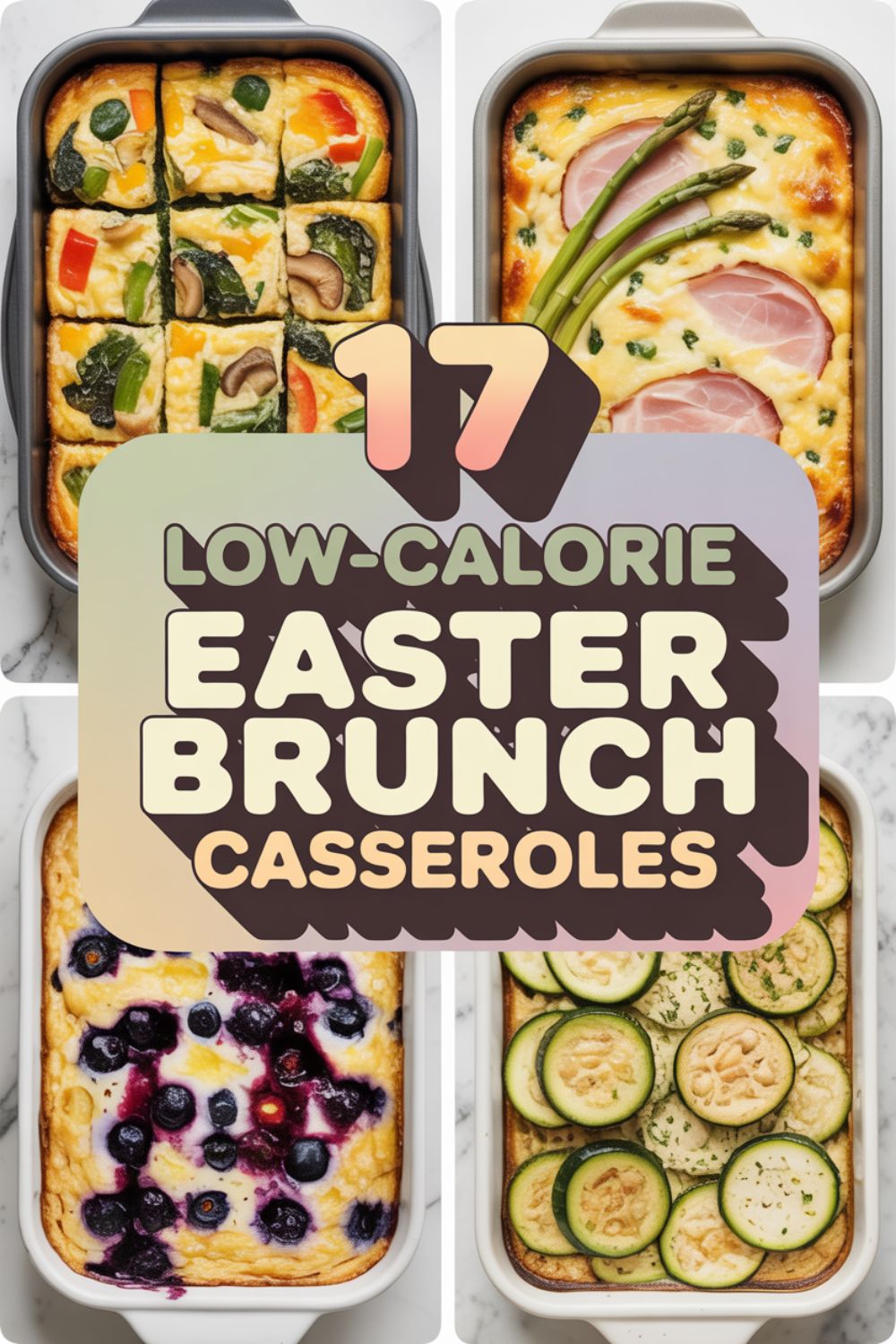
17 Low-Calorie Easter Brunch Casseroles That Actually Taste Amazing
Let’s be real for a second. Easter brunch is that one meal of the year where everyone shows up hungry, the table looks gorgeous, and somehow a single plate ends up costing you 900 calories before you’ve even touched the mimosa. Not exactly the spring reset most of us had in mind. The good news? You can absolutely host a table full of casseroles that look indulgent, taste indulgent, and won’t wreck the calorie deficit you’ve been quietly protecting all week.
These 17 low-calorie Easter brunch casseroles are the real deal. We’re talking fluffy egg bakes, veggie-packed strata, lighter ham and cheese versions, and even a couple of sweet brunch casseroles for the people at your table who consider dessert a breakfast food (no judgment). Every single one comes in under 350 calories per serving, and most are fully make-ahead friendly. Because nobody wants to be standing at the stove in a new dress while everyone else is already seated.
If you’ve been working through a structured eating plan like a 7-day 1200-calorie meal plan or just trying to keep things reasonable over the holiday weekend, these casseroles fit right in without requiring you to explain your food choices to your aunt who “just wants you to enjoy yourself.”
Why Casseroles Are the Smartest Easter Brunch Move
Casseroles are essentially the MVP of brunch entertaining, and if you’re not already fully committed to the concept, let me make the case. You prep them the night before, slide them in the oven the morning of, and you’re free to actually enjoy your own party. No flipping individual omelets, no coordinating pancake batches, no one standing at a griddle like a short-order cook who also happens to own the house.
Beyond the convenience factor, casseroles are incredibly easy to lighten up. Swap full-fat dairy for low-fat or Greek yogurt, use a blend of whole eggs and egg whites, pile in the vegetables, and you’ve immediately cut the calorie count without sacrificing the satisfaction factor. Research consistently shows that a high-protein breakfast like an egg-based casserole significantly reduces hunger and calorie intake for the rest of the day, which makes it one of the more strategic food choices you can make over a holiday weekend full of temptation.
And honestly? Most guests at your Easter table won’t even notice these are the “lighter” versions. That’s the real win here.
Assemble your casserole the night before and refrigerate unbaked. Pull it out 20 minutes before baking to take the chill off — this gives you a more even cook and eliminates the dreaded cold-center problem.
The 17 Low-Calorie Easter Brunch Casseroles
1. Classic Veggie Egg Bake
This is your reliable anchor recipe — the one that works for every crowd, every dietary preference, and every skill level. A base of whisked eggs and egg whites, loads of colorful bell peppers, spinach, mushrooms, and onions, finished with a light sprinkle of part-skim mozzarella. You’re looking at roughly 140-160 calories per slice, and it slices cleanly, which means it also photographs beautifully for those Easter table shots you’re absolutely going to take.
- 8 large eggs + 4 egg whites
- 2 cups mixed bell peppers, diced
- 2 cups fresh spinach
- 1 cup mushrooms, sliced
- 1/3 cup part-skim mozzarella
- Salt, pepper, garlic powder to taste
2. Ham and Leek Lightened-Up Strata
Strata is just a fancy word for “egg casserole with bread,” and this version uses a modest amount of crusty whole-grain bread to give it that pillowy, custardy texture without sending the calories through the roof. Lean diced ham, thinly sliced leeks, low-fat milk, and a touch of Dijon make this one taste way more special than the ingredient list suggests. Around 210 calories per serving. Get Full Recipe here.
3. Greek Spinach and Feta Casserole
Think spanakopita, but without the layers of butter-drenched phyllo pastry. This crustless version delivers all the salty, herbaceous, creamy satisfaction of the original at a fraction of the calorie cost. Fresh dill, loads of wilted spinach, crumbled feta, and a base of beaten eggs set in a light, fluffy bake. It’s honestly one of the more elegant-looking options on this list, which makes it perfect if you’re going for that “I absolutely did not stress about this” Easter vibe.
4. Turkey Sausage and Sweet Potato Bake
Sweet potato as a base layer in an egg casserole is genuinely one of those ideas that sounds weird until you try it. The natural sweetness of roasted sweet potato against savory turkey sausage and a little smoked paprika is a flavor combination that will have people asking for the recipe. You get fiber, complex carbs, and protein all in one dish. Approximately 240 calories per serving. Use a quality ceramic casserole dish here — sweet potato can stick to cheaper pans and ruin your clean-up Sunday morning.
5. Asparagus and Goat Cheese Egg Casserole
If you want one recipe on this list that feels genuinely spring-forward and celebration-worthy, this is it. Tender asparagus tips, a modest amount of tangy goat cheese (a little goes a long way, flavor-wise), fresh chives, and a clean egg custard base. It’s sophisticated enough for the adults at your table and straightforward enough that nobody needs a culinary degree to appreciate it. About 180 calories per portion.
6. Low-Calorie Hash Brown Egg Casserole
This one scratches that comfort-food itch without doing any real damage. Frozen hash browns go in as the base, topped with a seasoned egg mixture, lean turkey bacon, and just enough reduced-fat cheddar to pull everything together. It’s hearty, it’s filling, and it’s the recipe that will get the most enthusiastic reaction from the non-diet-conscious members of your family. Under 270 calories per slice. For more comfort food that actually fits your goals, the 20 low-calorie comfort foods that actually fill you up collection is worth bookmarking.
Shredded frozen hash browns release a lot of water during baking. Squeeze them in a clean kitchen towel before layering into the dish to prevent a soggy bottom layer — something we’d all prefer to avoid.
7. Cottage Cheese and Herb Bake
Cottage cheese in a casserole might sound like a 1970s wellness relic, but stay with me. Blended smooth, low-fat cottage cheese creates an incredibly creamy, protein-rich base that behaves a lot like ricotta at roughly half the calories. Stir in fresh herbs, sun-dried tomatoes, and a handful of baby spinach, and you have something that tastes luxurious and comes in at under 160 calories per serving. FYI, this is also the best dairy-free-adaptable recipe on the list — just swap in a high-protein plant-based yogurt for the cottage cheese.
8. Smoked Salmon and Cream Cheese Egg Bake
Okay, if you want to lean into full Easter brunch elegance, this is your recipe. Thin ribbons of smoked salmon, reduced-fat cream cheese dolloped throughout, fresh dill, capers, and thinly sliced red onion in a delicate egg custard. It’s the kind of dish that looks genuinely impressive on a table but takes less than 15 minutes of active prep. Roughly 200 calories per serving.
9. Broccoli and Cheddar Lightened Casserole
The broccoli cheddar combination is universally beloved, which is exactly why it belongs on an Easter brunch table. This lighter version uses a generous amount of broccoli florets, a smaller amount of sharp cheddar (because sharper cheese means more flavor per gram), and reduced-fat milk in the egg mixture. The trick to keeping the calories down while keeping the flavor up is using extra-sharp cheddar rather than mild — you get away with using a third of the amount. Around 220 calories per serving.
I made the broccoli cheddar version for Easter last year and served it alongside a green salad. My mother-in-law, who is not exactly known for holding back her opinions on food, asked for the recipe before she finished her first slice. That felt like a genuine win. — Amanda K., from the Purely Chic Life community
10. Zucchini, Corn, and Pepper Jack Egg Casserole
This one brings a little warmth and Southwest flavor to the Easter table. Shredded zucchini, sweet corn, diced green chiles, and a reasonable amount of Pepper Jack cheese create a casserole that feels festive and a little unexpected. If your crowd likes things on the spicier side, a small amount of diced jalapeho works beautifully here. Approximately 190 calories per slice. If you’re assembling a bigger low-calorie spread this spring, you’ll find even more inspiration in these 21 low-calorie spring meals under 400 calories.
11. Everything Bagel Egg White Casserole
This recipe was born from the very reasonable desire to eat an everything bagel without actually consuming an everything bagel at brunch. Egg whites form a light, high-volume base, topped generously with everything bagel seasoning, cream cheese dollops, capers, and thinly sliced smoked salmon or turkey. Under 150 calories per serving and incredibly high in protein. It also looks genuinely fun on the table, which counts for something.
12. Mushroom, Thyme, and Swiss Casserole
Mushrooms are one of the best volume-eating tools in a low-calorie cook’s toolkit. They shrink down significantly during cooking, concentrating flavor while staying virtually calorie-free. This earthy, savory casserole uses a pound of mixed mushrooms, fresh thyme, a modest amount of Swiss cheese, and a creamy egg base made lighter with Greek yogurt. Around 175 calories per serving. Using a non-stick 9×13 baking pan makes serving and cleanup genuinely painless here.
13. Caprese Egg Casserole with Fresh Basil
Tomato, fresh mozzarella, basil — the Caprese flavor profile translates shockingly well into an egg casserole. Sliced cherry tomatoes, fresh basil torn right before baking, part-skim fresh mozzarella torn into pieces, and a drizzle of balsamic glaze after baking make this one the most Instagram-friendly option on the list. Roughly 190 calories per portion. It also happens to be naturally gluten-free, which is increasingly relevant at any large family gathering.
14. Sausage, Sage, and Apple Egg Bake
Hear me out on the apple. A small amount of diced tart apple in a savory casserole with lean chicken sausage and fresh sage creates this subtle sweet-savory balance that makes the whole dish taste more complex and intentional than the effort involved. This one always gets the “wait, what’s that flavor?” reaction at the table, which is IMO the best possible outcome for a brunch dish. Under 250 calories per serving. Get Full Recipe here.
15. Roasted Red Pepper and Artichoke Egg Casserole
If you’re cooking for people who appreciate Mediterranean flavors — and in my experience, most people do — this casserole earns its place on the table. Jarred roasted red peppers (no shame in that shortcut) and marinated artichoke hearts bring big, bold flavor that makes the light egg base feel substantial. A little crumbled feta on top, some fresh parsley, and you’re done. Around 185 calories per slice. This fits beautifully into an overall approach to low-calorie spring cooking — the 27 low-calorie meals for spring weight loss collection has more ideas in the same flavor direction.
Meal Prep Essentials Used in This Plan
These are the products and resources I reach for every time I’m prepping a big brunch spread. Genuinely useful, no fluff.
- Physical Product Non-Stick Ceramic 9×13 Baking Pan — The one I use for nearly every casserole. Even heat distribution, nothing sticks, and it goes from oven to table without looking like a mess.
- Physical Product Glass Meal Prep Storage Containers (Set of 10) — Perfect for storing individual casserole slices for the week ahead. Microwave-safe, leak-proof, and they stack cleanly in the fridge.
- Physical Product Digital Kitchen Food Scale — If you’re serious about keeping portions accurate, this is the tool that makes it effortless. Takes 10 seconds to use and removes all the guesswork.
- Digital Product 7-Day 1200-Calorie Meal Plan — A complete, structured plan for the week around your holiday brunch. Takes all the decision-making off your plate.
- Digital Product 30-Day Low-Calorie Meal Plan — For when you want structure beyond just the holiday weekend. Highly practical, easy to follow.
- Digital Product 1200-Calorie Meal Plan for Women Over 40 (Free Printable) — Specifically designed with metabolism and hormonal changes in mind. Printable and easy to take with you.
- Community WhatsApp Community — Join our community for weekly low-calorie recipe drops, accountability check-ins, and access to new printables as they launch. Link available via the site.
16. Sweet French Toast Casserole (Lightened Up)
Not every Easter brunch guest wants a savory egg bake, and this lighter French toast casserole acknowledges that reality without apology. Thick slices of whole-grain brioche or day-old whole wheat bread soaked in a custard of eggs, unsweetened almond milk, cinnamon, vanilla, and a modest amount of maple syrup. Top it with fresh berries before baking and a very light dusting of powdered sugar after. Under 280 calories per slice and honestly one of the most crowd-pleasing dishes on this entire list. Use a silicone pastry brush to lightly coat the top with the custard mixture for even coverage.
17. Blueberry Lemon Ricotta Bake
This one is more dessert-adjacent than the rest, but it absolutely belongs at a brunch table. Part-skim ricotta lightened further with egg whites, lemon zest, a touch of honey, and fresh blueberries baked into a soufflé-like, creamy bake that feels genuinely celebratory. Around 210 calories per portion. It works as a sweet centerpiece alongside all the savory options, and it looks beautiful in a round ceramic baking dish. The lemon and blueberry combination screams spring in the best possible way.
Make two casseroles instead of one large one — a savory egg bake and the sweet ricotta bake. This gives every guest an option and makes your table look like you spent considerably more time and effort than you actually did.
How to Keep These Casseroles Under 350 Calories
The calorie-cutting strategies in these recipes are worth understanding so you can apply them to your own favorite casserole ideas going forward. None of them involve suffering or eating food that tastes like cardboard. Promise.
Use a blend of whole eggs and egg whites. Whole eggs bring flavor and richness; egg whites add volume and protein with minimal calories. A typical 9×13 casserole that calls for 12 eggs can often be swapped to 8 whole eggs and 6 egg whites without anyone noticing the difference in texture or taste.
Replace heavy cream or full-fat milk with low-fat milk or Greek yogurt. Greek yogurt, in particular, adds a subtle tang that enhances flavor while dramatically cutting the fat content. It also adds protein, which supports satiety throughout the morning. According to nutritional research on egg-based meals, the combination of egg protein and high-satiety dairy can keep you fuller significantly longer compared to carb-heavy breakfast alternatives.
Load up on vegetables. This sounds obvious, but it’s genuinely transformative. Vegetables add volume, color, fiber, and flavor at almost no calorie cost. A casserole that’s 60% vegetables by volume will feel just as filling as one that isn’t, and it’ll come in 100-150 calories lower per serving. Win-win.
Use strong-flavored cheeses sparingly. Sharp cheddar, aged Parmesan, Gruyere, and feta all deliver maximum flavor impact with minimal quantity. You don’t need a full cup of cheese when half a cup of a more intensely flavored variety does the same job.
I’d been avoiding Easter brunch hosting for three years because I couldn’t figure out how to serve something that worked for my calorie goals and still felt festive enough for guests. The veggie egg bake and sweet ricotta bake combination from this list completely solved that problem. My family thought I’d gone all out. I was honestly home by 11am cleaning up. — Jessica T., who’s been following along since the 30-day plan
The Make-Ahead Strategy That Changes Everything
Here’s the thing about Easter brunch: the meal itself is typically on a Sunday morning, which means Saturday evening is your actual prep window. Every single one of these 17 casseroles can be fully assembled on Saturday night, covered tightly with plastic wrap or foil, and refrigerated overnight. Sunday morning, you pull it out of the fridge while the oven preheats, let it sit at room temperature for 15-20 minutes, then bake as directed.
This approach does a few things for you. It develops flavor as the egg mixture has time to absorb into vegetables and any bread components. It eliminates all morning stress. And it means you’re genuinely present with your guests rather than frantically managing a hot oven and a cold mimosa. If you want to take make-ahead cooking further beyond just the holiday, the 25 low-calorie meal prep ideas for busy weekdays is a great next step.
Some casseroles — particularly those with a bread or potato component — actually taste better when made ahead because the base has more time to absorb the custard. The sweet French toast casserole on this list, for instance, is noticeably better made the night before than assembled and baked immediately.
Tools and Resources That Make Cooking Easier
A short, honest list of the things that actually make a difference when cooking light and cooking ahead.
- Physical Product OXO Good Grips Egg Separator — Separating two dozen eggs by hand is a miserable task. This little tool takes about 8 seconds per egg and eliminates any yolk-in-the-white situation. Genuinely worth the counter space.
- Physical Product Adjustable Mandoline Slicer — For thin-slicing potatoes, zucchini, and sweet potatoes evenly. Even slices mean even cooking, and you avoid the rookie mistake of half-raw, half-overcooked vegetable layers.
- Physical Product Silicone Baking Mat Set (2-pack) — I use these on sheet pans under my casserole dishes to catch any overflow during baking. Saves the oven, saves your sanity, and they’re reusable indefinitely.
- Digital Product 21-Day Low-Calorie Meal Plan for Busy Women — The plan I recommend for anyone who wants structure heading into and out of holiday weekends. Realistic, not restrictive.
- Digital Product 7-Day High-Protein 1200-Calorie Meal Plan — Especially useful if you want to get back on track quickly after the holiday weekend without feeling deprived.
- Digital Product 1200 vs 1500 Calorie Meal Plan: Which One Is Best for You — A genuinely helpful guide for figuring out where to start if you’re new to structured calorie planning.
- Community WhatsApp Community — Share your Easter brunch photos, get feedback on calorie swaps, and connect with others doing the exact same thing. Details on the site.
Frequently Asked Questions
Can I freeze these low-calorie Easter brunch casseroles?
Most egg-based casseroles freeze well once fully baked and cooled. Cut them into individual portions, wrap each piece tightly in plastic wrap and foil, and freeze for up to 2 months. Reheat individual slices straight from frozen in the microwave in 90-second increments, or thaw overnight and warm in the oven at 325°F. The sweet French toast casserole and ricotta bake are better enjoyed fresh and don’t freeze quite as well as the savory egg bakes.
How do I keep my Easter egg casserole from getting watery?
Water in casseroles typically comes from vegetables releasing moisture during baking. The main culprits are zucchini, mushrooms, tomatoes, and frozen vegetables. Sauté or roast wet vegetables before adding them to the casserole, and always thaw and thoroughly drain any frozen vegetables before use. Salting and pressing zucchini for 10 minutes before cooking also draws out excess moisture and makes a significant difference.
What is the best low-calorie substitute for heavy cream in a brunch casserole?
Plain low-fat Greek yogurt is the best all-around substitute. It adds creaminess and a slight tang, boosts the protein content of the casserole considerably, and cuts the fat dramatically compared to heavy cream. Low-fat evaporated milk is another excellent option if you want a more neutral flavor. Unsweetened almond milk works well in sweeter casseroles like the French toast bake but doesn’t add the same richness as Greek yogurt in savory dishes.
How far in advance can I assemble a casserole for Easter brunch?
You can safely assemble most of these casseroles up to 24 hours in advance and keep them refrigerated unbaked. Anything longer than 24 hours risks the egg mixture beginning to weep or the vegetables softening too much before baking. For best results, assemble Saturday evening and bake Sunday morning. Pull the casserole from the fridge about 20 minutes before baking to allow the temperature to even out slightly — this leads to more consistent cooking throughout the dish.
Can these Easter brunch casseroles fit into a calorie deficit?
Absolutely. Each of these recipes is designed to come in at 150-350 calories per serving, which fits comfortably within most structured calorie plans. Paired with a light salad or fresh fruit, a serving of any of these casseroles can form the centerpiece of a brunch that still keeps you on track for your goals. If you’re following a specific plan, check out the guide to losing weight on 1200-1500 calories for practical advice on how meals like these fit into your day.
Your Easter Table, Your Way
Easter brunch doesn’t have to be the meal where you throw your hands up and decide that calorie goals are a “next week problem.” These 17 low-calorie Easter brunch casseroles give you a genuine, satisfying spread that works for your goals and impresses your guests at the same time. That’s a combination worth having.
Pick one or two recipes that match your crowd’s flavor preferences, assemble them the night before, and spend Easter morning doing anything other than stressing about food. The casseroles have it covered. Whether you’re working through a structured plan, casually keeping an eye on your intake, or just trying to make better-than-usual choices over the holiday weekend, these recipes make the whole thing considerably easier.
The best part about a casserole-centered brunch is that the leftovers are just as good on Monday morning, which means you’re basically getting two meals out of one round of cooking. And if that’s not reason enough to make one this Easter, I’m not sure what more you need.