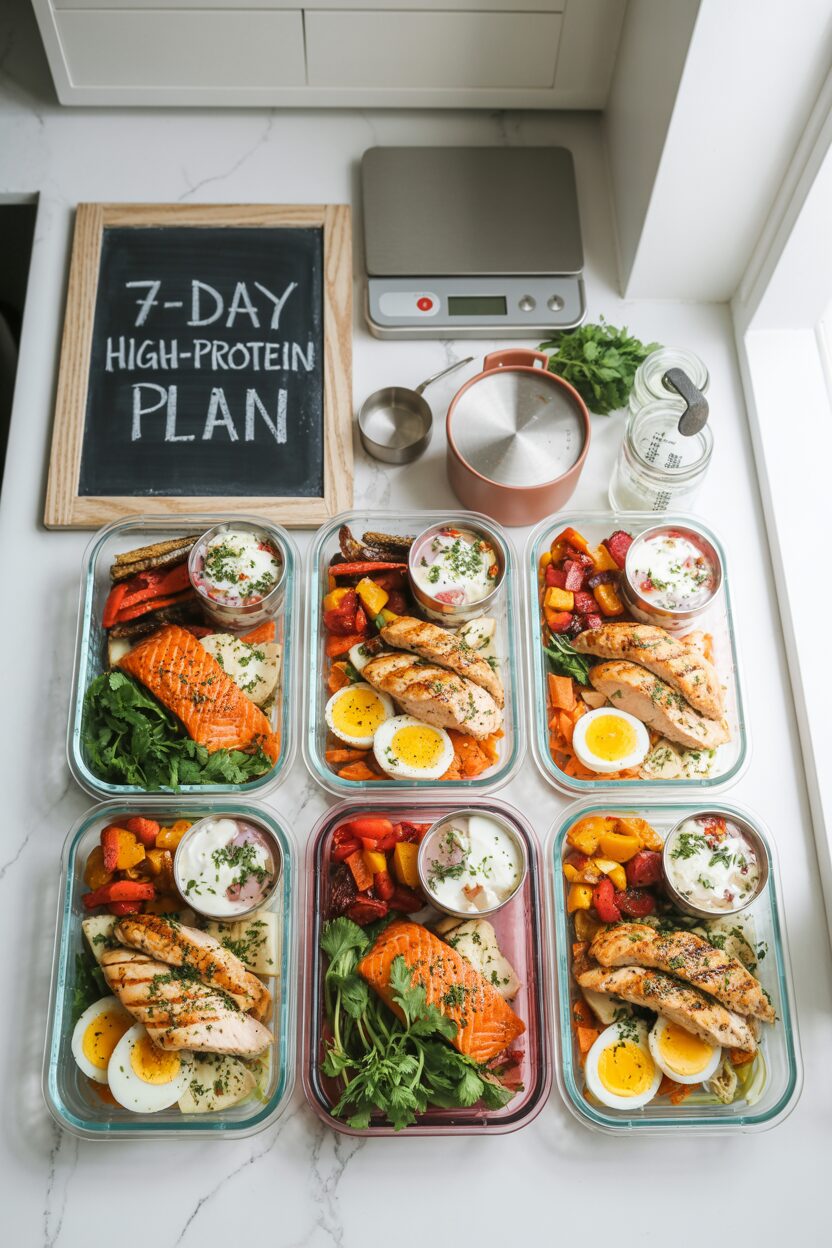
7-Day High-Protein 1200 Calorie Meal Plan
You know what’s harder than finding a decent parking spot at Trader Joe’s on a Sunday? Sticking to 1200 calories while actually hitting your protein goals. Most low-calorie meal plans leave you with barely enough protein to feed a house cat, let alone maintain your muscle mass while losing fat.
I’ve been there—hungry, irritable, watching my workout performance tank because I thought losing weight meant eating like a bird. Then I figured out the secret: prioritize protein, plan strategically, and stop pretending that a handful of almonds counts as a meal.
This 7-day high-protein meal plan gives you 100-120 grams of protein daily on just 1200 calories. No sad salads. No flavorless chicken breast tragedy meals. Just real food that actually keeps you satisfied.
Why High Protein Changes Everything on 1200 Calories
Let’s get real about why protein matters so much when you’re cutting calories. Your body needs protein to maintain muscle mass, and when you’re in a calorie deficit, your body doesn’t care where it gets its energy—it’ll happily break down your hard-earned muscle if you don’t give it enough protein.
According to research from Harvard Medical School, adults need a minimum of 0.8 grams of protein per kilogram of body weight. But when you’re trying to lose fat while preserving muscle? That number jumps to 1.6-2.2 grams per kilogram—roughly 0.7-1.0 grams per pound of body weight.
Here’s what adequate protein does for you on a calorie deficit:
- Keeps you fuller longer than carbs or fats
- Preserves lean muscle mass during weight loss
- Increases thermic effect (your body burns more calories digesting protein)
- Stabilizes blood sugar and prevents energy crashes
- Reduces cravings and mindless snacking
On 1200 calories, hitting 100-120 grams of protein means dedicating about 33-40% of your daily intake to protein. This isn’t negotiable if you want to keep your metabolism humming and your muscles intact.
The Macro Breakdown That Actually Works
Most generic 1200 calorie plans throw some random meals at you and call it a day. This plan is different because we’re reverse-engineering your macros to prioritize what matters most.
Your daily macro targets:
- Protein: 100-120 grams (400-480 calories, 33-40%)
- Fat: 40-50 grams (360-450 calories, 30-37%)
- Carbs: 80-100 grams (320-400 calories, 27-33%)
Notice that protein takes up the biggest chunk of your calorie budget. Your fats are moderate because you need them for hormone production and vitamin absorption. Carbs get what’s left—which is still enough to fuel your workouts if you time them strategically.
This macro split keeps you satisfied, energized, and strong. I’ve tried the high-carb, low-protein approach on 1200 calories, and I spent every afternoon wanting to gnaw on my desk chair.
Essential Tools and Prep Strategy
Before we get into the meal plan, let’s talk about the gear that makes this actually doable. You cannot eyeball portions on 1200 calories and expect success. Trust me, I tried.
Non-negotiable tools:
A digital food scale is your new best friend. I use one that measures in grams because it’s more accurate than ounces. Get this compact kitchen scale that’s precise to 0.1 grams—game changer for measuring protein portions.
Glass meal prep containers with compartments keep everything organized. I’m obsessed with these 3-compartment containers that let you separate proteins from sides without everything turning into a soggy mess by day three.
A good set of measuring cups and spoons for liquids and smaller portions. Even with a scale, you’ll need these for things like olive oil and nut butter.
Prep strategy that works:
Sunday becomes your power prep day. Block out 2-3 hours. Put on a podcast or your favorite playlist. Get it done.
- Cook all your proteins for the week (chicken, fish, eggs)
- Roast two sheet pans of vegetables
- Portion out snacks into grab-and-go containers
- Make overnight oats or egg muffins for easy breakfasts
I use these large rimmed baking sheets that fit a ridiculous amount of food without crowding. Crowded vegetables steam instead of roast, and steamed Brussels sprouts are nobody’s friend.
Day 1: Starting Strong
Breakfast: Greek Yogurt Power Bowl (310 calories, 32g protein)
Start your week with 1 cup plain nonfat Greek yogurt, half cup of mixed berries, 1 tablespoon of ground flaxseed, and a sprinkle of cinnamon. Mix in half a scoop of vanilla protein powder to boost the protein even more.
This breakfast keeps you full until lunch without the blood sugar roller coaster. Greek yogurt is protein-packed magic—6 ounces gives you about 18 grams of protein. Add the protein powder and you’re sitting pretty at 32 grams before 9 AM.
Snack: Hard-Boiled Eggs (140 calories, 12g protein)
Two hard-boiled eggs with a pinch of salt and pepper. Simple, portable, and protein-dense.
I prep a dozen eggs every Sunday using my Instant Pot with egg rack—perfect eggs every time, and they peel like a dream.
Lunch: Grilled Chicken Salad (350 calories, 38g protein)
Massive bed of mixed greens with 5 ounces grilled chicken breast, cherry tomatoes, cucumber, bell peppers, and 2 tablespoons balsamic vinaigrette. Add a tablespoon of sunflower seeds for crunch and healthy fats.
The key here is volume. Load up on non-starchy vegetables until your bowl looks absurdly large. You want to feel like you’re eating a substantial meal, not a sad desk lunch.
Snack: Protein Shake (120 calories, 24g protein)
One scoop of whey protein isolate mixed with water or unsweetened almond milk. Keep it simple.
Dinner: Baked Salmon with Roasted Vegetables (280 calories, 32g protein)
Four ounces of baked salmon seasoned with lemon, garlic, and herbs. Serve with roasted broccoli, cauliflower, and asparagus drizzled with half a tablespoon of olive oil.
Salmon is one of those magical foods that’s protein-dense and packed with omega-3s. If fresh salmon feels too expensive for meal prep, frozen wild-caught salmon works beautifully and costs half as much.
Daily totals: 1200 calories, 138g protein, 45g fat, 82g carbs
For more high-protein breakfast ideas that won’t bore you to tears, check out these protein-packed morning recipes and make-ahead egg cups that reheat perfectly all week.
Day 2: Mixing It Up
Breakfast: Veggie Scramble with Toast (320 calories, 28g protein)
Three egg whites plus one whole egg scrambled with spinach, mushrooms, tomatoes, and onions. Serve with one slice of whole grain toast (look for bread with at least 4 grams of protein per slice).
I cook this in a nonstick ceramic skillet that requires barely any oil—saves calories without sacrificing the fluffy texture.
Snack: Cottage Cheese with Cucumber (110 calories, 14g protein)
Half cup of low-fat cottage cheese with sliced cucumber and everything bagel seasoning. Sounds weird, tastes amazing.
Lunch: Turkey and Avocado Lettuce Wraps (340 calories, 36g protein)
Six ounces of sliced turkey breast wrapped in large romaine or butter lettuce leaves with quarter of an avocado, tomato slices, and mustard. Side of bell pepper strips.
Lettuce wraps save you 100+ calories compared to bread while still feeling like an actual meal. The avocado provides healthy fats that keep you satisfied.
Snack: Greek Yogurt (100 calories, 17g protein)
Small container (5.3 ounces) of plain nonfat Greek yogurt with a dash of vanilla extract and stevia if you need sweetness.
Dinner: Lean Beef Stir-Fry with Cauliflower Rice (330 calories, 35g protein)
Four ounces of lean beef (93/7 or leaner) stir-fried with tons of mixed vegetables—snap peas, bell peppers, broccoli, carrots—over cauliflower rice. Season with low-sodium soy sauce, garlic, and ginger.
A good wok or large skillet makes stir-frying so much easier. I use this carbon steel wok that heats evenly and makes everything taste like takeout without the calorie bomb.
Daily totals: 1200 calories, 130g protein, 48g fat, 85g carbs
Day 3: Keeping Momentum
Breakfast: Protein Pancakes (300 calories, 30g protein)
Mix one scoop vanilla protein powder, one egg, quarter cup of oats, splash of almond milk, and a pinch of baking powder. Cook on a griddle until golden. Top with half cup of berries.
These actually taste good—not like the cardboard protein pancakes that plagued the fitness industry for years.
Snack: String Cheese and Cherry Tomatoes (100 calories, 8g protein)
One part-skim mozzarella string cheese with a cup of cherry tomatoes. Simple, satisfying, hits the savory craving.
Lunch: Tuna Salad Lettuce Boats (340 calories, 40g protein)
One can of tuna packed in water, mixed with 1 tablespoon of Greek yogurt (instead of mayo—saves calories, adds protein), diced celery, and seasonings. Serve in large lettuce leaves with carrot sticks on the side.
Snack: Edamame (130 calories, 12g protein)
One cup of steamed edamame in the pods with sea salt. Takes forever to eat, which tricks your brain into feeling more satisfied.
I keep frozen edamame stocked at all times—microwaves in 3 minutes and works as both a snack and a side dish.
Dinner: Grilled Chicken with Sweet Potato and Green Beans (330 calories, 38g protein)
Five ounces grilled chicken breast with one small baked sweet potato (about 100 grams) and steamed green beans. Season everything well—herbs and spices are your friends.
Daily totals: 1200 calories, 128g protein, 42g fat, 92g carbs
Speaking of chicken that doesn’t taste like despair, these grilled chicken marinade recipes and sheet pan chicken dinners will save you from bland protein fatigue.
Day 4: Halfway There
Breakfast: Overnight Oats (310 calories, 26g protein)
Mix a third cup of oats with half cup unsweetened almond milk, 2 tablespoons of plain Greek yogurt, half scoop protein powder, and 1 tablespoon of chia seeds. Let it sit overnight. Top with berries in the morning. Get Full Recipe.
Prep these in mason jars on Sunday night—grab and go all week without thinking.
Snack: Turkey Roll-Ups (120 calories, 18g protein)
Three slices of deli turkey wrapped around cucumber spears with a thin smear of hummus.
Lunch: Shrimp and Avocado Salad (350 calories, 32g protein)
Six ounces of cooked shrimp over mixed greens with quarter avocado, cherry tomatoes, cucumber, and lemon juice. Add 1 tablespoon of pumpkin seeds for crunch.
Shrimp is criminally underrated for meal prep. It’s almost pure protein—6 ounces gives you about 35 grams with barely any fat or carbs.
Snack: Protein Bar (110 calories, 15g protein)
Choose a low-sugar protein bar with at least 15 grams of protein and under 150 calories. I keep several flavors on hand for variety.
Dinner: Baked Cod with Roasted Brussels Sprouts (310 calories, 36g protein)
Five ounces of baked cod with garlic and lemon, served with roasted Brussels sprouts tossed in half tablespoon of olive oil and balsamic vinegar.
Cod is lean protein perfection—mild flavor that takes on whatever seasonings you throw at it, and it cooks in 10-12 minutes.
Daily totals: 1200 calories, 127g protein, 46g fat, 88g carbs
Day 5: Friday Feeling
Breakfast: Egg White Muffins (290 calories, 28g protein)
Meal-prepped egg white muffins loaded with spinach, bell peppers, turkey sausage, and a sprinkle of reduced-fat cheese. Get Full Recipe. Eat three muffins with a small apple on the side.
Make a batch of 12 on Sunday in a silicone muffin pan—they pop out perfectly and cleanup is nothing.
Snack: Greek Yogurt Protein Bowl (130 calories, 20g protein)
Small Greek yogurt with a tablespoon of PB2 powdered peanut butter mixed in. All the peanut butter flavor with a fraction of the calories.
Lunch: Chicken Fajita Bowl (340 calories, 38g protein)
Five ounces of grilled chicken with sautéed bell peppers and onions over cauliflower rice. Top with salsa, 1 tablespoon of Greek yogurt (sour cream substitute), and fresh cilantro.
Snack: Jerky and Veggies (100 calories, 12g protein)
One ounce of low-sodium beef jerky with sliced bell peppers. Portable protein that doesn’t need refrigeration.
Dinner: Baked Tilapia with Asparagus (340 calories, 40g protein)
Six ounces of tilapia baked with Old Bay seasoning, served with roasted asparagus and a small serving of quinoa (quarter cup cooked).
IMO, tilapia gets a bad rap, but it’s affordable, mild-flavored, and packs serious protein for minimal calories.
Daily totals: 1200 calories, 138g protein, 42g fat, 84g carbs
For more meal prep inspiration that saves your sanity during busy weeks, try these freezer-friendly protein meals and batch cooking protein recipes designed for easy reheating.
Day 6: Weekend Warrior
Breakfast: Protein Smoothie Bowl (320 calories, 32g protein)
Blend one scoop protein powder, half a frozen banana, half cup frozen berries, handful of spinach, and unsweetened almond milk until thick. Pour into a bowl and top with 1 tablespoon of sliced almonds and chia seeds.
The bowl format makes it feel more substantial than a drinkable smoothie. Blend it thick using a high-speed blender that can handle frozen fruit without leaving chunks.
Snack: Cottage Cheese and Berries (120 calories, 16g protein)
Half cup low-fat cottage cheese with half cup of fresh berries. Simple, protein-rich, and satisfying.
Lunch: Grilled Chicken Caesar-ish Salad (350 calories, 40g protein)
Five ounces grilled chicken over romaine with cherry tomatoes, cucumber, and 2 tablespoons of light Caesar dressing. Add 1 tablespoon of parmesan cheese.
It’s Caesar-adjacent without the calorie chaos of traditional Caesar dressing. You still get the flavor profile without blowing your entire fat budget on one meal.
Snack: Hard-Boiled Egg and Veggies (90 calories, 7g protein)
One hard-boiled egg with carrot and celery sticks.
Dinner: Turkey Meatballs with Zoodles (320 calories, 38g protein)
Homemade turkey meatballs (use 93/7 ground turkey) served over zucchini noodles with marinara sauce. Get Full Recipe. Make about 4 ounces worth of meatballs.
A spiralizer turns zucchini into noodles in seconds. I use this handheld version that doesn’t require a engineering degree to operate.
Daily totals: 1200 calories, 133g protein, 44g fat, 82g carbs
Day 7: Strong Finish
Breakfast: Veggie Egg Scramble (310 calories, 30g protein)
Four egg whites plus one whole egg scrambled with tons of vegetables—spinach, mushrooms, tomatoes, onions, bell peppers. Serve with one slice of whole grain toast.
Load up on the veggies here. The volume helps you feel full without adding significant calories.
Snack: Protein Shake (110 calories, 24g protein)
One scoop protein powder with water or unsweetened almond milk. Quick, easy, no-brainer protein.
Lunch: Beef and Vegetable Soup (340 calories, 35g protein)
Homemade soup with 4 ounces of lean beef, tons of vegetables (carrots, celery, tomatoes, green beans), and beef broth. Serve with a small side salad.
Soup is volume eating at its finest. You can eat a massive bowl for relatively few calories while hitting solid protein numbers.
Snack: Turkey Slices and Cucumber (110 calories, 16g protein)
Three ounces of deli turkey with cucumber slices and mustard.
Dinner: Grilled Salmon with Cauliflower Mash (330 calories, 38g protein)
Four ounces of grilled salmon with cauliflower mashed with a touch of Greek yogurt, garlic, and herbs. Side of roasted Brussels sprouts.
Cauliflower mash hits that comfort food craving without the carb and calorie load of regular mashed potatoes. Season it well and nobody will accuse you of eating “diet food.”
Daily totals: 1200 calories, 143g protein, 46g fat, 78g carbs
Smart Substitutions and Flexibility
Look, life happens. You won’t always have every ingredient, or maybe you hate Brussels sprouts with a burning passion (though we can’t be friends if that’s the case). Here’s how to substitute intelligently without derailing your macros.
Protein swaps:
- Chicken and turkey are interchangeable
- Any white fish works (cod, tilapia, halibut, mahi-mahi)
- Salmon and other fatty fish have similar macros
- Lean beef and bison are comparable
- Shrimp and scallops swap easily
Vegetable swaps:
- All non-starchy vegetables are fair game
- Swap freely based on what’s on sale
- Frozen vegetables work just as well as fresh
- Cauliflower rice substitutes for any rice or grain
Carb swaps:
- Sweet potato and regular potato have similar macros
- Oats and quinoa are interchangeable
- Brown rice and quinoa swap one-to-one
- Whole grain bread slices have similar calories
The key is maintaining the protein target. Everything else has more flexibility.
Navigating Hunger and Cravings
Let’s be honest—some hunger is normal on 1200 calories. You’re in a deficit. Your body notices. But there’s a difference between manageable hunger and the kind that makes you want to fight someone.
Strategies that actually work:
Drink a stupid amount of water. Get yourself a motivational water bottle with time markers if you’re terrible at remembering. Sometimes hunger is just thirst wearing a disguise.
Time your carbs strategically. Eat most of them around your workouts or when you’re naturally most hungry. For most people, that’s breakfast and post-workout.
Load up on fibrous vegetables. Broccoli, Brussels sprouts, cauliflower, zucchini—eat them until you’re stuffed. They take up space in your stomach for minimal calories.
Don’t go longer than 4-5 hours without eating. That’s when you make terrible decisions like eating an entire jar of peanut butter with a spoon while standing at the counter.
Dealing with cravings:
Cravings usually mean you’re missing something—salt, fat, or just plain satisfaction. Don’t try to fill a pizza craving with celery. Have a small portion of what you actually want, track it, and move on.
According to research published in the Journal of the Academy of Nutrition and Dietetics, completely restricting foods you love often backfires and leads to bingeing. Build small treats into your plan occasionally.
For more ideas on staying satisfied without blowing your calorie budget, check out these high-volume low-calorie meals and satisfying low-calorie snacks that actually work.
Workout Nutrition on This Plan
You can absolutely work out on 1200 calories, but you need to be strategic about timing and intensity. FYI, if you’re doing intense training 6 days a week, 1200 calories probably isn’t enough for you anyway.
Pre-workout nutrition:
Eat a small portion of carbs 30-60 minutes before training. Half a banana, a rice cake, or a small serving of oats gives you quick energy without sitting heavy in your stomach.
Post-workout nutrition:
This is when you want your largest serving of carbs and a solid protein hit. Your post-workout meal should be your biggest meal of the day—aim for 400-450 calories with at least 30 grams of protein.
What about strength training?
You can maintain strength and even build muscle in a deficit if you’re hitting adequate protein and training smart. Focus on maintaining your weights rather than constantly trying to progress. If you can keep your strength levels where they are while losing fat, you’re winning.
Shopping List for Success
Let’s make your grocery shopping as painless as possible. Here’s what you need for the week:
Proteins:
- Boneless skinless chicken breast (2-3 pounds)
- Lean ground turkey (1 pound)
- Lean beef (1 pound)
- Salmon fillets (4-6 ounces)
- White fish (cod or tilapia, 8-10 ounces)
- Large shrimp (8 ounces)
- Eggs (18-24)
- Nonfat Greek yogurt (multiple containers)
- Low-fat cottage cheese (1 container)
- Sliced deli turkey (1 pound)
- Protein powder (your preferred brand)
Vegetables:
- Mixed greens and romaine (lots)
- Spinach (fresh or frozen)
- Broccoli, cauliflower, Brussels sprouts
- Bell peppers (multiple colors)
- Zucchini, asparagus, green beans
- Cherry tomatoes, cucumber
- Mushrooms, onions, garlic
Carbs:
- Rolled oats
- Whole grain bread
- Sweet potatoes
- Quinoa (optional)
Fats and others:
- Olive oil
- Avocados (2-3)
- Mixed berries (fresh or frozen)
- Almonds or other nuts
- Chia seeds, flaxseed
Pantry staples:
- Low-sodium soy sauce
- Balsamic vinegar
- Mustard, hot sauce
- Herbs and spices
- Marinara sauce
Shop the perimeter of the store where the fresh foods live. Use a insulated grocery bag to keep proteins cold on the drive home—food safety matters when you’re meal prepping for the week.
Meal Prep Like You Mean It
Sunday prep is non-negotiable if you want this plan to work. Here’s your step-by-step game plan:
Hour 1: Proteins
Season and bake all your chicken breast. Grill or pan-sear your fish. Hard-boil a dozen eggs using an egg cooker that does all the work. Cook your ground turkey for meatballs or stir-fries.
Hour 2: Vegetables
Roast two sheet pans of mixed vegetables. Steam or blanch green beans and asparagus. Chop raw veggies for salads and snacks. Make cauliflower rice if using.
Hour 3: Assembly and portioning
Portion proteins using your food scale—weigh everything. Divide roasted vegetables into containers. Prep overnight oats or egg muffins. Portion out snacks into individual containers.
Label everything with masking tape and a marker. Day 1 lunch, Day 3 dinner—takes the guesswork out of grabbing meals when you’re rushed.
Common Mistakes That Tank Your Results
I’ve seen these mistakes destroy perfectly good meal plans more times than I can count:
Underestimating portions. That chicken breast is 7 ounces, not 4. Your tablespoon of peanut butter is actually 3. Get real with measurements.
Forgetting about cooking oils. A tablespoon of olive oil is 120 calories. Two tablespoons while cooking dinner and you’ve just added 240 untracked calories.
Drinking calories. Black coffee is fine. That vanilla latte is 300 calories. Make your own drinks or stick with water, black coffee, and unsweetened tea.
Not tracking consistently. You can’t track Monday through Thursday, eat whatever Friday through Sunday, and expect results. Weekends count.
Ignoring vegetable portions. Yes, vegetables have calories. No, you can’t eat unlimited amounts and stay at 1200. Non-starchy vegetables are close to free, but calorie-dense ones like sweet potatoes count.
Skipping rest days. Your body needs recovery. Training hard 7 days a week on 1200 calories is a recipe for burnout, injury, and metabolic adaptation.
Related Recipes You’ll Love
Looking for more high-protein meal ideas that fit your calorie goals? Here are some favorites that complement this meal plan perfectly:
More High-Protein Breakfasts:
- Protein Pancakes with Cottage Cheese
- Make-Ahead Egg White Frittatas
Lunch Ideas:
- Greek Chicken Bowls
- Shrimp and Avocado Lettuce Wraps
Dinner Options:
- Baked Lemon Herb Salmon
- Turkey Meatballs with Marinara
Snacks and Sides:
- Protein-Packed Snack Boxes
- Roasted Chickpeas for Crunch
The Bottom Line on High-Protein 1200 Calorie Eating
Here’s what you need to understand: this meal plan works if you work it. The high protein keeps you full, preserves your muscle, and makes 1200 calories actually sustainable instead of a miserable exercise in deprivation.
But sustainability matters more than speed. If you’re constantly starving, irritable, and thinking about food 24/7, you’ve gone too aggressive. It’s okay to bump up to 1400 or 1500 calories if 1200 feels unsustainable. Slower progress you can maintain beats rapid weight loss followed by gaining it all back.
Give this plan at least 3-4 weeks before making judgments. Your body needs time to adapt. Track everything honestly—and I mean everything, including that “small” bite of your partner’s dessert. Take measurements and progress photos because the scale is a lying liar that lies.
Most importantly, this is a tool, not a lifestyle sentence. Use it to create a deficit, lose the weight you want to lose, and then transition to a higher maintenance calorie level. The goal is teaching yourself what proper portions look like and building habits that serve you long-term.
Now stop overthinking it, print this plan, prep your meals, and get started. Your future self—the one with more muscle definition and better energy—is waiting for you to take action.