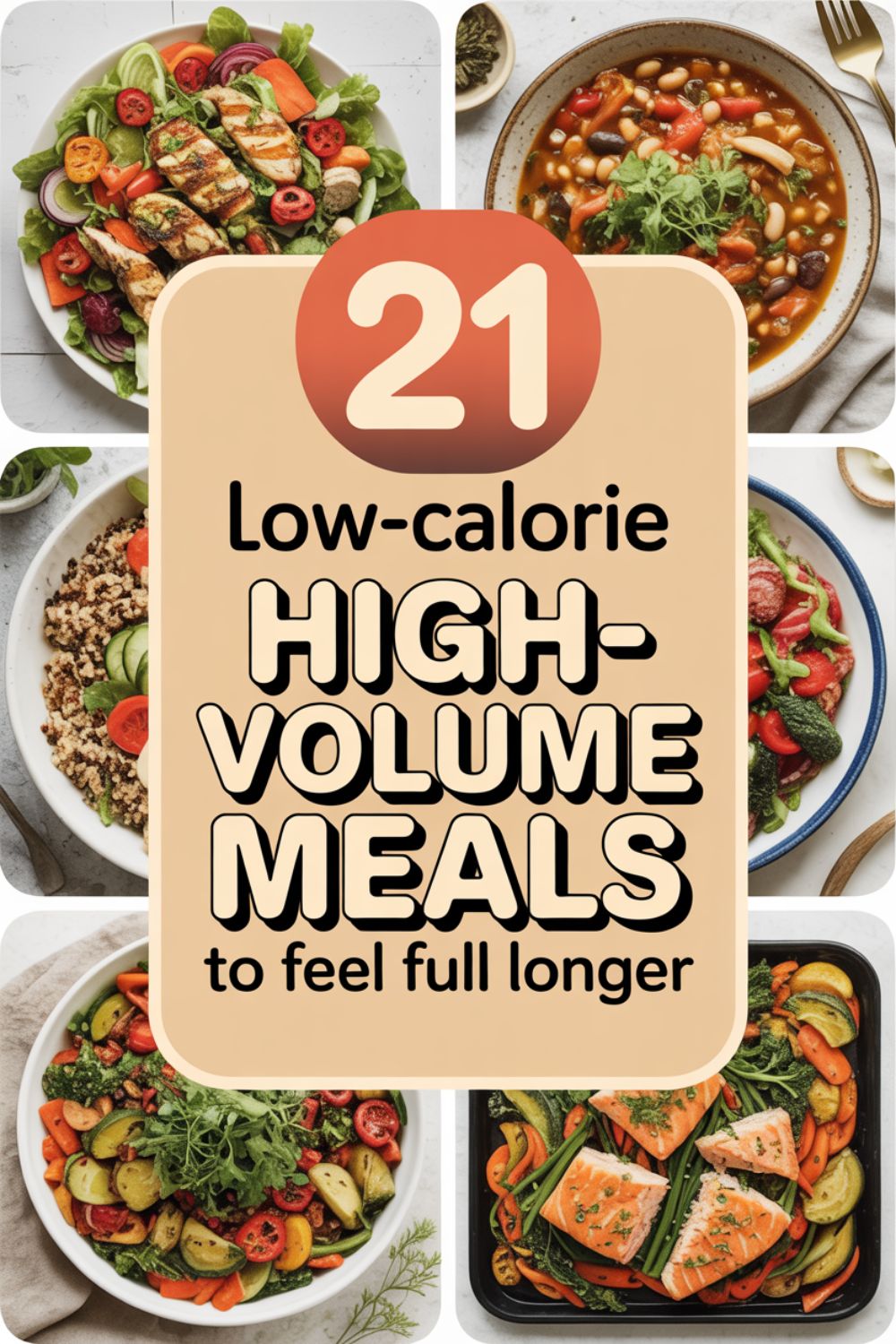
21 Low-Calorie High-Volume Meals to Feel Full Longer
You know that horrible feeling when you finish dinner and your stomach’s already plotting its next complaint in an hour? Yeah, I’ve been there too many times. The whole “eat less to lose weight” thing sounds great until you’re staring at a sad plate of three cherry tomatoes and a prayer.
Here’s what actually works: high-volume, low-calorie meals that fill up your plate and your stomach without wrecking your calorie budget. We’re talking meals where you can pile your bowl high, eat until you’re genuinely satisfied, and still stay on track. No weird hunger pangs at 9 PM, no secret pantry raids, no lying awake fantasizing about bagels.
I’m sharing 21 meals that actually deliver on volume without sneaking in hundreds of extra calories. These aren’t those Instagram salads that leave you ravenous—these are real, substantial meals that understand the assignment.
Why Volume Actually Matters More Than You Think
Your stomach doesn’t have a calorie counter. Shocking, I know. What it does have are stretch receptors that send “I’m full” signals to your brain based on how much physical space food takes up. This is why you can demolish 500 calories of chips in ten minutes and still feel hungry, but struggle to finish a massive salad that’s half the calories.
The science behind this is actually pretty straightforward. Foods with high water content and fiber take up more room in your stomach while delivering fewer calories. A pound of broccoli has about 150 calories. A pound of pasta? Try 1,600 calories. Both will fill your stomach, but one lets you eat again in this lifetime.
According to research from the CDC on energy density, choosing foods with lower energy density helps you feel full on fewer calories. This isn’t some fad diet nonsense—it’s basic physics meeting basic biology.
Pro Tip: Fill half your plate with non-starchy vegetables before adding anything else. You’ll automatically increase meal volume without overthinking portions.
The Best High-Volume, Low-Calorie Foods to Stock Up On
Before we get to the actual meals, let’s talk about the MVPs that make this whole strategy work. These are the ingredients I always have on hand because they let me eat like a normal human while keeping calories reasonable.
Vegetables That Actually Fill You Up
Leafy greens are the obvious champions here. Spinach, kale, romaine, arugula—you can eat literal cups of these for under 50 calories. I’m talking salads so big they need their own zip code.
Cruciferous vegetables like broccoli, cauliflower, and Brussels sprouts are incredible for volume. Roast them with a tiny bit of olive oil and suddenly you’ve got a massive side dish for under 100 calories. I use this sheet pan literally every other day because roasted veggies are life.
Zucchini and summer squash are sneaky good for adding bulk to meals. Spiralize them, chop them, whatever—they soak up flavors and take up serious plate space. A good spiralizer changed my whole relationship with low-calorie pasta alternatives.
When prepping these in bulk, I reach for glass meal prep containers because they don’t get weird and stained like plastic ones do. Plus you can see what’s in there without playing fridge roulette.
Protein Sources That Don’t Break the Calorie Bank
Protein is crucial for staying full, but some sources pack way more calories than others. Chicken breast, white fish, shrimp, and egg whites give you the most protein bang for your calorie buck.
Greek yogurt deserves its own paragraph because it’s basically a cheat code. High protein, low calorie, and versatile enough to work sweet or savory. The plain, non-fat version might not win any flavor awards straight from the container, but doctor it up and you’ve got everything from breakfast bowls to creamy salad dressings.
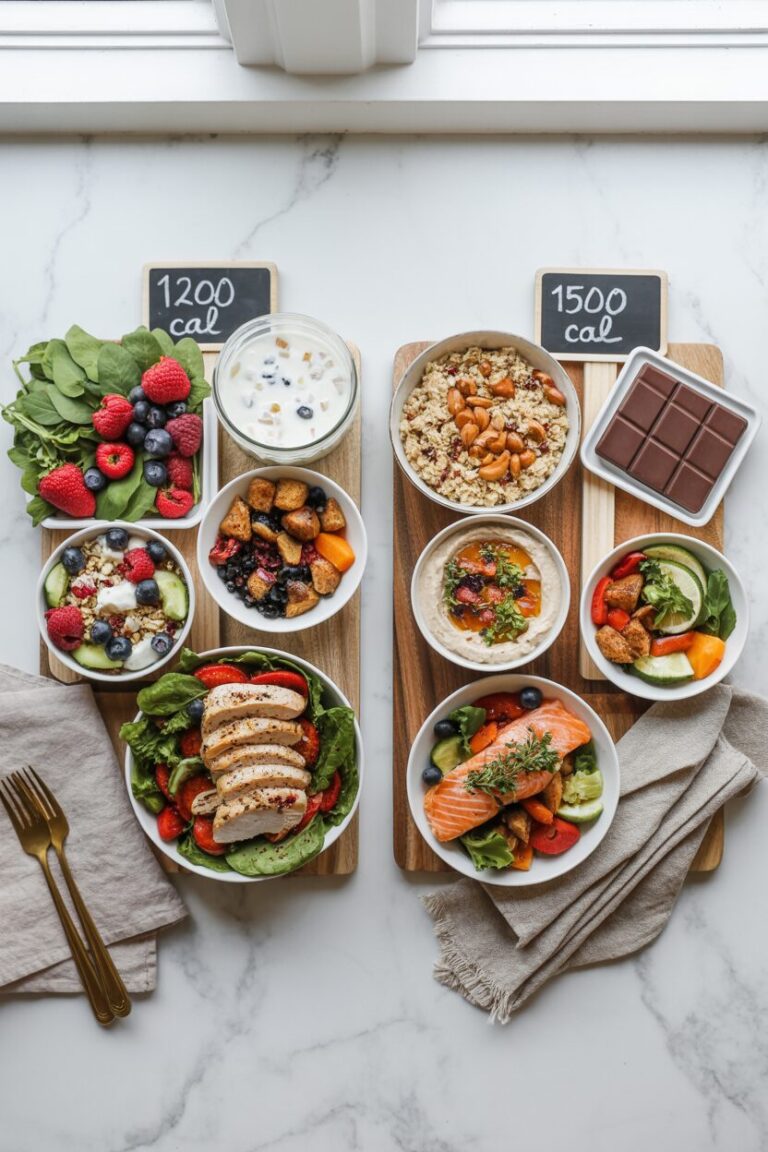
If you’re looking for structured meal plans that incorporate these protein sources smartly, check out this high-protein 1200 calorie plan that takes the guesswork out of balancing macros.
21 High-Volume Meals That Actually Satisfy
1. Massive Veggie-Loaded Egg White Scramble
Start with 4-5 egg whites (about 85 calories) and throw in everything but the kitchen sink. We’re talking bell peppers, mushrooms, onions, spinach, tomatoes—whatever vegetables are looking at you from the crisper drawer. Add salsa on top and you’ve got a plate so full you might need a bigger plate. Total damage? Around 150 calories for something that looks like brunch at a fancy hotel.
I cook mine in a non-stick ceramic pan so I can skip the oil entirely. Game changer for keeping calories down without food sticking like superglue.
2. Cauliflower Rice Stir-Fry Bowl
Swap regular rice for cauliflower rice and suddenly you can have a huge bowl of stir-fry for under 300 calories. Load it up with chicken breast, tons of vegetables, and a measured amount of sauce. The volume is absolutely ridiculous—I’m talking two full cups of food minimum.
You can buy pre-riced cauliflower or make your own with a food processor. I go with pre-riced because I value my sanity and countertop space.
3. Zucchini Noodle Marinara with Turkey Meatballs
Three medium zucchinis spiralized give you a pasta-sized portion for about 60 calories. Add marinara sauce (check the label, some are sugar bombs) and lean turkey meatballs. You get that pasta comfort without the carb coma.
This pairs perfectly with some of the low-calorie pasta recipes I’ve put together if you want more variety in your rotation. Get Full Recipe
“I started making high-volume meals three months ago and finally stopped feeling like I was starving myself. Down 18 pounds and I’m eating more food than before—just smarter food. The cauliflower rice stir-fry is in my weekly rotation now.” — Jessica, community member
4. Giant Greek Salad with Grilled Chicken
When I say giant, I mean you need a mixing bowl, not a salad bowl. Romaine lettuce, cucumbers, tomatoes, red onion, bell peppers, a sprinkle of feta, olives, and grilled chicken breast. Dress it with lemon juice and a tablespoon of olive oil. This is easily 4+ cups of food for around 350 calories.
5. Vegetable Soup with White Beans
Soup is basically the definition of high-volume eating. Make a huge pot with vegetable broth, tomatoes, carrots, celery, zucchini, green beans, and white beans for protein. Season it well (this is not the time for bland diet food). You can eat two full bowls and still come in under 300 calories.
Speaking of satisfying soups, I’ve rounded up 20 low-calorie soup recipes that prove comfort food doesn’t have to be calorie-dense.
6. Spaghetti Squash Pad Thai
Roasted spaghetti squash becomes the noodle base, then you load it with bean sprouts, shredded cabbage, carrots, chicken, and a lighter version of pad Thai sauce. The squash alone gives you massive volume for minimal calories—one cup is only 42 calories compared to rice noodles at 200+ for the same amount.
7. Massive Mixed Green Salad with Tuna
Mixed greens, cherry tomatoes, cucumber, carrots, radishes, and a can of tuna packed in water. Add a hard-boiled egg if you’re feeling fancy. This is the kind of salad where you’re genuinely full halfway through but it tastes good enough to finish. Around 250 calories for a truly impressive bowl.
Meal Prep Essentials I Actually Use
Listen, I’m not here to sell you stuff you don’t need, but these items genuinely make high-volume cooking way easier:
Physical Products:
- Glass Meal Prep Containers Set – For storing all those vegetables without them turning into sad, wilted disappointments
- Digital Food Scale – Because eyeballing portions is how you accidentally eat 400 calories of “healthy” nuts
- Vegetable Spiralizer – Turns vegetables into noodles, which is basically magic
Digital Resources:
- 7-Day 1200 Calorie Meal Plan – Week-long guide with shopping lists
- 14-Day Budget-Friendly Meal Plan – Because eating healthy shouldn’t require a second mortgage
- Beginner’s Guide to 1200 Calorie Days – Perfect if you’re just starting out
8. Shirataki Noodle Stir-Fry
Shirataki noodles are basically calorie-free (like 20 calories for a whole bag). They’re made from konjac root and have a unique texture that takes some getting used to, but once you nail the prep, they’re fantastic. Rinse them really well, dry-fry them for a few minutes, then add your stir-fry ingredients. Massive portion, minimal calories.
9. Egg White and Veggie Frittata
This is meal prep gold. Whisk together egg whites with a splash of milk, pour over sautéed vegetables in an oven-safe skillet, bake until set. One slice is filling and around 120 calories. The beauty is you can eat two slices and still be under 250 calories while feeling legitimately full. Get Full Recipe
10. Chicken and Vegetable Kebabs with Cauliflower Rice
Thread chicken breast, bell peppers, onions, zucchini, and mushrooms onto skewers. Grill or bake them. Serve over a huge mound of seasoned cauliflower rice. The vegetables on the skewers add bulk without adding calories, and you get that satisfying grilled flavor.
11. Mega Salad Wrap in Lettuce Leaves
Ditch the tortilla and use large lettuce leaves (butter lettuce works great). Fill with tons of vegetables, lean protein, and a thin spread of hummus or mustard. You can eat 3-4 wraps for fewer calories than one regular wrap. Plus, the crunch factor is seriously satisfying.
For more wrap inspiration that won’t derail your goals, check out these 25 low-calorie wraps under 300 calories.
12. Asian-Style Cabbage Salad with Grilled Shrimp
Shredded cabbage (both regular and purple for color), shredded carrots, edamame, grilled shrimp, and a ginger-sesame dressing. Cabbage is ridiculously low in calories and incredibly filling. This salad is huge, crunchy, and totally satisfying for around 300 calories.
Quick Win: Buy pre-shredded coleslaw mix and just add your protein and dressing. Sometimes convenience wins, and that’s totally fine.
13. Roasted Vegetable and Chicken Sheet Pan Dinner
Cover a sheet pan with broccoli, cauliflower, bell peppers, zucchini, and chicken breast. Roast everything together. The vegetables shrink down when cooked but you start with so much that you still end up with a massive plate of food. Season generously because bland vegetables are why people hate healthy eating.
This cooking method shows up a lot in my 30 easy low-calorie dinner ideas because honestly, it’s the easiest way to make a complete meal. Get Full Recipe
14. Zucchini Pizza Boats
Halve zucchinis lengthwise, scoop out some of the seeds, fill with marinara sauce, a sprinkle of part-skim mozzarella, and your favorite pizza toppings (think mushrooms, bell peppers, turkey pepperoni). Bake until tender. Two boats are filling and clock in around 200-250 calories depending on your cheese enthusiasm.
15. Veggie-Packed Egg Drop Soup
Start with chicken or vegetable broth, add tons of shredded cabbage, mushrooms, carrots, and bok choy. Bring to a simmer and drizzle in beaten eggs while stirring. The eggs create ribbons throughout the soup. You can eat a gigantic bowl for under 200 calories, and it’s genuinely comforting.
16. Shrimp and Zoodle Scampi
Zucchini noodles tossed with shrimp, garlic, a bit of white wine, lemon juice, and a small amount of butter or olive oil. Shrimp is incredibly low-calorie for the protein it provides, and you can pile your plate high with zoodles. This feels like a restaurant meal but comes in around 300 calories.
17. Loaded Cauliflower “Fried Rice”
Cauliflower rice, scrambled eggs, tons of vegetables (peas, carrots, onions, bell peppers), and a protein of choice. Season with soy sauce or coconut aminos. The amount of food you get is absurd—easily 3+ cups—for around 350 calories with chicken. Get Full Recipe
If you’re into meal prep, this fits perfectly into a 21-day meal plan rotation without getting boring.
18. White Fish with Roasted Vegetables
White fish like cod or tilapia is incredibly lean. Bake it with lemon and herbs, serve alongside a mountain of roasted vegetables. We’re talking Brussels sprouts, carrots, bell peppers, and asparagus. You’re looking at a massive dinner plate for around 350 calories.
19. Chicken and Vegetable Soup (Asian-Inspired)
Chicken broth base with ginger, garlic, shredded chicken breast, bok choy, mushrooms, carrots, and some shirataki noodles. This soup is so filling you might not finish it, and it’s under 250 calories for a huge bowl. The shirataki noodles add that noodle soup satisfaction without the calorie hit.
20. Massive Cobb Salad (Lightened Up)
Romaine lettuce, grilled chicken, hard-boiled eggs (maybe just the whites or one whole egg), cherry tomatoes, cucumber, turkey bacon, and a small amount of blue cheese. Use a lighter dressing or just lemon and vinegar. This salad is legitimately a meal, not a sad side dish pretending to be dinner.
Tools That Make Volume Cooking Actually Doable
Real talk: the right tools make everything easier. I’m not suggesting you buy out Williams-Sonoma, but these genuinely help:
Physical Products:
- Large Non-Stick Skillet – For cooking mountains of vegetables without them sticking
- Silicone Baking Mats – Roast vegetables without oil and without scrubbing pans for 20 minutes
- Mandoline Slicer – Slice vegetables evenly in seconds instead of minutes of knife work
Digital Resources:
- 30-Day Low-Calorie Meal Plan – A full month of planned meals
- Guide to Losing Weight Without Starving – The strategy behind making this actually sustainable
- Must-Buy Low-Calorie Groceries – My actual shopping list
21. Spaghetti Squash with Turkey Bolognese
Roast a spaghetti squash, scrape out the strands, top with a hearty turkey bolognese sauce loaded with tomatoes, onions, carrots, and celery. One cup of spaghetti squash is about 40 calories versus 200+ for regular pasta. You can have a enormous portion and feel like you’re eating actual comfort food.
This kind of substitution is exactly what makes the difference between feeling deprived and feeling satisfied. You’re not giving up pasta night—you’re just getting creative with it.
How to Build Your Own High-Volume Meals
Okay, so you’ve got 21 ideas, but what about when you want to freestyle? Here’s the formula I use to create any high-volume, low-calorie meal.
The Base Layer: Non-Starchy Vegetables
Start with at least 2 cups of vegetables. This is your volume foundation. Think leafy greens, cruciferous vegetables, zucchini, bell peppers, mushrooms, tomatoes. These should take up literally half your plate or bowl.
According to Mayo Clinic’s guidance on high-fiber foods, filling up on fiber-rich vegetables helps you feel satisfied with fewer calories and supports digestive health.
The Protein Component
Add 3-5 ounces of lean protein. Chicken breast, white fish, shrimp, lean turkey, egg whites, or Greek yogurt depending on the meal type. Protein keeps you full longer and prevents that blood sugar crash that makes you raid the pantry an hour later.
For more protein-focused meal ideas, check out these 18 high-protein low-calorie meals that prioritize satiety.
The Optional Carb Addition
This is where you add a small portion of complex carbs if you want them. Maybe half a cup of quinoa, sweet potato, or beans. Or skip it entirely if you’re loading up on vegetables—you won’t miss it as much as you think.
The Flavor Boosters
Don’t skip this part. Herbs, spices, vinegars, lemon juice, hot sauce, salsa, mustard—these add virtually no calories but make everything actually taste good. Nobody sticks with eating sad, bland food. I don’t care how motivated you are.
Pro Tip: Invest in a good spice collection. The difference between bland steamed broccoli and delicious roasted broccoli is literally just garlic powder, paprika, and black pepper. Zero extra calories, infinite more flavor.
Common Mistakes People Make with High-Volume Eating
Forgetting About Protein
You can eat a salad the size of your head, but if there’s no protein in it, you’ll be hungry in an hour. Protein slows digestion and keeps blood sugar stable. Don’t skip it thinking you’re saving calories.
Drowning Everything in Dressing or Sauce
Two tablespoons of ranch dressing can have more calories than the entire salad underneath it. Measure your dressings and sauces, at least until you get a feel for appropriate portions. This is where a good set of measuring spoons actually earns its keep.
Not Seasoning Your Food
If your meals taste like cardboard, you won’t stick with this. Season generously. Use garlic, onions, herbs, spices, citrus, vinegar—whatever makes food taste like something you’d actually choose to eat.
Eating Too Fast
Even with high-volume meals, if you inhale your food in three minutes, your brain doesn’t get the signal that you’re full. Slow down. Put your fork down between bites. I know it sounds cheesy, but it genuinely helps.
Making This Work in Real Life
Theory is great, but what about when you’re exhausted after work and the thought of chopping vegetables makes you want to cry? Fair question. Here’s what actually works.
Prep Once, Eat Multiple Times
Spend an hour on Sunday chopping vegetables, grilling chicken, and making a big batch of soup or cauliflower rice. Store everything in containers. Then during the week, you’re just assembling meals, not cooking from scratch every single night.
My 25 cheap meal prep recipes are specifically designed for this exact approach—minimal cooking skill required, maximum results delivered.
Use Convenience Items Strategically
Pre-washed salad greens, pre-riced cauliflower, frozen vegetable mixes, rotisserie chicken—these aren’t cheating. They’re how you actually stick with eating well when life gets chaotic. Yes, they cost more than buying whole vegetables. So does ordering takeout when you’re too tired to cook.
Keep Frozen Vegetables on Hand
Frozen vegetables are nutritionally comparable to fresh and they don’t go bad in three days. Keep your freezer stocked with broccoli, cauliflower, green beans, and stir-fry mixes. They’re your backup plan when the week goes sideways.
“The biggest change for me was actually eating enough volume. I’d been eating these tiny portions and wondering why I felt miserable. Now I pile my plate with vegetables and reasonable portions of protein, and I’m shocked at how much food I can actually eat. Down 22 pounds and I feel like I’m not even dieting.” — Rachel, community member
When High-Volume Eating Might Not Be Right
Look, I love this approach, but I’m not going to pretend it’s perfect for everyone. If you have digestive issues or conditions like IBS, eating massive amounts of raw vegetables might not feel great. You can still use these principles—just cook your vegetables well and maybe scale back the volume slightly.
Some people also find that eating huge portions, even of low-calorie foods, doesn’t help them learn appropriate portion sizes for when they’re eating more calorie-dense foods. That’s valid. Use this as a tool, not a religion.
And if you’re training heavily or have high calorie needs, you might need more energy-dense foods than this approach provides. Athletes often need more carbs and fats than high-volume eating typically includes. Adjust accordingly.
Tips for Eating Out While Sticking to High-Volume Principles
Restaurant meals are notoriously calorie-dense, but you can still make this work. Order grilled protein and ask for extra vegetables instead of the rice or pasta. Most restaurants will accommodate this. Get dressing on the side and use it sparingly.
Skip the bread basket (or limit yourself to one piece). Start with a broth-based soup or side salad. These fill you up before the main course arrives, so you’re less likely to overeat.
Don’t be afraid to ask for modifications. “Can I get extra broccoli instead of the mashed potatoes?” is a totally reasonable request. The worst they can say is no, and most places are happy to swap things around.
Frequently Asked Questions
Can I really eat large portions and still lose weight?
Absolutely, as long as you’re choosing the right foods. High-volume, low-calorie meals work because they fill your stomach with fewer calories. A massive salad with lean protein might be 300 calories, while a small burger could be 800. Your stomach feels full based on volume, not calories, so you can eat satisfying portions without overeating.
How often should I eat high-volume meals throughout the day?
There’s no magic number, but I’ve found that including at least one high-volume meal per day makes a huge difference in how satisfied I feel overall. Most people do best with a high-volume lunch or dinner, though some prefer starting the day with a massive breakfast. Experiment and see what keeps you feeling full longest.
Will eating so many vegetables cause digestive issues?
If you’re not used to eating a lot of fiber, yes, you might experience some bloating or gas initially. Increase your vegetable intake gradually and make sure you’re drinking plenty of water. Cooking vegetables instead of eating them all raw can also help. Most people adjust within a week or two and their digestion actually improves.
Do I need to count calories if I’m eating high-volume meals?
It helps, at least initially, to understand portion sizes and make sure you’re in a calorie deficit if weight loss is your goal. Once you get familiar with what appropriate portions look like, you can relax a bit on the tracking. But even healthy, low-calorie foods add up if you’re eating them in truly unlimited quantities, so some awareness is useful.
What if I don’t like vegetables very much?
Then you probably haven’t found the right preparation methods or seasonings yet. Seriously—roasted Brussels sprouts with balsamic vinegar taste nothing like steamed Brussels sprouts. Experiment with different cooking methods, spices, and flavor combinations. And start with vegetables you’re neutral about rather than ones you actively hate. You might surprise yourself.
The Bottom Line on High-Volume Eating
Here’s the thing nobody tells you about weight loss: feeling hungry all the time doesn’t make you more successful. It just makes you miserable and way more likely to quit. High-volume, low-calorie meals let you eat actual satisfying portions while still creating the calorie deficit you need.
You don’t have to make all 21 of these meals. Pick 3-4 that sound good, try them out, and rotate them into your regular meal plan. Add one or two more as you get comfortable. This doesn’t have to be complicated.
The goal isn’t perfection—it’s finding a way of eating that you can actually sustain. If that means using pre-cut vegetables and rotisserie chicken, great. If it means meal prepping every Sunday, also great. Whatever gets you eating more vegetables and feeling fuller on fewer calories is the right approach for you.
And honestly? Once you get used to eating bigger portions of low-calorie foods, regular portions of calorie-dense foods start looking kind of small and unsatisfying. Your preferences actually shift. That’s when you know this has become a lifestyle change, not just another diet you’re white-knuckling through.
Start with one high-volume meal tomorrow. See how you feel. Adjust as needed. You’ve got this.