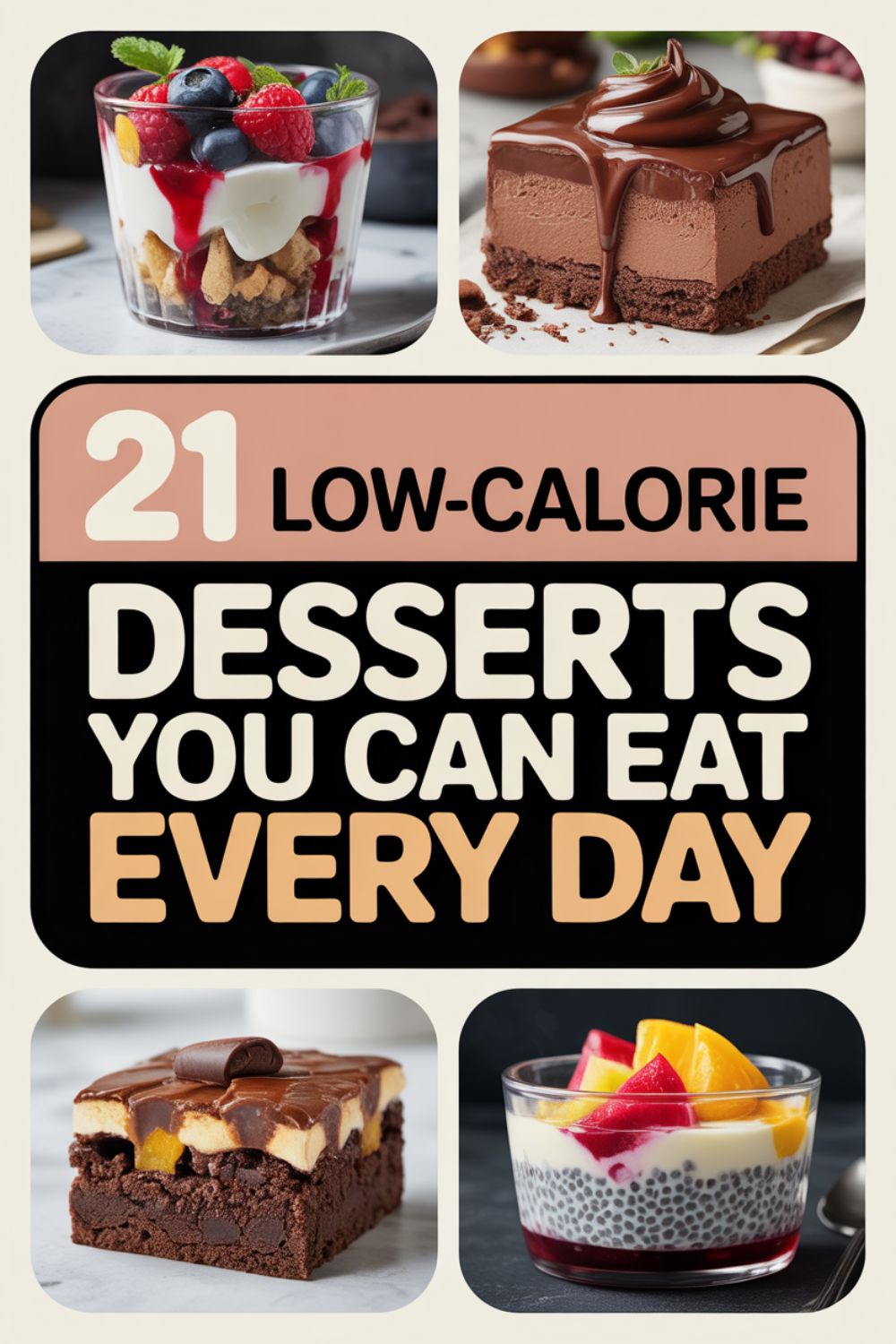
21 Low-Calorie Desserts You Can Eat Every Day
You know that moment when your brain starts sending urgent chocolate signals around 8 PM? Yeah, me too. Let’s talk about having your cake and eating it too—literally.
Listen, I’m not here to preach about giving up sweets forever or pretending that celery sticks are a valid dessert option. That’s just sad. What I am saying is that you absolutely can satisfy your sweet tooth without derailing your weight loss goals or feeling guilty about every bite. I’ve spent way too many nights staring into my fridge, wondering if Greek yogurt counts as dessert (spoiler: it can, and we’ll get into that).
The whole low-calorie dessert thing used to sound like an oxymoron to me. Like, how can something be both delicious and diet-friendly? Turns out, with the right ingredients and a little creativity, you can whip up treats that clock in under 200 calories and actually taste like real food. Not that weird diet food that tastes like disappointment with a side of artificial sweetener aftertaste.
We’re diving into 21 desserts that won’t sabotage your progress. Some take five minutes, others require a bit more effort, but all of them are worth making part of your regular rotation. And before you ask—yes, chocolate is absolutely on this list. Multiple times. Because I’m not a monster.
Why Low-Calorie Desserts Actually Work
Here’s the deal with weight loss that nobody really explains properly: you need a calorie deficit to lose weight. That’s just science. Creating a calorie deficit means burning more calories than you consume, and when you maintain that deficit consistently, your body starts using stored fat for energy.
But here’s where most diets fall apart—they tell you to cut out entire food groups or eliminate all treats. That works for about a week before you’re face-down in a pint of ice cream at midnight. Been there, done that, have the empty container to prove it.
Low-calorie desserts let you stay in that deficit while still enjoying something sweet. Think of it as budgeting your calories the same way you budget money. Sure, you could blow your entire daily allowance on one massive slice of cheesecake, or you could have a 200-calorie treat that leaves room for actual meals. I know which option keeps me sane.
The beauty of these low-calorie options is that they often pack in more nutrition than their high-calorie counterparts. We’re talking fiber from fruits, protein from Greek yogurt, and healthy fats from nuts. These aren’t just empty calories that leave you hungry an hour later. For more guidance on structuring your meals around a calorie deficit, check out this 7-day 1200-calorie meal plan that actually keeps you satisfied.
The Science Behind Satisfying Sweet Cravings
Your brain on sugar is basically a toddler throwing a tantrum until it gets what it wants. When you completely deny those cravings, they just get louder and more persistent. Eventually, your willpower cracks, and you end up eating way more than if you’d just had a reasonable portion in the first place.
But when you incorporate planned treats into your routine—and I mean genuinely satisfying treats, not sad diet versions—something interesting happens. Your cravings become manageable. You’re not constantly thinking about what you can’t have because nothing is off-limits. You’re just making smarter choices about portions and ingredients.
The key is finding desserts that hit that sweet spot between low calories and actual satisfaction. Nobody wants to eat a “cookie” made entirely of beans and regret (yes, that’s a thing, and no, I don’t recommend it). These 21 options use real ingredients that taste like actual desserts, just in smarter portions or with lighter swaps.
21 Low-Calorie Desserts Worth Making
1. Greek Yogurt Parfait with Berries (140 calories)
Start with plain Greek yogurt—not the flavored stuff loaded with sugar. Add fresh berries, a drizzle of honey, and maybe some granola clusters# if you’re feeling fancy. The protein in Greek yogurt keeps you full way longer than regular yogurt, and the natural sweetness from berries means you don’t need much added sugar.
I make these in small mason jars# and keep them in the fridge for grab-and-go options. Saves me from the vending machine on rough days.
2. Frozen Banana “Nice Cream” (95 calories per serving)
Freeze ripe bananas, then blend them until creamy. That’s it. Sounds too simple to be good, right? Wrong. The texture is shockingly close to soft-serve ice cream, and you can mix in cocoa powder, peanut butter, or whatever flavor you’re craving.
The secret is using a high-powered blender# or food processor. Regular blenders struggle with frozen fruit and you’ll end up with banana chunks instead of smooth ice cream. Not the vibe we’re going for.
3. Dark Chocolate-Dipped Strawberries (70 calories for 3 berries)
Melt some quality dark chocolate (70% cocoa or higher) and dip strawberries. Let them set on parchment paper. Fancy? Yes. Difficult? Absolutely not. The antioxidants in dark chocolate actually provide some health benefits, which almost makes this feel virtuous.
Pro move: use a silicone baking mat# instead of parchment paper because nothing sticks to it. Makes cleanup so much easier, and you can reuse it forever.
4. Baked Cinnamon Apples (120 calories)
Core an apple, sprinkle with cinnamon, maybe add a tiny bit of brown sugar, and bake until tender. Smells amazing, tastes like fall in a bowl, and the fiber content means it’s actually filling. Sometimes I’ll throw in a few chopped pecans# for extra texture.
If you want to meal prep these for the week, try making larger batches. Speaking of planning ahead, this 30-day low-calorie meal plan includes dessert options that fit perfectly into your daily routine.
5. Chia Seed Pudding (150 calories)
Mix chia seeds with almond milk, add a touch of vanilla and sweetener, refrigerate overnight. The chia seeds absorb the liquid and create this pudding-like texture that’s weirdly satisfying. Top with fresh fruit in the morning.
I prep these in small glass containers# on Sunday night. By Monday morning, I’ve got five days of dessert-for-breakfast sorted. Yes, I eat dessert for breakfast sometimes. Don’t judge.
6. Frozen Grapes (100 calories per cup)
Literally just freeze grapes. That’s the whole recipe. But something magical happens when grapes freeze—they turn into these little sorbet-like bites that feel way more special than they should. My favorite trick for summer evenings when I want something cold and sweet.
7. Protein Mug Cake (130 calories)
Mix protein powder, egg, almond milk, and cocoa powder in a mug. Microwave for 60-90 seconds. Boom, instant chocolate cake. It’s not going to win any baking competitions, but it satisfies that “I need cake NOW” craving without requiring you to make an entire cake.
The key is finding a good quality protein powder# that doesn’t taste like chemicals. I’ve tried way too many that tasted like sweetened chalk.
8. Angel Food Cake with Fresh Berries (140 calories)
Angel food cake is naturally low in calories and fat-free. Add fresh berries and maybe a small dollop of whipped cream. It’s light, fluffy, and feels indulgent without the calorie bomb of regular cake.
For more breakfast ideas that double as desserts (or vice versa), check out these low-calorie breakfasts that won’t wreck your progress.
9. Watermelon Pizza (85 calories per slice)
Cut a thick watermelon round, top with Greek yogurt, berries, and mint. It looks Instagram-worthy and tastes refreshing. Plus, watermelon is mostly water, so you get a huge portion for minimal calories.
10. Chocolate Avocado Mousse (165 calories)
Blend ripe avocado with cocoa powder, vanilla, and a sweetener. The avocado makes it creamy without any cream, and you’d never guess it’s the main ingredient. This one actually impresses guests who assume you slaved over it.
11. Baked Pear with Cinnamon (110 calories)
Halve a pear, sprinkle with cinnamon, bake until caramelized. The natural sugars intensify when baked, so it tastes way sweeter than raw pear. I sometimes add a tiny drizzle of honey using my honey dipper# because it makes me feel fancy.
12. Rice Cake with Almond Butter and Banana (125 calories)
Not traditional dessert territory, but hear me out. A rice cake with a thin layer of almond butter and sliced banana hits that sweet-and-salty craving perfectly. It’s crunchy, creamy, and feels substantial.
The trick is measuring the almond butter with an actual measuring spoon instead of just scooping it on. Nut butters are calorie-dense, and it’s really easy to turn a 125-calorie snack into a 300-calorie situation. Ask me how I know.
13. Sugar-Free Jello with Whipped Cream (60 calories)
Okay, so this one’s a bit retro, but sugar-free jello topped with a small amount of real whipped cream is legitimately good. Not every dessert needs to be artisanal or Instagram-ready. Sometimes you just want something sweet that takes zero effort.
14. Cottage Cheese with Pineapple (140 calories)
I know cottage cheese as dessert sounds weird, but the combination with pineapple is actually delicious. The protein content is solid, and it’s got that sweet-and-savory thing going on. Plus, if you’re following any kind of high-protein meal plan, this fits perfectly.
15. Homemade Fruit Popsicles (45 calories)
Blend fruit with a bit of juice or coconut water, pour into popsicle molds#, freeze. Kids love them, adults love them, and they’re basically just frozen fruit. Way better than store-bought versions loaded with sugar and artificial colors.
16. Cinnamon Sugar Popcorn (100 calories per 2 cups)
Air-pop popcorn, spray lightly with cooking spray, dust with cinnamon and a tiny bit of sugar. It’s sweet, crunchy, and you get a massive portion for minimal calories. Volume eating at its finest.
17. Chocolate Protein Balls (85 calories each)
Mix dates, cocoa powder, oats, and a bit of almond butter# in a food processor. Roll into balls, refrigerate. These are perfect for when you need something portable, and they actually taste like real brownies.
Looking for more portable options? These low-calorie snacks under 150 calories are perfect for busy days.
18. Baked Apple Chips (75 calories per serving)
Slice apples thin, arrange on a baking sheet, sprinkle with cinnamon, bake low and slow until crispy. They’re like nature’s candy, except they won’t rot your teeth or spike your blood sugar into oblivion.
I use my mandoline slicer# to get uniform slices because it’s way faster than doing it by hand, plus they bake more evenly. Just watch your fingers—those things are sharp.
19. Vanilla Yogurt Bark (110 calories per piece)
Spread Greek yogurt on a baking sheet, top with berries and a drizzle of honey, freeze, then break into pieces. It’s basically frozen yogurt in bark form, and it feels way fancier than it is.
20. Meringue Cookies (25 calories per cookie)
Whip egg whites with sugar until stiff peaks form, pipe onto a baking sheet, bake low until crispy. They’re light, airy, and you can eat several without demolishing your calorie budget. They do take time to bake, though, so make a big batch.
21. Hot Chocolate with Almond Milk (95 calories)
Real cocoa powder, almond milk, a bit of sweetener, heat it up. It’s comforting, chocolatey, and way lower in calories than regular hot chocolate made with whole milk and sugar. Perfect for cozy nights when you want something warm and sweet.
Looking for complete meal plans that incorporate desserts? This 14-day 1500-calorie meal plan is budget-friendly and includes room for treats.
Kitchen Tools That Make Low-Calorie Desserts Easier
- High-Speed Blender# – Essential for making nice cream, smoothie bowls, and chocolate mousse. Regular blenders just don’t have the power for frozen fruit.
- Digital Food Scale# – Measuring portions accurately is crucial when you’re watching calories. Eyeballing portions is how you accidentally eat three servings.
- Silicone Baking Mats# – Nothing sticks to these, they’re reusable, and cleanup takes seconds. Game-changer for baked apple chips and meringue cookies.
Want more resources? Download our free meal prep guide and calorie tracking templates. Join our WhatsApp community for daily recipe ideas and support from women on the same journey.
Making Low-Calorie Desserts Part of Your Routine
The biggest mistake people make with these recipes is treating them as special occasion foods. These aren’t “diet desserts” you suffer through—they’re legitimate treats you can incorporate daily without guilt.
I keep ingredients on hand for at least three different low-calorie desserts at any given time. That way, when cravings hit (and they will), I’ve got options that fit my goals instead of defaulting to whatever’s in the pantry. Usually frozen bananas for nice cream, Greek yogurt and berries for parfaits, and ingredients for protein balls.
The other game-changer? Meal prepping desserts along with your regular meals. If you’re already cooking for the week, throw some apples in the oven or make a batch of chia pudding. It takes an extra 10 minutes but saves you from making bad decisions later.
For those managing specific calorie targets, these low-calorie meals under 300 calories pair perfectly with any of these desserts while keeping your daily total in check.
Common Ingredient Swaps That Actually Work
Learning to make smart ingredient substitutions is what separates people who successfully maintain weight loss from those who yo-yo diet forever. You don’t need to memorize a hundred different swaps, just learn a few key ones.
Greek yogurt can replace sour cream, mayo, and even some cream cheese applications. It’s got way more protein and fewer calories. Unsweetened applesauce works as a substitute for oil in many baked goods—cuts the fat content dramatically without sacrificing moisture.
For sweeteners, I lean toward natural options like stevia or monk fruit when possible. They don’t spike blood sugar the same way regular sugar does, and you need way less to achieve the same level of sweetness.
Almond milk instead of whole milk saves you tons of calories, especially in recipes where you’re using a fair amount. The flavor difference is minimal in most desserts, especially when you’re adding cocoa powder or fruit anyway.
When comparing different approaches to eating, resources like this 1200 vs 1500 calorie comparison help you figure out which calorie target makes sense for your lifestyle and goals.
Dealing with Social Situations and Special Occasions
Here’s something nobody tells you about eating low-calorie desserts: other people get weird about it. You’ll bring a Greek yogurt parfait to a party, and someone will inevitably comment on how you’re “being so good” or ask if you’re “allowed” to eat regular cake.
First of all, this isn’t about being “good” or “bad.” It’s about making choices that align with your goals. And second, you can absolutely have regular cake at a birthday party without derailing everything. The key is planning for it.
If I know there’s a special event coming up, I’ll eat lighter earlier in the day and save calories for dessert. Or I’ll have a smaller portion of the special dessert and supplement with one of my go-to low-calorie options when I get home if I’m still craving something sweet.
The all-or-nothing mentality is what kills most diets. One slice of birthday cake doesn’t erase weeks of progress. Neither does a weekend of vacation eating. What matters is getting back to your routine afterward instead of using it as an excuse to quit entirely.
For women over 40 navigating weight loss with changing metabolism, this 1200-calorie meal plan offers realistic strategies that account for hormonal changes and lifestyle factors.
Digital Resources & Meal Planning Tools
- Calorie Tracking Template – Spreadsheet for logging meals and desserts, calculating daily totals, and tracking weekly progress without paying for premium apps.
- Dessert Swap Guide PDF – Quick reference chart showing calorie counts for traditional desserts versus low-calorie alternatives, plus ingredient substitution ratios.
- Weekly Meal Planner with Dessert Integration – Printable template that helps you plan all meals including dessert, ensuring you stay within your calorie goals while still enjoying treats.
Access these tools plus our private Facebook group where members share recipe modifications, success stories, and real-time support. Because doing this alone is hard—doing it with a community is sustainable.
Why Portion Control Matters More Than You Think
Even with low-calorie desserts, portions still matter. I’ve seen people eat an entire batch of protein balls and wonder why they’re not losing weight. Well, 12 protein balls at 85 calories each adds up to over 1,000 calories. That’s not a snack—that’s a meal.
This is where having a food scale# becomes non-negotiable. Eyeballing portions is how you accidentally eat double servings without realizing it. I thought I knew what a tablespoon of almond butter looked like until I actually measured it. Turns out I was using closer to three tablespoons. Yikes.
The good news about these low-calorie options is that the portions are usually pretty generous. Two cups of cinnamon sugar popcorn, a whole baked apple, multiple chocolate-dipped strawberries—these aren’t sad little servings that leave you unsatisfied.
But you still need to measure until you’ve genuinely calibrated your eye. Eventually, you’ll be able to eyeball portions accurately, but that takes time and practice. Until then, use the scale.
If you’re vegetarian and struggling to find meal plans that work, these 1500-calorie vegetarian options include plenty of plant-based dessert ideas too.
The Psychology of Satisfying Your Sweet Tooth
There’s actual science behind why completely eliminating desserts backfires. When you tell yourself you can’t have something, your brain fixates on it. It’s like the classic “don’t think about pink elephants” thing—now that’s all you can think about.
But when you give yourself permission to have dessert within your calorie budget, the forbidden fruit appeal disappears. It’s just food. Some foods are more calorie-dense than others, so you adjust portions accordingly, but nothing is completely off-limits.
This mindset shift took me forever to internalize, but it’s been crucial for maintaining weight loss long-term. The second I stop labeling foods as “good” or “bad,” eating becomes so much less stressful. I can go to a restaurant and order dessert if I want it, or skip it if I don’t, without any emotional drama either way.
The desserts on this list help bridge that gap between restriction and indulgence. They satisfy cravings without using up your entire calorie budget, which means you can have them regularly without sabotaging progress.
For busy women juggling work, family, and trying to stay healthy, this 21-day low-calorie meal plan takes the guesswork out of daily decisions.
Looking for more complete dinner solutions? These low-calorie dinners under 350 calories leave plenty of room in your daily budget for one of these desserts.
When Low-Calorie Isn’t Necessarily Better
Real talk for a second: there are times when the low-calorie version isn’t worth it. If you’re at your favorite bakery and they’ve got that one incredible dessert you’ve been thinking about for months, just get it. Enjoy it. Move on with your life.
The goal isn’t to never eat high-calorie foods again. The goal is to make most of your choices align with your health objectives while still leaving room for the things that truly bring you joy. There’s a massive difference between mindlessly eating a pint of ice cream in front of the TV versus intentionally enjoying an amazing dessert you’ve been craving.
These low-calorie desserts are for daily satisfaction, for when you want something sweet but don’t need it to be a special occasion. They’re the weeknight options, the grab-and-go solutions, the “I just need chocolate right now” fixes.
But sometimes you want the full-fat, full-sugar version of something, and that’s fine too. Just make it a conscious choice instead of a mindless habit, and balance it out with your regular routine. One indulgent dessert doesn’t undo consistent healthy eating any more than one salad makes you suddenly fit.
Frequently Asked Questions
Can I really eat dessert every day and still lose weight?
Absolutely, as long as you’re staying within your calorie deficit. These low-calorie desserts typically range from 60-165 calories, which leaves plenty of room in most weight loss plans. The key is portion control and making sure the rest of your meals are nutritionally balanced. Think of dessert as part of your daily calorie budget, not as something separate from it.
How do I stop myself from eating the whole batch of dessert in one sitting?
Pre-portion everything immediately after making it. Put individual servings in separate containers or bags so you have to make a conscious decision to grab a second serving. Also, ask yourself if you’re actually still hungry or just eating because it’s there. Sometimes I’ll brush my teeth right after having dessert—it’s a psychological signal that eating time is over.
Are artificial sweeteners safe to use in these recipes?
Most research suggests that artificial sweeteners like stevia, monk fruit, and erythritol are safe in moderate amounts for most people. However, some individuals experience digestive issues with sugar alcohols. Start with small amounts and see how your body responds. Natural sweeteners like honey or maple syrup work too—just account for the extra calories.
What if I don’t like Greek yogurt or cottage cheese?
No worries—there are plenty of other options on this list that don’t involve dairy. Try frozen banana nice cream, baked fruits, dark chocolate-dipped strawberries, or fruit popsicles. You can also experiment with plant-based yogurt alternatives, though they may have different protein and calorie profiles, so check the labels.
How long can I store these desserts?
It varies by recipe. Chia pudding and yogurt parfaits last 3-5 days in the fridge. Frozen options like nice cream and popsicles can last months in the freezer. Baked items like apple chips stay fresh for about a week in an airtight container. Protein balls keep for up to two weeks refrigerated or can be frozen for longer storage. Always use your judgment—if it smells off or looks funky, toss it.
The Bottom Line
Low-calorie desserts aren’t about deprivation or suffering through sad diet food. They’re about finding that sweet spot where you can satisfy cravings, stay within your calorie goals, and actually enjoy what you’re eating. These 21 options prove you don’t have to choose between weight loss and dessert—you can absolutely have both.
The recipes I’ve shared range from dead simple (frozen grapes, anyone?) to slightly more involved (but still totally doable on a weeknight). Pick a few that sound good, keep the ingredients stocked, and rotate through them based on what you’re craving. Some weeks I live on Greek yogurt parfaits, other weeks I’m all about that chocolate avocado mousse.
Remember that sustainable weight loss isn’t about perfection. It’s about making better choices most of the time while still leaving room for the foods you love. These desserts make that balance way easier to maintain because you’re not constantly feeling deprived or counting down the days until you can “cheat.”
Start with one or two recipes that sound appealing and build from there. Maybe meal prep a batch of chia pudding this Sunday, or freeze some bananas for nice cream later this week. Small steps add up to big changes, and before you know it, reaching for low-calorie desserts becomes second nature instead of feeling like a sacrifice.
Your sweet tooth doesn’t have to be the enemy of your weight loss goals. With these 21 options in your arsenal, you can satisfy cravings, stay on track, and actually enjoy the process. Now if you’ll excuse me, I’ve got some frozen grapes calling my name.