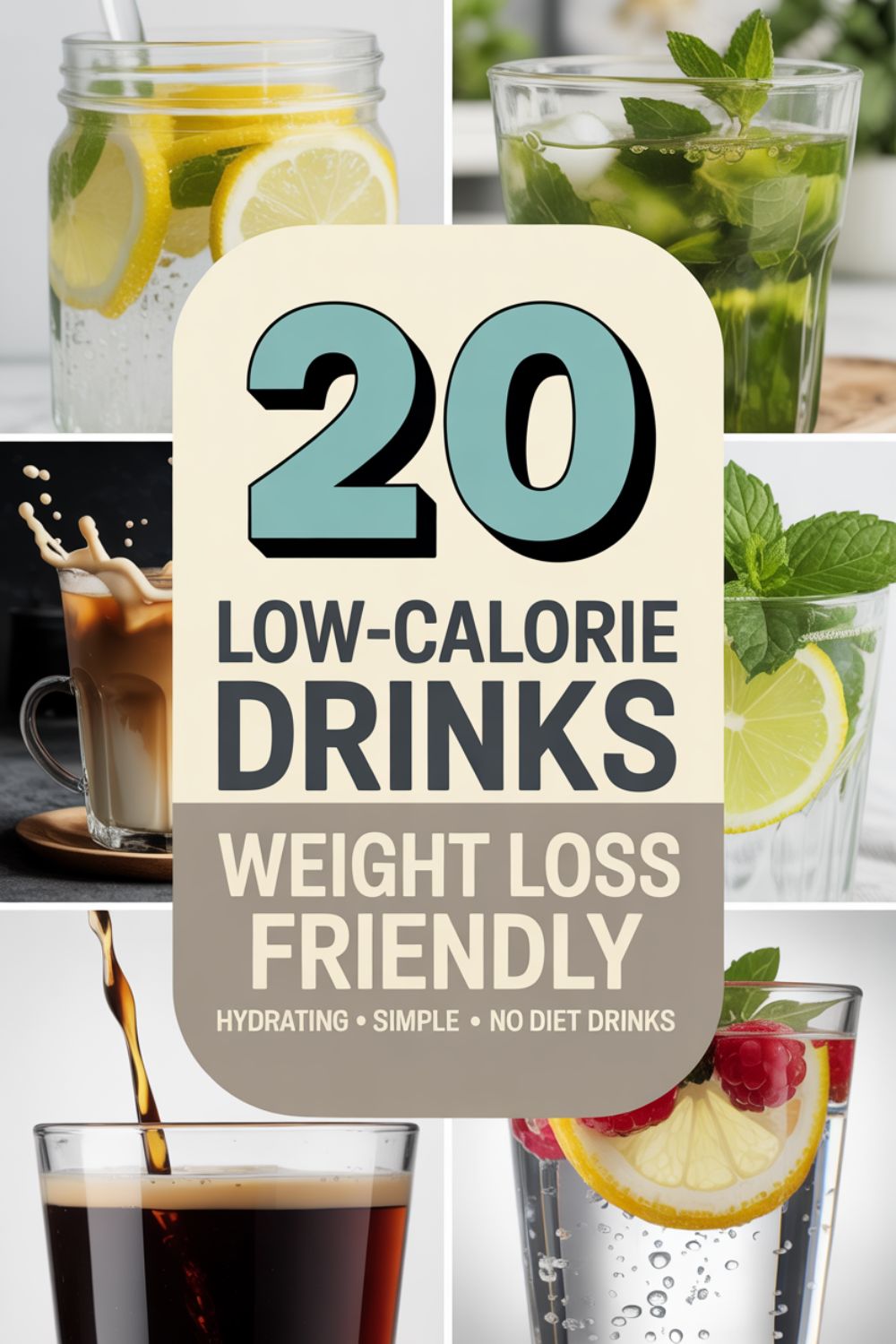
20 Low-Calorie Drinks That Support Weight Loss
Let’s be real—your drink choices might be sabotaging your weight loss goals more than you think. I learned this the hard way after wondering why the scale wasn’t budging despite my “healthy” eating.
Here’s the thing: most people obsess over what’s on their plate but completely ignore what’s in their glass. That afternoon latte? Easily 300 calories. Your go-to smoothie? Could be packing more sugar than a candy bar. Even that innocent-looking fruit juice is basically liquid sugar masquerading as health food.
I’ve spent the last few years experimenting with drinks that actually support weight loss instead of derailing it. What I found surprised me—and probably will surprise you too. Some of the best options aren’t the trendy wellness drinks plastered all over Instagram. They’re simpler, cheaper, and way more effective.
Throughout this guide, I’ll walk you through 20 drinks that have genuinely helped me (and countless others) lose weight without feeling deprived. No BS, no miracle claims—just practical options that work when you’re trying to drop pounds without losing your mind.
Why Your Drink Choices Matter More Than You Think
Before we jump into the list, you need to understand why beverages are such sneaky calorie bombs. Unlike solid food, liquid calories don’t trigger the same fullness signals in your brain. You can drink 500 calories and still feel hungry an hour later.
Research shows that some zero-calorie drinks may not be the magic bullet we thought they were. The science around artificial sweeteners and weight loss is honestly complicated. But here’s what we do know: replacing high-calorie beverages with genuinely low-calorie options makes a measurable difference.
Think about it this way—if you swap a 300-calorie frappuccino for a 5-calorie option every day, that’s 2,100 calories saved per week. Over a month, you’re looking at nearly 9,000 calories, which translates to roughly 2.5 pounds of potential weight loss. And that’s just from changing one drink.
The Top 20 Low-Calorie Drinks for Weight Loss
1. Green Tea (Hot or Iced)
Let’s start with the OG weight loss drink. Green tea isn’t just trendy—it’s actually backed by science. The combination of caffeine and catechins (especially EGCG) can help boost your metabolism and increase fat burning.
According to Cleveland Clinic, women who consumed four or more cups daily showed notably less abdominal fat. At zero calories per cup, it’s basically free real estate for your calorie budget. I keep a quality loose-leaf green tea in my pantry at all times—the flavor is miles better than those dusty tea bags.
2. Black Coffee
Controversial opinion: if you need three pumps of syrup and whipped cream to enjoy your coffee, you don’t actually like coffee. Black coffee has roughly 2 calories per cup and can genuinely boost your metabolism.
The caffeine increases your metabolic rate temporarily, which means you burn slightly more calories even at rest. Plus, it suppresses appetite for a lot of people. Just don’t go overboard—too much caffeine makes you jittery and can mess with your sleep, which ironically sabotages weight loss.
Speaking of metabolism-boosting beverages, check out these high-protein meal options that pair perfectly with your morning coffee routine.
3. Sparkling Water
This one saved my sanity when I quit soda. The carbonation gives you that fizzy satisfaction without any calories, sugar, or artificial sweeteners. I use a home carbonation system to make my own—way cheaper than buying cases of LaCroix.
Some people worry about carbonation affecting weight loss, but the research is mixed at best. What isn’t debatable is that it’s infinitely better than regular soda. Add a squeeze of fresh citrus, some cucumber slices, or a few mint leaves for natural flavor.
4. Water (Obviously, But Let Me Explain)
Yeah, yeah, everyone tells you to drink water. But here’s what they don’t tell you: drinking water before meals can actually help you eat less. Studies show that people who drank two glasses before eating consumed fewer calories during the meal.
Plain water is also essential for fat metabolism. When you’re dehydrated, your body holds onto water weight and your metabolism slows down. Aim for half your body weight in ounces daily. I know it sounds like a lot, but keep a motivational water bottle with time markers on your desk and it becomes automatic.
5. Herbal Tea (Any Flavor)
Herbal teas are criminally underrated. Peppermint tea can help with digestion and reduce bloating. Ginger tea helps with nausea and may boost metabolism slightly. Chamomile is perfect for evening sipping when you might otherwise raid the fridge.
At zero calories and infinite variety, herbal teas give you something flavorful to sip on without derailing your calorie goals. I rotate between about five different flavors to keep things interesting. A good tea sampler set is worth the investment if you’re new to this.
6. Lemon Water
Is lemon water magic? No. Does it help with weight loss? Kind of, indirectly. The vitamin C may support fat oxidation during exercise, and the tartness makes water more appealing so you drink more of it.
At about 11 calories per whole lemon, you’re still well within low-calorie territory. Plus, it feels fancy, which matters when you’re trying to make healthier choices feel less like deprivation. I prep lemon ice cubes in advance using silicone ice cube trays—just pop one in your water and you’re set.
7. Skim Milk
Hear me out on this one. Yes, skim milk has about 80-90 calories per cup, but it provides protein and calcium that can actually support weight loss. The protein helps keep you full, and some research suggests calcium from dairy may help with fat metabolism.
It’s not a drink I’d recommend chugging all day, but a cup with breakfast or in your coffee isn’t going to wreck your calorie budget. Just avoid the chocolate or strawberry varieties—those are basically dessert in disguise.
Meal Prep Essentials Used in This Plan
Making these drinks a habit is way easier with the right tools. Here’s what actually makes a difference:
Physical Products:
- Insulated Water Bottle with Time Markers – Keeps drinks cold for 24 hours and reminds you to stay on track
- Electric Kettle with Temperature Control – Perfect brewing temps for different teas without guesswork
- Glass Meal Prep Containers – Prep fruit-infused water batches for the whole week
Digital Products:
- Hydration Tracker App Premium – Seriously helps you stay accountable with reminders
- Low-Calorie Recipe Database – Over 500 drink recipes with calorie counts
- Macro Calculator & Meal Planner – Figure out exactly how drinks fit into your daily goals
Want more personalized support? Join our WhatsApp Community for Weight Loss Warriors where we share daily drink ideas and motivation.
8. Unsweetened Almond Milk
This is my secret weapon for making protein shakes and smoothies without wrecking the calorie count. Unsweetened almond milk has only 30-40 calories per cup compared to regular milk’s 150.
The calcium-fortified versions give you bone-supporting nutrients without the calorie load. Fair warning though—check labels carefully because “original” almond milk usually means sweetened, which defeats the purpose entirely.
9. Vegetable Juice (The Right Kind)
Before you grab that V8, hold up. Most vegetable juices are loaded with sodium. What you want is fresh-pressed or low-sodium versions that actually contain vegetables, not just tomato concentrate and salt.
A cup of proper vegetable juice runs about 50 calories and provides nutrients that can help curb cravings. I use a slow juicer to make my own blends—usually celery, cucumber, spinach, and a tiny bit of green apple for sweetness.
For more veggie-forward meal ideas, these vegetarian meal plans show you how to build filling, low-calorie meals around produce.
10. Iced Coffee (Unsweetened)
Cold brew is having a moment, and for good reason. It’s less acidic than hot-brewed coffee, which means it’s easier on your stomach and actually tastes smooth enough to drink without sugar.
At 5 calories per cup for straight black iced coffee, you can sip this all day without guilt. Add a splash of unsweetened almond milk if you need a creamier texture. I make big batches in a cold brew maker every Sunday—it lasts all week and costs pennies compared to coffee shop prices.
11. Kombucha (Plain Varieties)
Kombucha walks a fine line. The plain varieties have about 30-50 calories per cup and contain probiotics that may support gut health. Some research suggests gut bacteria plays a role in weight regulation, though the science is still evolving.
Here’s the catch: flavored kombuchas can pack serious sugar. Stick to plain or ginger varieties and check labels religiously. Anything over 5 grams of sugar per serving is basically just probiotic soda.
12. Coconut Water (Unsweetened)
Coconut water gets a health halo it doesn’t entirely deserve. Yes, it’s better than Gatorade for hydration. No, it’s not a miracle drink. At about 45 calories per cup, it’s reasonable but not zero-calorie.
I only drink this post-workout when I actually need the electrolyte replenishment. Using it as your daily hydration source is overkill and adds unnecessary calories. Save it for after intense exercise and stick to regular water the rest of the time.
13. Matcha Green Tea
Matcha is basically green tea on steroids—you’re consuming the whole leaf instead of just steeping it. One cup has about 5 calories and significantly more antioxidants than regular green tea.
The L-theanine in matcha provides calm energy without the jitters you get from coffee. I mix ceremonial grade matcha powder with hot water and a tiny bit of unsweetened almond milk. It’s become my mid-afternoon ritual instead of reaching for snacks.
Looking for more structured meal ideas? This 7-day meal plan pairs perfectly with these low-calorie beverages.
14. Black Tea
Black tea contains polyphenols that may help with weight management. At 2 calories per cup and with a robust flavor, it’s satisfying without being fussy.
The modest caffeine content (less than coffee but more than green tea) gives you energy without overwhelming your system. Add a slice of lemon if you want, but skip the honey and sugar—they undo all the low-calorie benefits.
15. Bone Broth
This might seem weird on a drink list, but hear me out. Bone broth has about 40-50 calories per cup and is packed with protein that keeps you full.
Sipping warm bone broth in the evening helps curb nighttime snacking urges. The collagen may support gut health (though claims about this are often overblown). I keep shelf-stable bone broth cartons in my pantry for easy evening sipping.
16. Protein Shakes (Made Smart)
Protein shakes can be 600-calorie desserts or 150-calorie meal replacements—it all depends on what you put in them. Stick to unsweetened protein powder, unsweetened almond milk, ice, and maybe a handful of spinach or frozen berries.
A well-made protein shake runs 120-180 calories and genuinely keeps you full for hours. According to WebMD, consuming adequate protein may help reduce overall calorie intake throughout the day by increasing satiety.
I use an unflavored whey protein isolate because it’s pure protein without the artificial sweeteners and fillers. Blend it up in a quality blender bottle and you’ve got breakfast or a snack sorted.
If you’re serious about protein intake, check out these high-protein meal ideas to complement your shake routine.
17. Infused Water Varieties
This is where you get to be creative. Cucumber-mint, strawberry-basil, orange-ginger—the combinations are endless and all clock in at under 20 calories per pitcher.
Let the ingredients steep for at least 2 hours (overnight is better). The natural flavors make plain water actually enjoyable without adding sugar or artificial sweeteners. I rotate through different combos using a fruit infusion pitcher that keeps the ingredients contained.
18. Oolong Tea
Oolong sits somewhere between green and black tea in terms of oxidation and flavor. At zero calories, it provides antioxidants and may boost metabolism slightly.
The flavor is more complex than green tea but less robust than black tea—kind of a sweet spot if you’re bored with the usual options. I drink this hot in the morning or iced in the afternoon.
19. Apple Cider Vinegar Drinks
Before you wrinkle your nose, let me clarify—I mean diluted ACV in water, not straight shots of vinegar. Mix 1-2 tablespoons in a large glass of water with a squeeze of lemon.
The whole “ACV melts belly fat” thing is mostly hype, but it may help with blood sugar regulation after meals. At about 3 calories per tablespoon, it’s negligible. Just don’t drink it straight or sip it throughout the day—the acidity can damage tooth enamel.
20. Club Soda with Fresh Citrus
This is my go-to when I’m at social events and don’t want alcohol but also don’t want to explain my life choices. Club soda has zero calories, and adding fresh lime or lemon gives it a sophisticated edge.
It feels special enough that you don’t feel deprived but doesn’t sabotage your weight loss goals. Keep a citrus juicer handy so you can add fresh juice easily—those little bottles of juice concentrate are usually loaded with sugar.
Tools & Resources That Make Healthy Drinking Easier
Honestly, having the right setup makes or breaks consistency. Here’s what I actually use daily:
Physical Products:
- Portable Blender for Smoothies – Blend protein shakes anywhere, even at the office
- Tea Storage and Organization System – Keep your tea collection fresh and accessible
- Reusable Straws Set – Makes healthy drinks feel more indulgent
Digital Resources:
- Complete Beverage Calorie Guide eBook – Know exactly what’s in every drink
- 30-Day Hydration Challenge – Build the water-drinking habit with daily support
- Smart Kitchen Scale App Bundle – Track drink portions accurately
Join our WhatsApp Community for daily drink recipes, motivation, and real talk from people actually losing weight.
What to Avoid: Drinks That Sabotage Weight Loss
Let’s talk about the drinks you should ditch. Regular soda is the obvious culprit—150 calories of pure sugar with zero nutritional value. But fruit juice is just as bad. That innocent-looking glass of OJ has as much sugar as Coke.
Fancy coffee drinks are another trap. A venti caramel macchiato can pack 300+ calories. Those smoothies from juice bars? Often 400-600 calories masquerading as health food. Even energy drinks marketed as “healthy” usually contain 100+ calories from sugar.
Sports drinks are unnecessary unless you’re exercising intensely for over an hour. For regular workouts, water is perfectly fine. And don’t even get me started on “detox” juices—they’re expensive sugar bombs with zero scientific backing.
For practical alternatives to high-calorie beverages, these low-calorie snack options show you how to make smart food choices that complement your drink strategy.
Making Low-Calorie Drinks a Habit
Knowledge is useless without action. The hardest part isn’t knowing what to drink—it’s actually doing it consistently. Start by replacing just one high-calorie drink daily. Don’t try to overhaul everything at once.
Prep your drinks the night before so they’re grab-and-go in the morning. Keep healthy options visible—I keep a pitcher of infused water in the fridge at eye level. Out of sight, out of mind works against you here.
Track your beverages for at least a week. Most people are shocked when they realize they’re drinking 500+ calories daily without even noticing. Use an app or just jot it down in your phone. The awareness alone changes behavior.
Pair your new drink habits with structured eating. This 14-day meal plan takes the guesswork out of what to eat while you’re figuring out what to drink.
The Truth About Artificial Sweeteners
This is where things get controversial. Diet sodas and artificially sweetened drinks have zero calories, which technically makes them “low-calorie.” But the research on whether they actually help with weight loss is all over the place.
Some studies suggest artificial sweeteners may mess with your gut bacteria or increase sugar cravings. Other research shows they’re a perfectly fine tool for reducing calorie intake. Honestly? The science isn’t settled, and it probably depends on the individual.
IMO, if diet soda helps you avoid regular soda, it’s a net win. But if you’re downing six Diet Cokes daily, you might want to explore other options. Moderation, as unsexy as that sounds, is probably the answer.
Speaking of moderation, if you’re comparing different calorie approaches, this article on 1200 vs 1500 calorie plans might help you figure out your sweet spot.
Timing Your Drinks for Maximum Impact
When you drink matters almost as much as what you drink. Start your day with 16 ounces of water before coffee—it jumpstarts your metabolism and rehydrates you after sleeping.
Drink a full glass of water 20-30 minutes before meals. This genuinely helps you eat less without feeling deprived. Green tea or coffee works best mid-morning when your energy naturally dips.
Avoid drinking calories in the evening. Your metabolism slows at night, and liquid calories are more likely to be stored as fat. Stick to herbal tea or water after dinner.
For complete meal timing strategies, check out these dinner ideas that complement your beverage routine.
Budget-Friendly Tips for Low-Calorie Drinks
You don’t need expensive equipment or specialty ingredients. Generic tea bags work just as well as fancy brands. Regular coffee is cheaper and just as effective as designer cold brew.
Make your own infused water instead of buying flavored water. Buy a reusable water bottle instead of single-use bottles—you’ll save hundreds annually. Skip the juice bar and blend smoothies at home for a fraction of the cost.
Stock up on tea when it’s on sale. Buy protein powder in bulk online—it’s usually 30-40% cheaper than retail stores. These small switches add up to serious savings.
If you’re watching your budget overall, this 30-day meal plan shows you how to eat well without breaking the bank.
Frequently Asked Questions
Can I drink diet soda on a weight loss plan?
Technically yes, but it’s complicated. Diet soda has zero calories, which makes it better than regular soda from a pure calorie perspective. However, some research suggests artificial sweeteners might increase cravings or affect gut bacteria. If it helps you avoid high-calorie beverages, it’s probably fine in moderation. Just don’t make it your primary hydration source.
How much water should I actually drink for weight loss?
Aim for half your body weight in ounces daily as a baseline. So if you weigh 150 pounds, shoot for 75 ounces. Increase this if you exercise heavily or live in a hot climate. Proper hydration supports fat metabolism and helps reduce water retention, which can make a noticeable difference on the scale.
Are protein shakes worth it, or should I just eat more protein?
Both have their place. Protein shakes are convenient for people who struggle to hit protein targets through food alone or need a quick meal replacement. Whole food is generally better when possible, but a well-made protein shake (150-200 calories) is infinitely better than skipping breakfast or grabbing a pastry. Use them strategically, not as a crutch.
Will green tea really speed up my metabolism enough to lose weight?
The metabolic boost from green tea is real but modest—we’re talking maybe 3-4% increase. You won’t lose weight from tea alone, but combined with diet and exercise, it can contribute to better results. The bigger benefit is that it’s a zero-calorie beverage that helps you stay hydrated and provides antioxidants. Don’t expect miracles, but it’s definitely worth incorporating.
Can I drink alcohol and still lose weight?
Yes, but it’s challenging. Alcohol has 7 calories per gram (nearly as much as fat), and your body prioritizes metabolizing alcohol before fat. This temporarily halts fat burning. If you drink, choose lower-calorie options like dry wine or spirits with soda water, limit frequency, and account for those calories in your daily budget. Weekend binge drinking will absolutely sabotage your progress.
Final Thoughts on Low-Calorie Drinks
Here’s what nobody tells you about weight loss: the small stuff matters more than the big dramatic changes. Switching from juice to water, from lattes to black coffee, from soda to sparkling water—these aren’t sexy transformations. But they add up to hundreds of calories saved daily.
You don’t need to drink weird detox concoctions or expensive supplements. The drinks that work are usually the simplest ones: water, tea, black coffee, and the occasional protein shake. Everything else is just noise.
Start with one swap. Just one. Replace your morning OJ with green tea. Ditch the afternoon soda for sparkling water. Skip the evening wine for herbal tea. Do that consistently for two weeks and notice how you feel.
Weight loss isn’t about perfection—it’s about making better choices more often than not. Your drink habits are one of the easiest places to start because the changes require minimal effort once they become routine. No complicated recipes, no special ingredients, just conscious choices about what goes in your glass.
The drinks that support weight loss aren’t magic. They’re just beverages that don’t work against you. And honestly, that’s all you need.