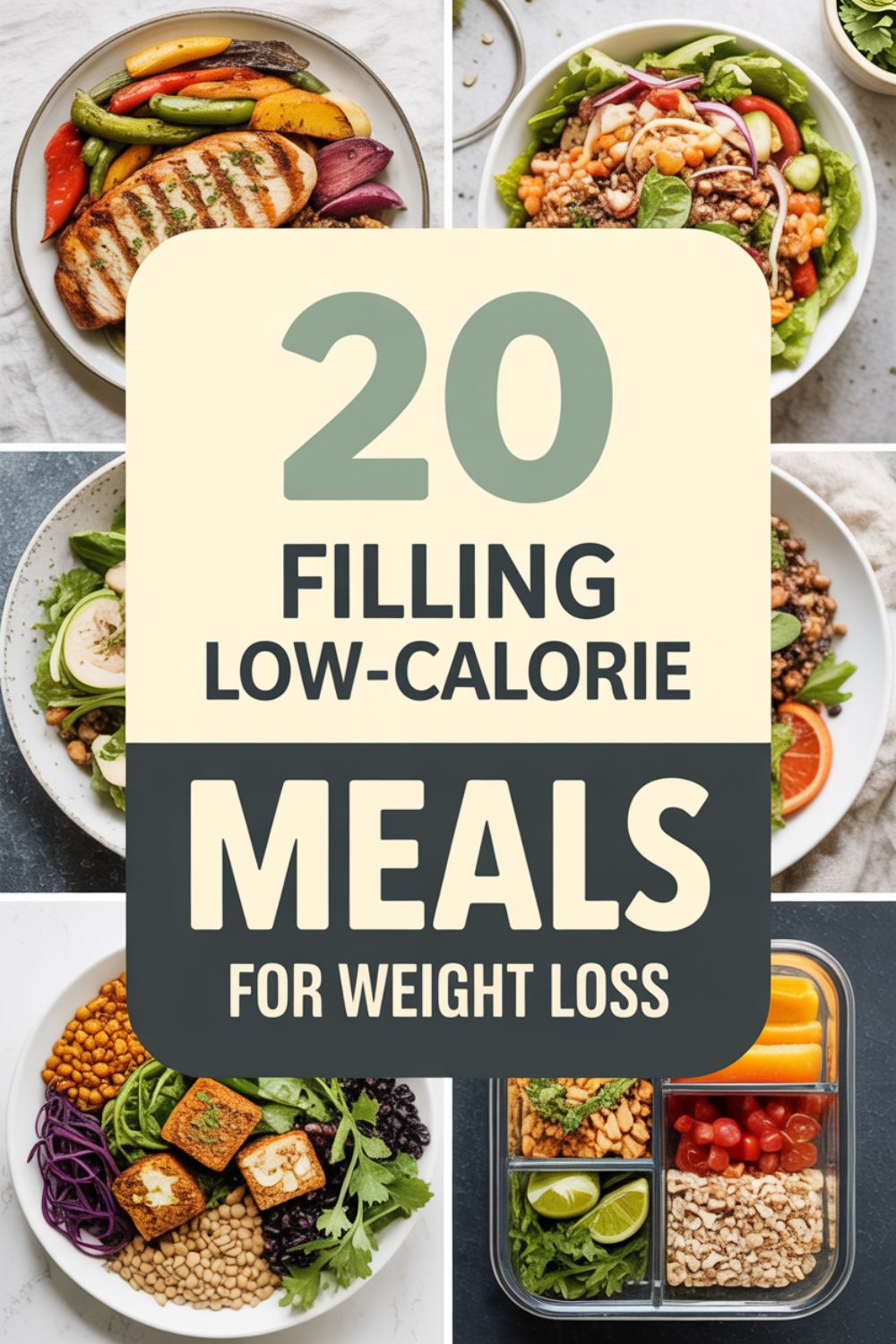
20 Filling Low-Calorie Meals for Weight Loss
Let’s talk about the elephant in the room: low-calorie meals that actually keep you full. Yeah, I said it. Because honestly, how many times have you tried eating “diet food” only to find yourself raiding the pantry two hours later? I’ve been there, staring into the fridge at midnight wondering why that sad salad didn’t cut it.
Here’s the thing—weight loss doesn’t have to mean you’re perpetually hungry. The secret sauce? Finding meals that hit that sweet spot between being genuinely satisfying and not blowing your calorie budget. And no, you don’t need to survive on celery sticks and suffering.
These 20 meals I’m about to share aren’t your typical boring diet fare. They’re meals I actually want to eat, the kind that make you forget you’re even trying to lose weight. Research shows that creating an energy deficit is the primary driver for weight loss, but the trick is doing it without feeling deprived.
Why Most Low-Calorie Diets Leave You Starving
Ever wonder why you can demolish a 400-calorie muffin and feel hungry an hour later, but a 350-calorie meal with chicken and veggies keeps you satisfied for hours? It’s not magic—it’s science.
The problem with most low-calorie approaches is they focus solely on the numbers without considering what actually makes you feel full. Protein and fiber are your best friends when it comes to satiety. Studies on filling foods consistently show that whole foods rich in these nutrients dramatically impact how satisfied you feel after eating.
Think about it: a bowl of sugary cereal versus scrambled eggs with veggies. Same calories, completely different experience. The eggs will keep you going because protein takes longer to digest and triggers fullness hormones in your body.
Pro Tip: When planning meals, aim for at least 20-30 grams of protein per meal. This isn’t just bro-science—your body actually sends stronger satiety signals when you hit this threshold.
The Formula for Actually Filling Low-Calorie Meals
Here’s my foolproof formula that works every single time: lean protein + fiber-rich carbs + volume vegetables + healthy fats. Boring? Maybe. Effective? Absolutely.
Let’s break it down. Your protein could be chicken breast, fish, tofu, or Greek yogurt—whatever floats your boat. The fiber-rich carbs might be quinoa, sweet potato, or legumes. Volume vegetables are your secret weapon here; we’re talking spinach, broccoli, cauliflower—things you can eat by the truckload without tanking your calorie budget.
And don’t skip the healthy fats. A little olive oil, some avocado, or a handful of nuts goes a long way in keeping you satisfied. Fat gets a bad rap, but your body needs it, and it helps you absorb certain vitamins anyway.
Looking for structured meal plans? Check out this 7-day 1200-calorie meal plan that takes the guesswork out of planning, or if you need a bit more flexibility, this 14-day 1500-calorie meal plan might be your jam.
20 Filling Low-Calorie Meals That Don’t Suck
1. Zucchini Noodles with Turkey Bolognese
Okay, I know what you’re thinking—”zoodles” sound like sad pasta pretenders. But hear me out. When you make them right (slightly al dente, not mushy), toss them with a hearty turkey bolognese, and maybe grate some Parmesan cheese on top, you’ve got yourself a legit meal that clocks in around 300 calories.
The key is getting a decent spiralizer so you’re not wrestling with your vegetables. I learned this the hard way after trying to hand-cut zucchini into noodle shapes. Not my finest moment.
2. Cauliflower Fried Rice with Shrimp
This is one of those meals that makes me forget I’m eating vegetables as my main carb source. The trick is getting your pan screaming hot and not overcrowding it—that’s how you get that slightly charred, restaurant-style flavor instead of steamed mush.
Use coconut aminos instead of soy sauce if you want to keep sodium in check, and throw in whatever veggies you’ve got hanging around. It’s basically a fridge clean-out meal that happens to be around 320 calories per massive serving.
3. Greek Yogurt Chicken Salad Lettuce Wraps
Swapping mayo for Greek yogurt in chicken salad is one of those stupid-simple switches that saves you calories without sacrificing taste. Add some grapes and walnuts for texture, wrap it in crispy lettuce leaves, and you’ve got a lunch that feels fancy but takes five minutes to throw together.
The non-fat Greek yogurt I use is so thick and creamy that nobody ever guesses it’s the “diet” version. Comes in around 280 calories for a seriously satisfying portion. Get Full Recipe.
“I started making these Greek yogurt chicken wraps for lunch and honestly forgot I was even trying to lose weight. Down 12 pounds in two months just from making smarter swaps like this.” — Jessica M., community member
4. Lentil and Vegetable Soup
Soup gets overlooked in the weight loss game, but it’s criminally underrated. Research from the CDC backs up what your grandma already knew—starting a meal with soup helps you eat less overall.
Lentils are basically little protein bombs disguised as carbs, and you can load this soup up with whatever vegetables you want. I use my Dutch oven to make huge batches and freeze individual portions. Around 250 calories per bowl, and you can practically eat two bowls if you’re really hungry.
5. Baked Cod with Roasted Brussels Sprouts
Fish is one of those proteins that’s naturally low in calories but high in satisfaction. Cod is mild enough that even fish-skeptics usually like it, and it pairs perfectly with crispy Brussels sprouts.
Here’s my secret: toss the sprouts with a tiny bit of balsamic vinegar before roasting. Game changer. The whole meal is about 340 calories and takes less time than ordering takeout.
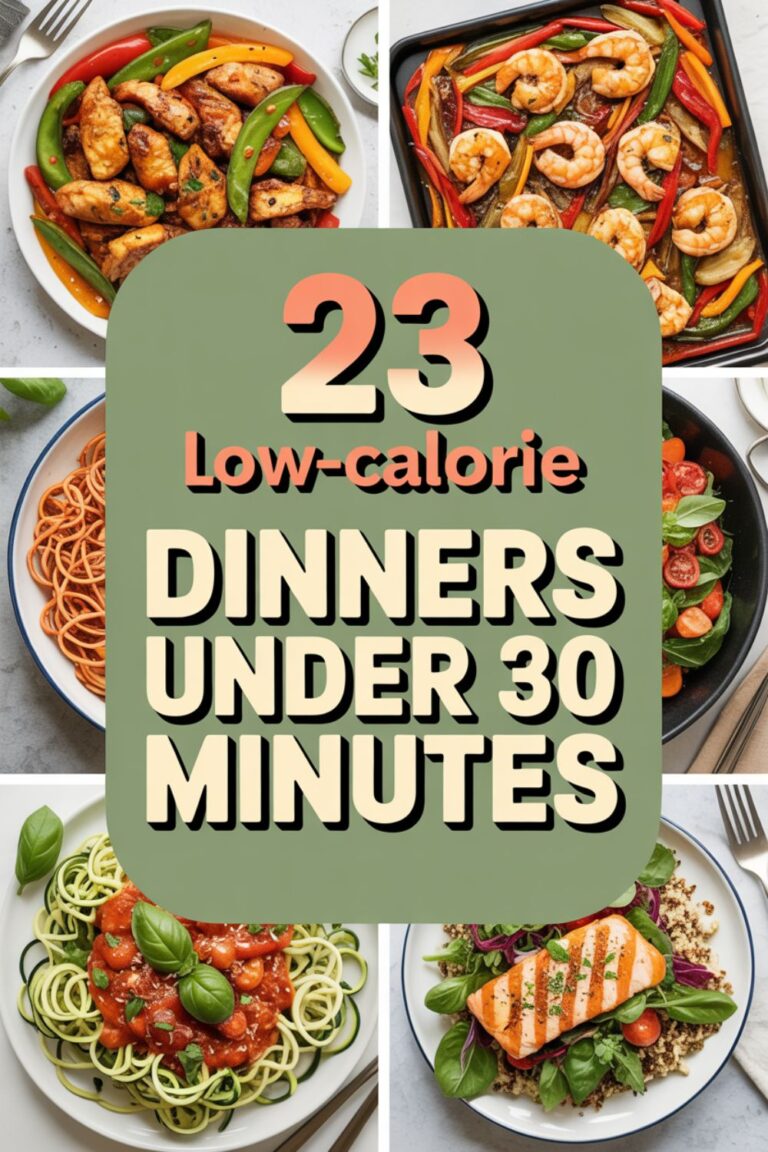
Speaking of quick weeknight dinners, these easy low-calorie dinner ideas have saved me on countless busy evenings.
6. Egg White Veggie Scramble with Whole Grain Toast
Breakfast for dinner is criminally underrated, IMO. A massive scramble with egg whites, peppers, onions, spinach, and mushrooms fills an entire plate for like 180 calories. Add a slice of whole grain toast and you’re still under 300.
I keep a non-stick skillet specifically for eggs because cleanup is already enough of a pain without scraping stuck-on egg off your pan. Trust me on this one.
7. Turkey and Quinoa Stuffed Peppers
Stuffed peppers are basically edible bowls, which automatically makes them more fun to eat. Mix ground turkey with cooked quinoa, diced tomatoes, and whatever seasonings you’re feeling, stuff it into halved bell peppers, and bake.
The peppers get all soft and sweet, the filling is hearty and satisfying, and you’re looking at roughly 320 calories per pepper. Plus they look impressive if you’re trying to convince someone that healthy eating isn’t boring. Get Full Recipe.
Quick Win: Make a double batch of stuffed peppers on Sunday. They reheat beautifully and you’ve just handled lunch or dinner for half the week.
8. Grilled Chicken with Cucumber Tomato Salad
Sometimes simple is best. A properly seasoned grilled chicken breast (and I mean properly—salt, pepper, garlic powder, paprika) alongside a fresh cucumber tomato salad with lemon vinaigrette is summer on a plate.
The salad adds so much volume for almost no calories that you can pile your plate high and still be around 310 calories total. And if you’re batch-cooking chicken, a meat thermometer is essential so you stop serving cardboard-dry chicken to yourself.
9. Eggplant Parmesan (Lightened Up)
Traditional eggplant parm is basically fried cheese heaven, which is delicious but not exactly diet-friendly. The lighter version uses baked eggplant slices instead of fried, goes easy on the cheese, and loads up on marinara sauce.
I brush the eggplant slices with a tiny amount of olive oil using a pastry brush before baking—gives you that golden color without deep-frying. Comes in around 290 calories per serving and scratches that Italian food itch.
10. Tuna Poke Bowl with Cauliflower Rice
If you’ve never tried cauliflower rice, this is your introduction. The poke bowl situation disguises it so well with all the other flavors going on that you barely notice you’re not eating regular rice.
Fresh tuna (or even canned works in a pinch), edamame, cucumber, avocado, a drizzle of sriracha mayo, and you’ve got a restaurant-quality meal at home for about 350 calories. Way cheaper than actual poke restaurants too.
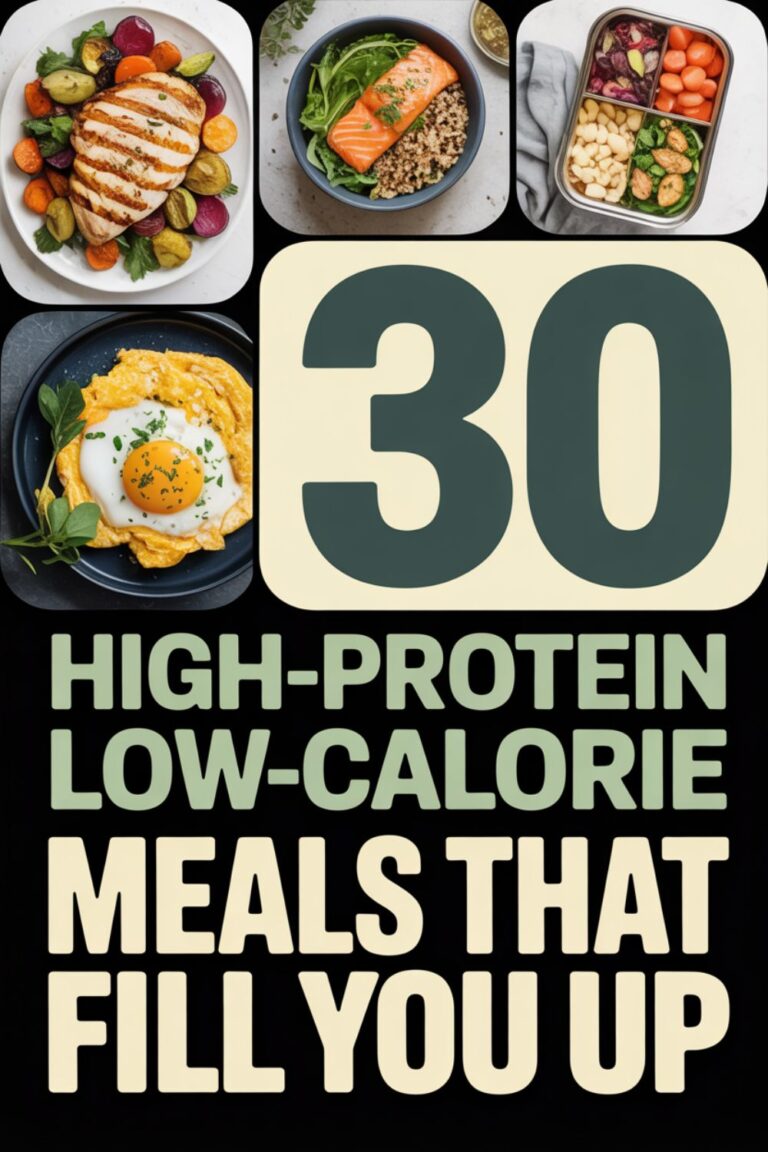
For more protein-packed options that keep you satisfied, these high-protein low-calorie meals are absolute lifesavers.
11. Veggie-Loaded Turkey Chili
Chili is one of those set-it-and-forget-it meals that gets better as it sits. I make mine with lean ground turkey, tons of beans (protein + fiber jackpot), and enough vegetables that it’s basically a vegetable stew pretending to be chili.
One bowl is around 300 calories, and you can eat it with a dollop of Greek yogurt instead of sour cream to keep things light. My slow cooker does all the heavy lifting here—dump everything in and walk away.
12. Balsamic Glazed Chicken with Green Beans
Balsamic glaze makes everything taste fancy with minimal effort. Reduce some balsamic vinegar with a touch of honey until it’s syrupy, brush it on chicken while it cooks, and serve with a mountain of green beans sautéed with garlic.
The whole plate is about 330 calories and tastes like you spent way more time on it than you actually did. Sometimes faking it till you make it applies to cooking too.
13. Spicy Black Bean Tacos with Cabbage Slaw
Meatless Monday never tasted so good. Black beans are ridiculously filling, stupid cheap, and actually taste good when you season them properly. Load up corn tortillas with seasoned black beans and a crunchy cabbage slaw dressed with lime juice.
Two tacos come in around 320 calories, and the crunch from the slaw is oddly satisfying. I use my taco holder when I’m feeling fancy—yes, it’s a silly kitchen gadget, but it prevents taco disaster all over my counter. Get Full Recipe.
14. Butternut Squash Soup with White Beans
Creamy soup without cream? Yeah, that’s butternut squash for you. Roast the squash, blend it with some broth and seasonings, throw in white beans for protein, and you’ve got a soup that feels indulgent but clocks in around 260 calories per bowl.
An immersion blender makes this so much easier than transferring hot soup to a regular blender. Less cleanup, fewer opportunities to burn yourself—it’s a win-win.
“The butternut squash soup has been on repeat at my house. My kids don’t even realize they’re eating vegetables, and I’ve lost 8 pounds without feeling like I’m dieting.” — Maria S., reader
15. Teriyaki Salmon with Broccoli
Salmon is fattier than other fish, sure, but those omega-3s are the good kind of fat your body actually needs. A teriyaki glaze (homemade or store-bought, I won’t judge) makes even frozen salmon taste restaurant-quality.
Pair it with roasted broccoli and you’ve got a meal that’s around 380 calories but feels substantial enough for dinner. My silicone baking mat is clutch here—nothing sticks, cleanup takes two seconds.
If you’re specifically focusing on dinners, these low-calorie dinners under 350 calories should give you plenty more options to rotate through.
16. Chicken Fajita Bowl
All the fajita flavors without the tortilla means you can load up on the good stuff. Grilled chicken, sautéed peppers and onions, cauliflower rice, black beans, salsa, and a sprinkle of cheese creates a bowl situation that’s about 340 calories.
The key is getting those peppers and onions properly caramelized in a hot pan. Don’t be timid with the heat—you want some char action happening. FYI, this is one of those meals that never gets old because you can switch up the toppings endlessly.
17. Lemon Herb Tilapia with Asparagus
Tilapia is the budget-friendly fish that cooks in like ten minutes flat. Squeeze some lemon, sprinkle herbs, bake it alongside asparagus spears, and dinner is served before your food delivery app even finishes loading.
Around 300 calories for a generous portion, and asparagus is one of those vegetables that actually tastes good with minimal effort. Just don’t overcook it into mush—we’re not making baby food here.
18. Moroccan Chickpea Stew
This stew is what I make when I want something that tastes complex but doesn’t require me to stand over the stove for hours. Chickpeas, tomatoes, warming spices like cumin and cinnamon, vegetables—it’s basically hug-in-a-bowl territory.
One serving is about 280 calories, it’s vegan-friendly if that’s your thing, and the leftovers somehow taste even better the next day. I serve mine over a small portion of couscous when I want it to feel more substantial.
19. Greek-Style Turkey Burgers with Tzatziki
Burgers don’t have to be off-limits. Ground turkey mixed with feta, spinach, and Mediterranean seasonings, grilled up and topped with homemade tzatziki (Greek yogurt, cucumber, garlic—stupid easy) gives you all the burger satisfaction for about 330 calories.
Skip the bun or use lettuce wraps if you want to save calories, or go ahead and use a whole wheat bun if that’s what keeps you sane. Either way works. Get Full Recipe.
20. Shrimp Stir-Fry with Snow Peas
Shrimp is basically cheating in the protein game—high protein, low calories, cooks in minutes. Toss them in a hot wok with snow peas, bell peppers, and a simple sauce (soy sauce, ginger, garlic), and you’ve got yourself a meal in under 15 minutes.
Around 290 calories per serving, and the whole thing feels way more special than the effort required. Sometimes lazy cooking produces the best results, honestly.
Pro Tip: Meal prep these proteins on Sunday—grilled chicken, cooked ground turkey, baked salmon. Having pre-cooked protein ready to go makes throwing together these meals infinitely easier during the week.
Want weekly meal ideas, weight loss tips, and exclusive recipes delivered straight to your phone?
Join our WhatsApp Community where we share daily inspiration, answer your questions, and support each other on this journey. It’s free, it’s fun, and it’s filled with people just like you who are making healthy eating work in real life.
The Volume Eating Secret Nobody Talks About
Want to know the real cheat code? Volume eating. This means loading up on foods that take up a lot of space in your stomach but don’t pack tons of calories. We’re talking vegetables, basically.
I can eat an entire head of roasted cauliflower for fewer calories than a handful of chips. The cauliflower fills me up, the chips leave me wanting more. It’s not rocket science, but it took me way too long to figure out.
The best volume foods are things like leafy greens, broccoli, cauliflower, zucchini, bell peppers, and berries. You can literally eat massive quantities without wrecking your calorie budget. Studies on low-calorie, filling foods consistently show that high-volume, low-energy-dense foods help with weight management.
🍽️ Game-Changer Alert: Digital Food Scale
Honestly, I resisted getting a food scale for way too long because I thought it would make me obsessive. Turns out, it’s the opposite—it takes the guesswork out of portions so you can stop second-guessing yourself.
Why you need this: You’d be shocked how off your eyeball measurements are. That “palm-sized” chicken breast? Probably 8 ounces, not 4. This little tool helped me realize I was accidentally eating way more (or sometimes way less) than I thought.
Check Current Price
For lighter options throughout the day, check out these low-calorie lunch ideas or these low-calorie breakfast options to round out your meal planning.
Protein: Your Secret Weapon Against Hunger
I’m going to sound like a broken record here, but protein is non-negotiable if you actually want to feel full on fewer calories. Research on protein-induced satiety shows it’s the most satiating macronutrient, hands down.
Your body processes protein differently than carbs or fats. It takes longer to digest, which means you stay fuller longer. Plus, eating protein triggers the release of hormones that tell your brain “hey, we’re good here, no need to raid the pantry.”
Aim for at least 20-30 grams of protein per meal. That might look like a palm-sized portion of chicken, a cup of Greek yogurt, or a hearty serving of lentils. It’s not about eating chicken breast at every meal—mix it up with fish, eggs, beans, tofu, whatever works for you.
Fiber: The Other Half of the Equation
If protein is Batman, fiber is Robin. You need both. Fiber adds bulk to your meals without adding many calories, plus it slows down digestion so you’re not hungry again an hour later.
The cool thing about fiber is that it feeds your gut bacteria, which apparently matters more than we realized for weight management. Who knew those little guys down there were so important?
Good fiber sources include vegetables (obviously), fruits, beans, lentils, whole grains, and nuts. Most people don’t eat nearly enough fiber—we’re supposed to get like 25-35 grams a day, but most folks barely hit 15.
🥗 Must-Have: Glass Meal Prep Containers (Set of 10)
Look, I tried the cheap plastic containers and they stained, warped, and made everything taste weird. These glass ones are a total game-changer for actually sticking to meal prep.
What makes them worth it: They’re microwave-safe, dishwasher-safe, and the lids actually seal properly so you’re not cleaning mystery sauce off your fridge shelves. Plus seeing your prepped meals through the clear glass somehow makes you more likely to actually eat them instead of ordering takeout.
Get the Set Here
If you’re looking for more variety, these meals under 300 calories offer even more filling options to keep your menu interesting.
Meal Prep: The Game-Changer You’re Probably Avoiding
Look, I get it. Meal prep sounds about as exciting as watching paint dry. But here’s the reality check: the nights you’re tired and hungry are the nights you’ll order pizza because cooking feels impossible.
I’m not saying you need to prep every single meal for the entire week. Start small. Maybe just prep your proteins on Sunday. Grill some chicken, bake some fish, cook a batch of hard-boiled eggs. Having those ready to go makes throwing together these low-calorie meals infinitely easier.
Or prep your vegetables. Chop everything you’ll need for the week and store it in containers. Future-you will be so grateful when you can just grab pre-chopped veggies instead of pulling out the cutting board after a long day.
📱 Digital Download: 30-Day Low-Calorie Meal Plan Bundle
Stop winging it and wondering if you’re doing this right. This complete meal plan bundle gives you every single breakfast, lunch, dinner, and snack mapped out for 30 days.
What’s included: Full recipes with calorie counts, grocery lists organized by week, meal prep tips for each day, and printable trackers. It’s like having a nutritionist in your pocket, minus the $200/hour price tag.
Get Instant Access
For a complete roadmap, this 30-day low-calorie meal plan takes all the guesswork out of planning and gives you a full month of variety.
The Snacking Situation
Let’s be real about snacks for a second. Sometimes you need them, sometimes they sabotage everything. The trick is choosing snacks that actually tide you over instead of just teasing your appetite.
My go-to snacks are things like Greek yogurt with berries, vegetables with hummus, a hard-boiled egg, or a small handful of nuts. These all have protein and/or fiber to keep you satisfied until your next meal.
What doesn’t work? Pretzels, crackers, most “low-fat” snack foods—basically anything that’s just refined carbs without much protein or fiber. Those are guaranteed to leave you hungrier than before you ate them.
📊 Digital Tool: Macro Calculator & Food Tracker App
Tired of guessing if you’re hitting your targets? This app does the math for you and tracks everything in one place. No more scribbling in notebooks or trying to remember what you ate three hours ago.
Why it’s better than free apps: Custom macro calculations based on YOUR body and goals, recipe builder that calculates nutrition automatically, meal planning calendar, and progress photos tracker. Plus zero ads interrupting you every five seconds.
Try It Free for 7 Days
Speaking of smart snacking, these low-calorie snacks under 150 calories are all vetted options that won’t derail your progress.
Kitchen Tools That Actually Make a Difference
You don’t need a kitchen full of gadgets, but a few key tools make cooking these meals way less annoying. A decent chef’s knife that’s actually sharp saves so much time and frustration.
A couple of non-stick pans mean you can cook with way less oil without everything turning into a stuck-on nightmare. And honestly, a food scale is clutch if you’re serious about knowing your portions—eyeballing is how you accidentally turn a 300-calorie meal into a 500-calorie meal.
My meal prep containers are probably the most-used items in my kitchen. Having proper containers means you can actually store all this food you’re making without it going bad or making a mess in your fridge.
Hydration: The Thing Everyone Forgets
Okay, I’m going to say something that sounds totally cliché but is annoyingly true: sometimes when you think you’re hungry, you’re actually just thirsty. Your body is weirdly bad at distinguishing between the two signals.
I started keeping a water bottle on my desk and actually drinking from it throughout the day, and the random snack cravings decreased noticeably. Not eliminated, but definitely less frequent.
Plus, drinking water before meals can help you feel fuller faster. It’s not magic, but it’s free and has zero calories, so might as well use it to your advantage. Aim for that classic eight glasses a day, or more if you’re exercising.
Dealing with Cravings Without Losing Your Mind
Let’s talk about the elephant in the room: cravings. They happen. Pretending they don’t is how you end up eating an entire sleeve of cookies at 10 PM because you’ve been “so good” all week.
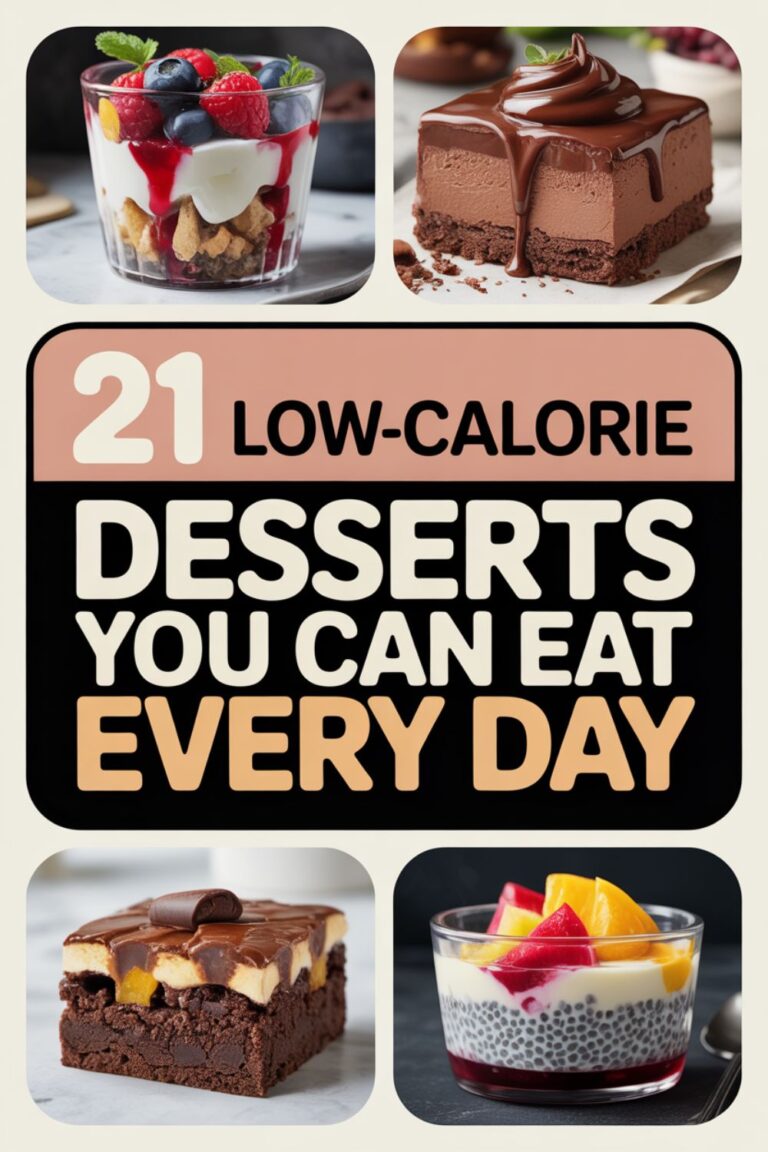
My approach? Don’t completely deprive yourself, but be strategic. If you’re craving something sweet, maybe have a square of dark chocolate or some berries with a drizzle of honey. If you’re craving something salty and crunchy, air-popped popcorn or roasted chickpeas might hit the spot.
Sometimes you just need the real thing though, and that’s okay. Have a small portion of what you actually want instead of eating around it and ending up consuming way more calories trying to satisfy the craving with “acceptable” substitutes.
For those times when you want comfort food that won’t completely derail you, these low-calorie comfort foods deliver the satisfaction without the regret.
Restaurant Eating: It’s Not Off Limits
You can still go out to eat while trying to lose weight. Shocking, I know. The key is making smarter choices without being that person who brings a food scale to the restaurant.
Look for grilled or baked proteins instead of fried. Ask for dressings and sauces on the side. Load up on vegetables. Skip the bread basket if it’s just going to tempt you into eating half a loaf before your meal arrives.
And honestly? Sometimes just eat half of what they serve you and take the rest home. Restaurant portions are usually massive anyway, and you get two meals for the price of one. Win-win.
The Slow Cooker Advantage
If you’re not using a slow cooker for these kinds of meals, you’re missing out. Throw ingredients in before work, come home to a house that smells amazing and a meal that’s ready to eat.
Soups, stews, chilis, shredded chicken for meal prep—all perfect slow cooker candidates. My slow cooker has probably saved me from ordering takeout more times than I can count.
The beauty of slow cooker meals is that they’re usually pretty forgiving. Exact measurements? Meh. Cooking time off by an hour? Still probably fine. It’s cooking for people who don’t really want to cook, which is me most weeknights.
⚡ Time-Saver: Programmable Slow Cooker (6-Quart)
This thing has saved me from takeout temptation more times than I can count. Throw ingredients in before work, set it, and come home to dinner that’s actually ready. No joke, it’s like having a personal chef who works for free.
Why it’s clutch: The programmable timer means you can set it for 4 or 8 hours and it automatically switches to “warm” mode so nothing overcooks. Perfect for soups, stews, shredded chicken, and basically any of those filling low-calorie meals that need zero babysitting. The 6-quart size is perfect for meal prep—enough for the week without being ridiculously huge.
See It On Amazon
If you’re into set-it-and-forget-it cooking, these low-calorie crockpot meals are designed exactly for that—dump everything in and walk away.
Comparing Calorie Targets: What Works for You?
Not everyone needs the same calorie target, obviously. Your height, weight, activity level, and goals all play into what makes sense for you. Some people do great on 1200 calories, others need more like 1500 or even 1800.
The important thing is finding what’s sustainable. A calorie target that leaves you constantly starving isn’t going to work long-term, no matter how fast the scale moves initially. You’ll just end up binging and feeling terrible about it.
Listen to your body. If you’re genuinely hungry all the time, you might need to bump up your calories slightly. Better to lose weight a bit slower while actually enjoying life than to white-knuckle through an overly aggressive deficit.
Still figuring out what works for you? This breakdown of 1200 vs 1500 calorie meal plans might help you decide which approach fits your lifestyle better.
Age-Related Considerations
If you’re over 40, weight loss gets a bit trickier thanks to metabolism changes and hormonal shifts. Not impossible, just requires a slightly different approach.
Prioritizing protein becomes even more important because you’re fighting against natural muscle loss that happens with age. Strength training helps too, though that’s beyond the scope of meal planning.
The meals I’ve listed here still work great regardless of age, but you might need to be more strategic about your portions and make sure you’re getting enough nutrients. Your body’s not as forgiving of nutritional shortcuts as it was in your twenties.
For age-specific guidance, this meal plan for women over 40 addresses those unique metabolic considerations.
Plant-Based Options That Actually Satisfy
Not everyone eats meat, and honestly, some of the most filling low-calorie meals are plant-based. Beans, lentils, and tofu are protein powerhouses that keep you full without the calories of meat.
The key with vegetarian meals is making sure you’re getting enough protein. It’s easy to accidentally make a meal that’s mostly carbs and then wonder why you’re hungry an hour later.
Combine different protein sources—like rice and beans, or hummus and whole grain pita—to get complete proteins. And don’t be shy with the vegetables. Load up that plate.
If you’re exploring plant-based eating, this vegetarian meal plan shows you how to hit your protein targets without meat.
Making It Work for Your Schedule
The best meal plan is the one you’ll actually stick to. If your schedule is packed and you barely have time to breathe, elaborate recipes with twenty ingredients aren’t going to happen.
Focus on meals with minimal prep time and ingredients you probably already have. Rotisserie chicken from the grocery store counts. Pre-cut vegetables are fine. Frozen vegetables are actually great—sometimes more nutritious than “fresh” ones that have been sitting around for weeks.
Give yourself permission to take shortcuts. The goal is consistency, not perfection. A simple meal you actually make beats a fancy meal that stays as good intentions.
🎓 Digital Course: Master Meal Prep in 5 Days
If meal prep intimidates you, this mini-course breaks it down so simply that even the most kitchen-phobic person can nail it. Five daily video lessons, each under 15 minutes, that teach you everything from grocery shopping strategies to storage hacks.
What you’ll learn: How to prep an entire week in 2 hours, which foods freeze well (and which don’t), container organization systems, batch cooking shortcuts, and how to keep food fresh all week. Includes downloadable checklists and templates.
Enroll Now
For those crazy-busy weeks, these low-calorie meals for busy schedules are designed with minimal prep time in mind.
Frequently Asked Questions
How many calories should I eat to lose weight?
It depends on your current weight, height, age, and activity level, but most women see results with 1200-1500 calories per day, while men typically need 1500-1800. The key is creating a deficit of 500-750 calories below your maintenance level for steady, sustainable weight loss of about 1-2 pounds per week. Going too low can backfire by slowing your metabolism and making you miserable.
Can I really stay full on low-calorie meals?
Absolutely, if you choose the right foods. Meals high in protein and fiber keep you satisfied for hours despite being lower in calories. Think grilled chicken with roasted vegetables versus a bagel—same calories, completely different satiety levels. The volume of food on your plate matters too, which is why loading up on low-calorie vegetables helps you feel full.
Do I need to meal prep to make this work?
Not necessarily, but it sure makes life easier. Even minimal prep—like cooking proteins in bulk or chopping vegetables ahead of time—saves you when you’re tired and hungry. If full meal prep feels overwhelming, start small. Prep just one component, like your proteins for the week, and build from there.
What if I’m still hungry after eating these meals?
First, make sure you’re drinking enough water—thirst often masquerades as hunger. If you’re genuinely hungry, you might need slightly more calories or more protein in your meals. It’s also worth checking that you’re eating slowly and mindfully, which helps your body register fullness. Don’t be afraid to adjust your calorie target upward if needed—sustainability matters more than speed.
Can I eat these meals if I have dietary restrictions?
Most of these meals are easily adaptable. Swap the proteins for plant-based options if you’re vegetarian, use gluten-free alternatives if needed, or modify seasonings for allergies. The core principle—high protein, high fiber, lots of vegetables—works regardless of dietary preferences. Just make sure whatever swaps you make keep the protein and fiber content similar.
Final Thoughts
Look, weight loss doesn’t have to be miserable. I know diet culture has convinced us that we need to suffer to see results, but that’s honestly garbage. You can eat food you actually enjoy, feel satisfied after meals, and still lose weight.
These 20 meals aren’t magic bullets—nothing is. But they’re practical, filling, and way more enjoyable than surviving on sad salads and rice cakes. The real secret is finding what works for your lifestyle and sticking with it long enough to see results.
Start with a few meals that sound good to you. Don’t try to overhaul your entire diet overnight. Make one or two of these for dinner this week and see how you feel. Build from there. Sustainable change happens gradually, not through dramatic Monday-morning declarations that fizzle out by Wednesday.
Your relationship with food doesn’t have to be complicated or stressful. Sometimes the best approach is just eating real food, mostly plants, not too much—and not overthinking it beyond that. These meals give you a solid foundation to work from without requiring you to become a nutrition scientist or give up everything you enjoy.
Now go make something delicious that actually fills you up. You’ve got this.