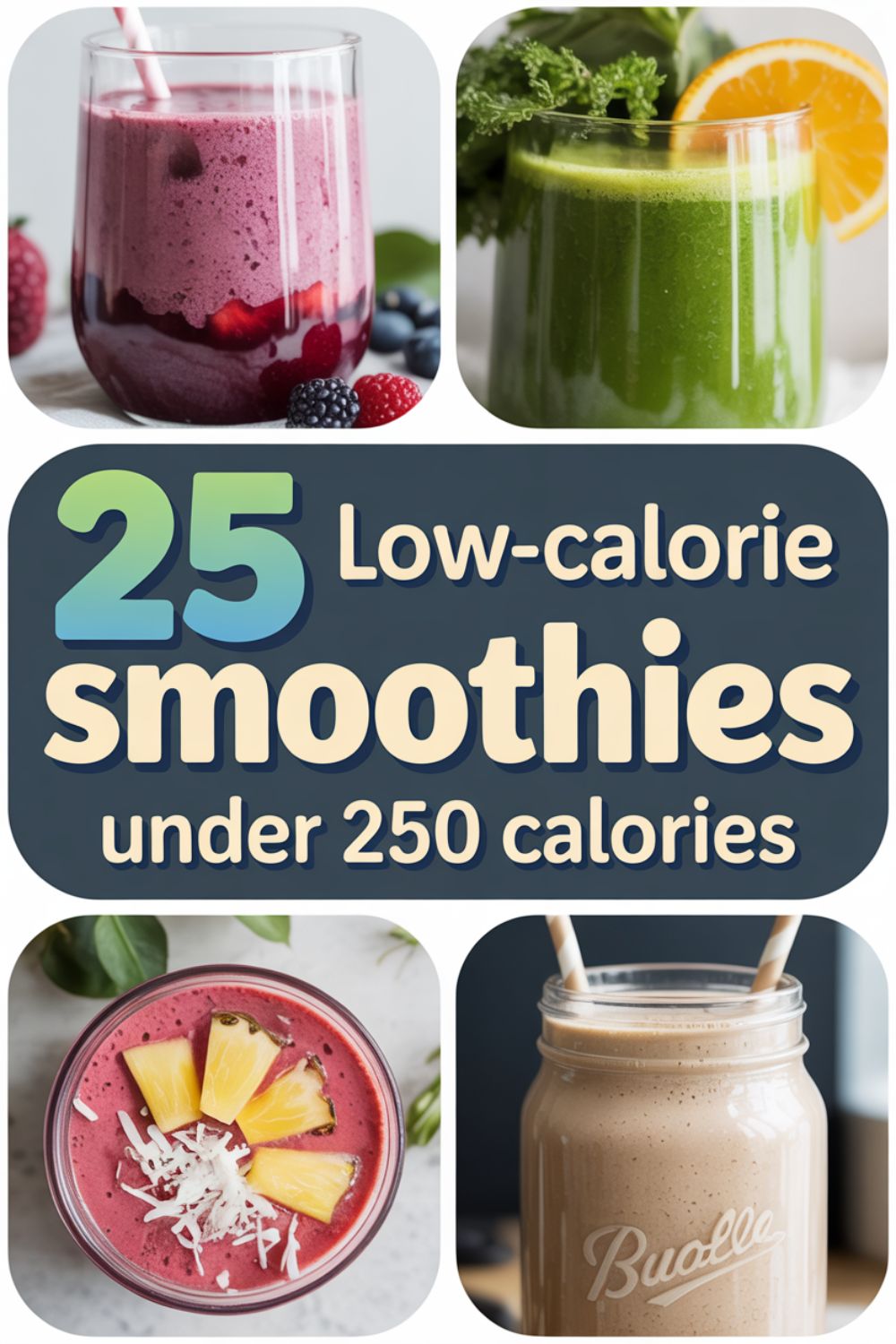
25 Low-Calorie Smoothies Under 250 Calories
Let’s be real—most smoothies are just desserts masquerading as health food. You walk into a smoothie shop, order something with “green” in the name, and boom: you’re suddenly 600 calories deep before lunch. I’ve been there, and honestly? It’s maddening.
But here’s the thing: smoothies can actually be incredible tools for weight loss and nutrition if you know what you’re doing. I’m talking about smoothies that clock in under 250 calories, keep you full for hours, and don’t taste like punishment. Sounds too good to be true? Trust me, it’s not.
I’ve spent the better part of two years perfecting low-calorie smoothies that actually work. No weird protein powders that taste like chalk. No endless lists of supplements. Just real food, real flavor, and real results. Research shows that smoothies made with whole foods can help you meet your daily fruit and vegetable intake while supporting weight management—if you build them right.
Why Most Smoothies Fail at Weight Loss
Before we jump into recipes, let’s talk about why your Pinterest smoothie probably isn’t doing you any favors. Most recipes throw in dates, honey, fruit juice, and multiple servings of fruit—each one innocent enough, but together? You’re looking at a 400-500 calorie drink that spikes your blood sugar faster than a candy bar.
The real issue is that liquid calories don’t register the same way solid food does in your brain. Northwestern Medicine notes that portion control matters—keeping your smoothie between 8-12 ounces helps manage calorie intake and prevents blood sugar spikes. You drink a 600-calorie smoothie, feel satisfied for about an hour, and then you’re ravenous again.
That’s where these 25 smoothies come in. Each one is designed to maximize volume, protein, and fiber while keeping calories stupidly low. We’re talking thick, creamy, genuinely satisfying drinks that won’t leave you searching for snacks an hour later.
The Secret Formula: Building a Perfect Low-Calorie Smoothie
Here’s what actually works, and this is non-negotiable if you want results. Every smoothie needs four components: liquid (under 50 calories), protein (15-20 grams), fiber (at least 5 grams), and volume (ice, frozen cauliflower, zucchini—yes, really).
Liquid Base Matters More Than You Think
Water is free and has zero calories, but let’s be honest—it’s boring. I use unsweetened almond milk (30 calories per cup) or unsweetened cashew milk (25 calories per cup) as my go-to bases. They add creaminess without the calorie bomb of regular milk or, god forbid, fruit juice.
Some people swear by coconut water, but at 45 calories per cup and loaded with natural sugars, I’m not convinced it’s worth it for weight loss. Save it for post-workout when you actually need the electrolytes.
Protein: The Non-Negotiable Element
This is where most people mess up. Fruit alone won’t keep you full—you need protein. I rotate between plain Greek yogurt (80 calories, 15g protein per half cup), protein powder (varies, but I use one that’s 120 calories and 25g protein per scoop), and silken tofu (40 calories, 5g protein per 3 ounces).
IMO, the protein powder debate is overblown. Find one that doesn’t taste like industrial waste, and you’re golden. I’ve had good luck with this vanilla whey protein that actually tastes like vanilla instead of sadness.
According to UC Davis research, ingredient combinations matter significantly for nutrient absorption. Pairing protein with certain fruits can enhance the overall nutritional benefit of your smoothie.
Fiber: Your Appetite’s Best Friend
Here’s something wild: adding half a cup of frozen cauliflower or zucchini to your smoothie adds virtually zero calories but tons of volume and fiber. You literally cannot taste it when it’s blended with berries and banana. It sounds insane until you try it.
Chia seeds (60 calories per tablespoon, but 5 grams of fiber) are another staple in my rotation. They gel up and make everything thicker. Plus, you can prep them ahead—just mix with water and store in the fridge. Speaking of prep, having these glass meal prep containers saved my life when I started batch-making smoothie components.
If you’re serious about tracking your intake and staying on target, check out this 7-Day 1200 Calorie Meal Plan for Weight Loss that breaks down exactly how to structure your day around low-calorie, high-satisfaction meals.
25 Low-Calorie Smoothies That Actually Deliver
Alright, let’s get into the good stuff. I’ve organized these by type because who wants to scroll through 25 random smoothies? Not me. Each one has been tested, tweaked, and approved by someone who gets hangry if breakfast doesn’t hit right.
Berry-Based Smoothies (5 Recipes)
1. Classic Berry Blast (180 calories)
This is your gateway smoothie. One cup mixed berries (frozen), half cup unsweetened almond milk, half cup plain Greek yogurt, handful of spinach (don’t skip this—you won’t taste it). Blend until your blender sounds like it’s trying to take flight. Get Full Recipe
2. Strawberry Cheesecake Dream (235 calories)
Ever wish you could eat cheesecake for breakfast without judgment? One cup frozen strawberries, 2 tablespoons light cream cheese, half cup almond milk, stevia to taste, and a handful of ice. It’s disturbingly good. Get Full Recipe
3. Blueberry Muffin Smoothie (210 calories)
One cup frozen blueberries, quarter cup old-fashioned oats, half teaspoon cinnamon, half teaspoon vanilla extract, one cup unsweetened almond milk. Add a pinch of nutmeg if you’re feeling fancy. Tastes exactly like a blueberry muffin without the 400-calorie price tag.
4. Raspberry Lime Refresher (165 calories)
One cup frozen raspberries, juice of one lime, half cup coconut water, quarter cup plain Greek yogurt, handful of ice. Tart, refreshing, and weirdly addictive. This one’s my summer go-to.
5. Triple Berry Protein Power (240 calories)
Half cup each of strawberries, blueberries, and blackberries (all frozen), one scoop vanilla protein powder, one cup unsweetened cashew milk. The protein powder makes this one thick enough to eat with a spoon, which somehow makes it more satisfying.
For more satisfying breakfast options that won’t derail your progress, you’ll want to explore these 15 Low-Calorie Breakfasts to Start Losing Weight. They pair perfectly with any of these smoothies for a complete morning routine.
Green Smoothies (4 Recipes)
6. Pineapple Green Machine (195 calories)
One cup frozen pineapple chunks, two cups fresh spinach, half cup unsweetened almond milk, juice of half a lemon. The pineapple completely masks the spinach. This is the smoothie I give to people who claim they hate green smoothies.
7. Mint Chocolate Chip (225 calories)
Two cups spinach, quarter avocado, one tablespoon unsweetened cocoa powder, quarter teaspoon peppermint extract, one cup almond milk, stevia to taste, handful of ice. Tastes like ice cream. Looks like grass. Worth it.
8. Cucumber Melon Cooler (140 calories)
Half cucumber (peeled), one cup honeydew melon chunks, handful of fresh mint leaves, juice of one lime, half cup coconut water. Incredibly hydrating and basically tastes like a spa day in a glass.
9. Apple Pie Green Smoothie (205 calories)
One small apple (cored), one cup spinach, quarter cup plain Greek yogurt, half teaspoon cinnamon, pinch of nutmeg, one cup unsweetened almond milk. Add a dash of vanilla extract and you’ve got dessert for breakfast.
Tropical Paradise Smoothies (4 Recipes)
10. Mango Lassi Light (215 calories)
One cup frozen mango chunks, half cup plain nonfat Greek yogurt, half cup unsweetened almond milk, quarter teaspoon cardamom, pinch of salt. If you’ve never tried cardamom in a smoothie, you’re missing out. It’s weirdly magical.
11. Piña Colada Protein (230 calories)
Half cup frozen pineapple, quarter cup light coconut milk (the canned stuff, not the carton), one scoop vanilla protein powder, half cup ice, splash of coconut extract. Beach vacation vibes without the calorie hangover.
12. Papaya Sunrise (175 calories)
One cup frozen papaya chunks, half orange (peeled), half cup unsweetened almond milk, squeeze of lime juice. Papaya is underrated in smoothies—it’s naturally sweet and has digestive enzymes that help with bloating.
13. Passion Fruit Paradise (190 calories)
Pulp from two passion fruits, one cup frozen mango, half banana (frozen), one cup unsweetened almond milk. The passion fruit adds this incredible tangy sweetness that’s impossible to replicate.
Speaking of tropical flavors and keeping things interesting, if you need more variety throughout your day, this collection of 30 Low-Calorie Lunch Ideas will keep you from getting bored with your meal plan.
Chocolate and Coffee Smoothies (3 Recipes)
14. Mocha Madness (220 calories)
One cup cold brew coffee, one scoop chocolate protein powder, half banana (frozen), one tablespoon unsweetened cocoa powder, handful of ice. This replaced my morning Starbucks run and I’m not even mad about it.
15. Peanut Butter Cup (245 calories)
Two tablespoons PB2 (powdered peanut butter—regular peanut butter will blow your calorie budget), one tablespoon unsweetened cocoa powder, one cup unsweetened almond milk, half banana (frozen), handful of ice. Dessert that feels illegal but isn’t.
16. Dark Chocolate Cherry (200 calories)
One cup frozen dark sweet cherries, one tablespoon unsweetened cocoa powder, half cup plain Greek yogurt, one cup unsweetened almond milk, quarter teaspoon almond extract. Cherry and chocolate is one of those combinations that just works.
Dessert-Inspired Smoothies (4 Recipes)
17. Vanilla Cake Batter (210 calories)
Half cup plain nonfat Greek yogurt, one scoop vanilla protein powder, quarter teaspoon vanilla extract, quarter teaspoon butter extract (sounds weird, tastes amazing), one cup unsweetened almond milk, handful of ice. Add a few sprinkles on top if you’re feeling celebratory.
18. Peach Cobbler (195 calories)
One cup frozen peaches, quarter cup old-fashioned oats, half teaspoon cinnamon, quarter teaspoon vanilla extract, one cup unsweetened almond milk. The oats make this one super filling. I use this portable blender when I’m traveling and need my smoothie fix.
19. Banana Cream Pie (225 calories)
One frozen banana, quarter cup plain nonfat Greek yogurt, one cup unsweetened cashew milk, quarter teaspoon vanilla extract, pinch of salt, handful of ice. Top with a tiny dollop of whipped cream if you’ve got the calories to spare.
20. Carrot Cake (235 calories)
Half cup grated carrots, quarter cup plain Greek yogurt, quarter teaspoon cinnamon, eighth teaspoon ginger, eighth teaspoon nutmeg, one tablespoon chopped walnuts, one cup unsweetened almond milk, handful of ice. Yes, raw carrots in a smoothie. No, you can’t taste the vegetables.
Unique and Unexpected Smoothies (5 Recipes)
21. Beet Berry Boost (185 calories)
Half cup cooked beets (I buy them pre-cooked because I’m lazy), one cup mixed berries, half cup plain Greek yogurt, one cup water. The beets add this incredible earthy sweetness. Don’t skip this one just because it sounds weird.
22. Matcha Green Tea (180 calories)
One teaspoon matcha powder, half banana (frozen), one cup unsweetened almond milk, quarter cup plain Greek yogurt, handful of ice, stevia to taste. The matcha gives you a caffeine boost without the coffee jitters.
23. Turmeric Golden Milk (190 calories)
One cup unsweetened almond milk, half teaspoon turmeric powder, pinch of black pepper (helps absorption), quarter teaspoon cinnamon, quarter teaspoon ginger, half banana (frozen), handful of ice. Anti-inflammatory and delicious.
24. Savory Tomato Basil (145 calories)
One cup cherry tomatoes, quarter avocado, handful of fresh basil, juice of half a lemon, half cup plain Greek yogurt, pinch of salt and pepper, handful of ice. This is technically a cold soup but also technically a smoothie. It’s breakfast, lunch, whatever you want it to be.
25. Sweet Potato Pie (240 calories)
Half cup cooked sweet potato (cooled), half teaspoon cinnamon, quarter teaspoon nutmeg, pinch of ginger, one cup unsweetened almond milk, half banana (frozen), handful of ice. Sweet potatoes in smoothies are criminally underrated.
If these smoothies are inspiring you to totally revamp your eating habits, you might want to check out this complete 30-Day Low-Calorie Meal Plan that takes all the guesswork out of healthy eating.
Meal Prep Essentials Used in These Smoothies
Look, I’m all about efficiency. These are the tools and products that make smoothie life exponentially easier:
Physical Products:
- High-powered blender – You need something that can pulverize frozen fruit without sounding like a jet engine. I use one that’s quiet enough to not wake up the entire house at 6am.
- Glass mason jars with lids – Perfect for prepping smoothie ingredients the night before. Add everything except liquid, store in fridge, blend in morning.
- Silicone ice cube trays – For freezing leftover smoothie, coffee for smoothies, or even pre-portioned almond milk. Total game changer.
Digital Products:
- 7-Day 1200 Calorie Meal Plan – Complete meal planning guide with grocery lists
- 1200 Calorie Meal Plan for Beginners – Perfect if you’re just starting your weight loss journey
- 14-Day 1500 Calorie Meal Plan – Budget-friendly options that don’t sacrifice flavor
Common Mistakes That Sabotage Your Smoothie
Even with perfect recipes, there are ways to mess this up. Here are the mistakes I see constantly.
Adding Too Much Fruit
One banana, two cups of berries, an apple, and some mango? That’s not a smoothie—that’s a sugar bomb. Stick to 1-1.5 cups of fruit total per smoothie. The rest should be protein, vegetables (yes, really), and volume fillers like ice or frozen cauliflower.
Skipping the Protein
A fruit-only smoothie will leave you hungry within an hour. It’s just how liquid calories work. You need that 15-20 grams of protein to trigger satiety signals in your brain. No negotiation here.
Not Pre-Freezing Ingredients
Fresh ingredients make watery, disappointing smoothies. Everything should be frozen—your fruit, your bananas, even your spinach. This is why having a good freezer organization system matters. I swear by these reusable silicone storage bags for portioning out smoothie ingredients.
Ignoring Portion Sizes
These recipes are designed for one serving (about 12-16 ounces). Making a 32-ounce smoothie and drinking it all? You’ve just doubled your calories. Get yourself a 16-ounce tumbler with measurements so you know exactly what you’re consuming.
Tools and Resources That Make This Easier
Beyond the basic blender, here’s what actually helps:
Physical Products:
- Digital kitchen scale – For accurately measuring portions. Eyeballing doesn’t work when calories matter.
- Reusable smoothie straws – Wide enough for thick smoothies. Also better for the environment, if you care about that sort of thing.
- Mini food processor – For chopping and prepping large batches of vegetables for freezing.
Digital Products:
- 1200 vs 1500 Calorie Meal Plan Comparison – Helps you figure out which calorie target is right for your goals
- 7-Day High-Protein 1200 Calorie Meal Plan – Perfect companion to these protein-packed smoothies
- 1500 Calorie Vegetarian Meal Plan – Plant-based options that keep you full
How to Actually Stick With This
Having 25 recipes is useless if you don’t actually use them. Here’s my strategy: pick five favorites. Write them down. Buy ingredients for just those five. Rotate them for two weeks.
Once you’re bored (and you will get bored), swap out two recipes for two new ones. This prevents decision fatigue and keeps your grocery bill manageable. I’m not trying to meal prep 25 different smoothies—that’s insane.
Also, prep matters more than you think. Every Sunday, I spend 30 minutes portioning out ingredients into freezer bags. Each bag gets labeled with the smoothie name and the liquid I need to add. Morning me is eternally grateful to Sunday me for this.
The blender thing is real, by the way. If your blender sucks, you’ll hate making smoothies. It doesn’t need to be expensive, but it needs to actually blend frozen stuff without leaving chunks. I learned this the hard way with a $20 blender that died after three weeks.
Frequently Asked Questions
Can I meal prep smoothies for the whole week?
Yes, but with a caveat. Pre-portion your ingredients into freezer bags (without liquid) and store them frozen. Add liquid and blend fresh each morning. Fully blended smoothies separate and get weird after about 24 hours, so I don’t recommend making them more than one day ahead.
Will these smoothies actually keep me full until lunch?
If they’re protein-packed (15-20g) and have fiber (5g+), absolutely. The key is not skipping the protein powder or Greek yogurt. Fruit-only smoothies won’t cut it—your blood sugar will crash within an hour and you’ll be ravenous. The recipes listed here are specifically designed to prevent that crash.
Do I really need to add vegetables to my smoothies?
You don’t need to, but honestly? Frozen cauliflower and spinach add volume and nutrients without affecting taste. It’s the easiest way to sneak in extra servings of vegetables, especially if you’re like me and struggle to eat enough greens. Start with a handful of spinach in berry smoothies—you literally won’t taste it.
What’s the best time to drink a smoothie for weight loss?
FYI, timing matters less than consistency. I drink mine for breakfast because it prevents me from grabbing pastries at work. Some people prefer them post-workout for the protein. The magic isn’t in when you drink it—it’s in making sure it fits your daily calorie goals and keeps you satisfied.
Can I substitute ingredients if I don’t like something in a recipe?
Absolutely, just watch your calorie swaps. Regular milk for almond milk? You’re adding 60+ calories per cup. Regular peanut butter for PB2? You’re tripling calories. The recipes work because of specific calorie counts, so if you substitute, recalculate. That said, most fruits and vegetables are interchangeable—swap raspberries for strawberries, spinach for kale, whatever works for you.
Final Thoughts: Making Low-Calorie Smoothies Work for You
Look, I’m not going to lie and say these smoothies are magic. They’re just really well-designed tools that make weight loss significantly less miserable. You still need to be in a calorie deficit. You still need to move your body. You still need to be patient with the process.
But here’s what these smoothies do: they give you a reliable, delicious, filling option that doesn’t require much thought. On the mornings when you’re tired and tempted to skip breakfast or grab something terrible, you’ve got these in your back pocket. They’re your safety net.
I’ve been using variations of these smoothies for two years now, and honestly? They’re the only “diet food” I’ve stuck with long-term. That’s because they don’t taste like diet food. They taste like treats that happen to be good for you.
Start with five recipes that sound good to you. Buy the ingredients. Prep them on Sunday. Blend one every morning for a week. See how you feel. That’s it. Don’t overthink it. Don’t try to be perfect. Just show up and blend the damn smoothie.
Your future self—the one who fits into those jeans again—will thank you.