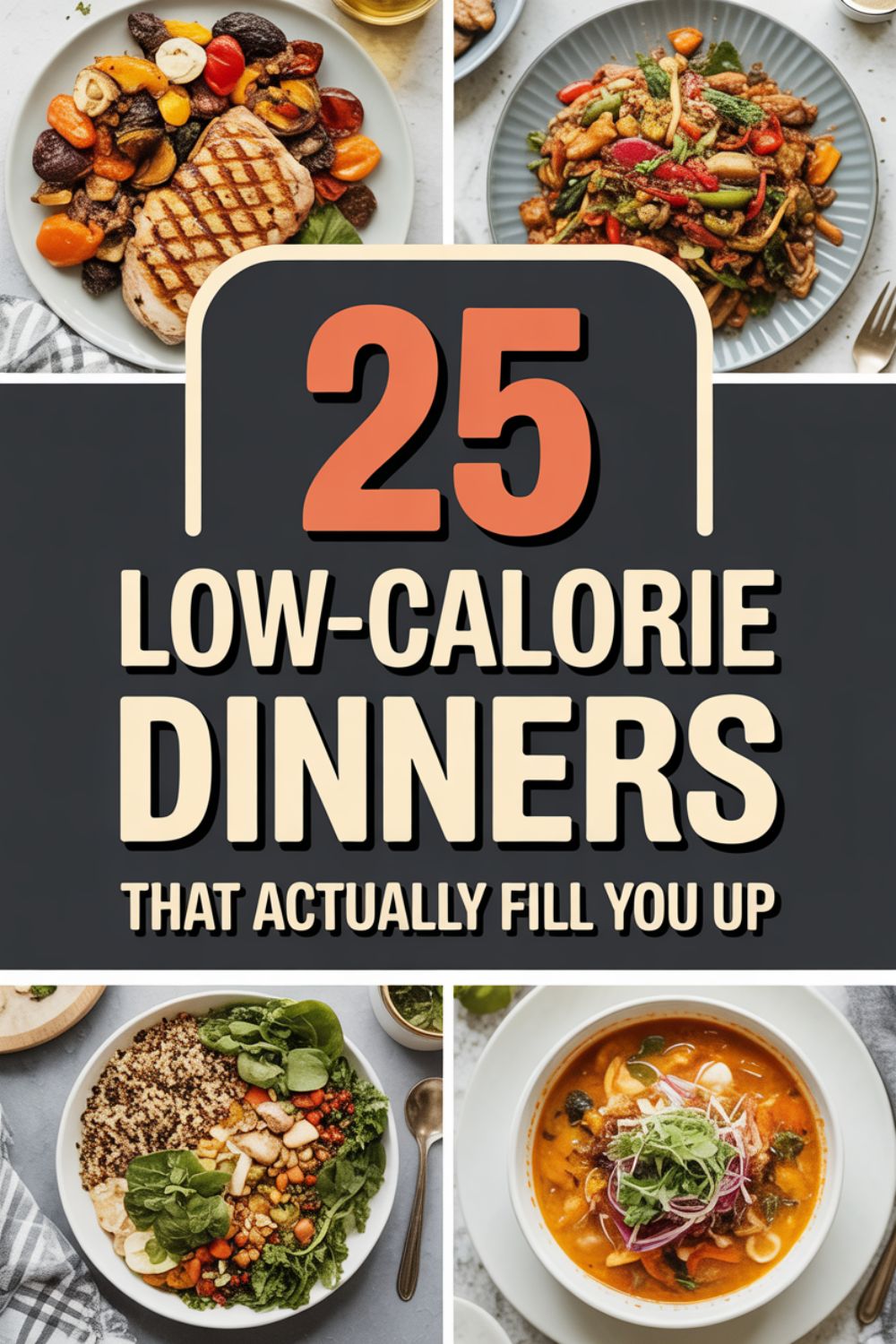
25 Low-Calorie Dinners That Actually Fill You Up
Here’s the thing about those bland chicken breasts and sad salads: they’re setting you up for failure. When you’re hungry an hour after dinner, that’s not willpower you lack—it’s proper nutrition and satiety. I’ve spent years figuring out what actually works, and spoiler alert: volume, protein, and fiber are your best friends.
These 25 dinners aren’t just low in calories—they’re engineered to keep you full. We’re talking about meals with enough protein to stabilize your blood sugar, enough fiber to slow digestion, and enough actual food on your plate that your brain registers satisfaction. No tricks, no gimmicks, just real food that happens to support your goals.
Why Most Low-Calorie Dinners Leave You Hungry
Let’s get real for a second. Most low-calorie recipes are basically punishment disguised as health food. They strip out everything that makes food satisfying and call it a day. The problem isn’t you—it’s the approach.
Research shows that protein and fiber work synergistically to increase satiety, which is just fancy talk for “keeping you full.” When you cut calories without considering these factors, you’re fighting an uphill battle against your own hunger hormones. And guess what? Your hunger hormones always win.
The secret sauce is energy density. You want foods that give you maximum volume with minimum calories. Think vegetables that fill half your plate, lean proteins that keep your metabolism humming, and enough healthy fats to make everything taste like actual food. It’s not rocket science, but it does require ditching the diet mentality that says less is always more.
The Satiety Trifecta: Protein, Fiber, and Volume
Before we dive into the actual meals, you need to understand what makes food filling. It’s not magic—it’s biology. Protein is your appetite’s kryptonite. It triggers satiety hormones and takes longer to digest than carbs or fats. Aim for at least 25-30 grams per dinner.
Fiber is the unsung hero of fullness. According to Mayo Clinic nutrition experts, fiber slows digestion and helps stabilize blood sugar, which means you won’t crash and burn two hours after eating. Plus, high-fiber foods tend to require more chewing, giving your brain time to catch up with your stomach.
Then there’s volume. Your stomach has stretch receptors that signal fullness based on the physical amount of food, not just calories. This is why you can eat two cups of broccoli for the same calories as a handful of chips, but only one will actually fill you up. Water-rich vegetables are your secret weapon here.
If you’re looking to structure these dinners into a complete plan, check out this 7-day 1200-calorie meal plan that’s actually realistic and sustainable.
25 Dinners That Won’t Leave You Starving
1. Lemon Herb Grilled Chicken with Roasted Vegetables
This is my go-to when I want something that feels fancy but takes zero brain power. A reliable meat thermometer ensures your chicken is cooked perfectly every time—no more dry, sad poultry. Pair it with whatever vegetables you have on hand, toss them in a tiny bit of olive oil, and roast at 425°F until they’re caramelized. The whole meal comes in around 350 calories and packs 35 grams of protein.
2. Zucchini Noodle Pad Thai
Here’s where a spiralizer becomes your best friend. Traditional pad thai can hit 800+ calories, but swapping regular noodles for zucchini cuts that in half while keeping all the flavor. The key is not overcooking the zoodles—nobody wants mushy vegetables. Add shrimp or chicken for protein, and use a light peanut sauce made with PB2 powder instead of regular peanut butter.
3. Sheet Pan Salmon with Brussels Sprouts
If you’re not doing sheet pan dinners, you’re working too hard. Everything goes on one pan, cooks at the same temperature, and cleanup is a joke. I use a reusable silicone baking mat because I’m done scrubbing pans like it’s 1952. This meal is loaded with omega-3s, comes in around 380 calories, and takes 20 minutes from start to finish.
4. Turkey Taco Lettuce Wraps
Lettuce wraps get a bad rap because people try to use wimpy lettuce. Use butter lettuce or romaine hearts—something with actual structure. Season your ground turkey with cumin, chili powder, and garlic, then load up on tomatoes, onions, and salsa. Skip the sour cream or use Greek yogurt instead. These clock in around 280 calories and are surprisingly filling thanks to all that vegetable crunch.
“I’ve been making these turkey wraps for three weeks and I’m down 8 pounds. I don’t even miss regular tacos anymore—these actually taste better and I’m not in a food coma after dinner.” – Jessica from our community
5. Cauliflower Fried Rice
Real talk: this isn’t exactly like regular fried rice, but it’s good enough that I choose it even when I’m not watching calories. The trick is getting your pan screaming hot and not overcrowding it. I pulse cauliflower in my food processor until it’s rice-sized, then stir-fry it with eggs, peas, carrots, and whatever protein I have. Add soy sauce and sesame oil at the end. Total calories? About 320 with 25 grams of protein.
For more ideas on keeping your meals interesting without blowing your calorie budget, these low-calorie lunch ideas work just as well for dinner.
6. Greek Chicken Bowl
Bowl meals are clutch because you can prep components ahead and mix-and-match throughout the week. This one features grilled chicken, cucumber, tomatoes, red onion, olives, and a massive handful of spinach. The dressing is just lemon juice, oregano, and a touch of olive oil. Maybe add some crumbled feta if you have calories to spare. Comes in around 340 calories.
7. Spaghetti Squash Marinara with Turkey Meatballs
Spaghetti squash is one of those vegetables that actually delivers on the promise of being a pasta substitute. Roast it cut-side down until it’s tender, scrape out the strands, and top with marinara and lean turkey meatballs. The whole plate is around 360 calories and you get that comfort food vibe without the carb crash.
8. Asian Lettuce Cups
These are fun to eat, which sounds stupid but actually matters. Use ground chicken or turkey, water chestnuts for crunch, and a sauce made with hoisin, soy sauce, and rice vinegar. The water chestnuts are key—they add texture without calories. Each serving is about 290 calories and feels way more indulgent than it is.
9. Stuffed Bell Peppers
My grandmother would stuff these with rice and beef and call it a day. My version swaps rice for cauliflower rice and uses extra-lean ground turkey. Add black beans for fiber, corn for sweetness, and top with a sprinkle of cheese. Pop them in the oven at 375°F for 30 minutes. Around 310 calories per pepper.
10. Blackened Tilapia with Roasted Asparagus
Fish cooks fast, which makes it perfect for weeknights when you’d rather order takeout than cook. Season tilapia with paprika, garlic powder, and cayenne, then cook it in a cast iron skillet until it’s got that gorgeous crust. Serve with asparagus that’s been roasted until the tips are crispy. Total: 320 calories, 35 grams of protein.
Meal Prep Essentials Used in This Plan
After making these dinners dozens of times, here are the tools and ingredients that make everything easier:
- Glass meal prep containers – Because microwaving plastic is sketchy and these don’t stain when you pack tomato-based sauces
- Quality food scale – Takes the guesswork out of portions and helps you actually hit your calorie targets
- Instant-read thermometer – Essential for perfectly cooked chicken and fish every single time
- Low-Calorie Meal Planning Template (Digital Download) – Customizable weekly planner with built-in calorie calculator
- Macro-Tracking Spreadsheet Bundle – Excel templates for tracking protein, carbs, and fats without using apps
- 25 Dinner Prep Checklists (Printable PDF) – Step-by-step guides for batch cooking proteins and vegetables
Want ongoing support? Join our WhatsApp community where we share daily meal ideas, answer questions, and keep each other accountable.
11. Chicken and Vegetable Stir-Fry
Stir-fries are only as good as your sauce game. Skip the bottled stuff that’s loaded with sugar and make your own with soy sauce, ginger, garlic, and a tiny splash of sesame oil. Load up on broccoli, snap peas, carrots, and bell peppers. The vegetables should outnumber the protein 2:1 by volume. Comes in around 340 calories.
12. Shrimp Scampi with Zucchini Noodles
Traditional shrimp scampi drowns everything in butter and pasta. This version uses zucchini noodles and cuts the butter way down, letting the lemon and garlic shine through. Shrimp cooks in literally three minutes, making this one of the fastest dinners on this list. About 310 calories per serving with 28 grams of protein.
13. Turkey Chili
Chili is meal prep gold because it actually tastes better the next day. I make a huge batch using lean ground turkey, tons of beans (kidney, black, and pinto for variety), crushed tomatoes, and enough spices to make it interesting. A big bowl clocks in around 350 calories and the fiber from the beans keeps you full for hours. Top with Greek yogurt instead of sour cream.
Speaking of high-protein meals that keep you satisfied, check out these high-protein low-calorie meals for even more options.
14. Egg White Frittata
Who says eggs are only for breakfast? A frittata loaded with vegetables makes a solid dinner, especially when you need something fast. I use a mix of egg whites and whole eggs (mostly whites to keep calories down), add spinach, mushrooms, tomatoes, and whatever else needs to be used up. Bake it in a non-stick oven-safe skillet and you’ve got dinner for days. Around 280 calories per serving.
15. Baked Cod with Lemon and Herbs
Cod is mild enough that even fish skeptics can get behind it. Season with lemon, dill, and garlic, wrap in parchment paper, and bake. The parchment keeps everything moist and makes cleanup stupid easy. Serve with roasted green beans and you’re looking at about 320 calories.
16. Chicken Fajita Bowl
All the flavors of fajitas without the tortilla calories. Grill chicken with bell peppers and onions, serve over cauliflower rice or a small portion of brown rice, and top with salsa and Greek yogurt. The peppers and onions add so much volume that you feel like you’re eating a massive meal. Around 360 calories.
17. Miso Glazed Salmon
This sounds fancy but takes maybe 15 minutes total. Mix miso paste with a tiny bit of honey, brush it on salmon, and broil until it’s caramelized on top. Serve with steamed bok choy or broccoli. The miso adds so much umami flavor that you don’t need any other seasoning. About 370 calories.
18. Vegetarian Stuffed Portobello Mushrooms
Portobello caps are basically nature’s edible bowls. Remove the stems, brush with a little olive oil, and stuff with a mixture of spinach, tomatoes, and part-skim mozzarella. Bake until the cheese is melted and the mushrooms are tender. These are surprisingly filling for only 290 calories.
19. Thai Basil Chicken
This is one of those restaurant dishes that you can absolutely make at home. Ground chicken, lots of fresh basil, a splash of fish sauce, and some chili paste if you like heat. Serve over cauliflower rice to keep calories in check. The basil makes everything taste fresh and summery. Around 330 calories.
20. Balsamic Chicken with Tomatoes
Chicken thighs are usually off-limits in low-calorie recipes, but if you remove the skin and trim the fat, they’re actually fine and way more flavorful than breasts. Sear them in a pan, add cherry tomatoes and balsamic vinegar, and let everything simmer together. The tomatoes break down into a sauce that’s slightly sweet and tangy. About 350 calories.
For more ways to work within a calorie deficit without feeling deprived, this guide on losing weight on 1200-1500 calories breaks down the science and strategy.
21. Mexican Cauliflower Rice Bowl
Season cauliflower rice with taco seasoning, add black beans, corn, and grilled chicken. Top with pico de gallo and a squeeze of lime. This bowl is so loaded with vegetables and fiber that you’ll be full before you finish it. Around 340 calories.
22. Lemon Pepper Baked Chicken Breast
Basic? Yes. Boring? Not if you season it right. The trick with chicken breast is pounding it to an even thickness so it cooks evenly. Season aggressively with lemon pepper, add some garlic, and bake at 400°F. Use a meat mallet to get that even thickness—game changer. Serve with roasted cauliflower. About 310 calories.
23. Grilled Shrimp Skewers
These feel like a special occasion but take no time at all. Marinate shrimp in lemon juice, garlic, and herbs, thread onto metal skewers, and grill for 2-3 minutes per side. Serve with a huge salad or grilled vegetables. Around 280 calories and perfect for summer.
24. Baked Chicken Parmesan (Lightened Up)
The traditional version is basically fried and then smothered in cheese. This one bakes the chicken with a light coating of panko, uses less cheese, and loads up on marinara sauce and a side salad. You still get that comfort food vibe without consuming 800 calories. This comes in around 380 calories.
25. Asian-Inspired Turkey Meatballs
Mix ground turkey with grated ginger, garlic, scallions, and an egg as a binder. Form into meatballs and bake. Toss with a sauce made from soy sauce, rice vinegar, and a touch of honey. Serve over cauliflower rice or with steamed broccoli. These meatballs are tender, flavorful, and clock in around 320 calories per serving.
Tools & Resources That Make Cooking Easier
These aren’t just nice-to-haves—they genuinely make the difference between cooking regularly and ordering takeout:
- Sharp chef’s knife – A dull knife is dangerous and makes prep take three times longer
- Large cutting board – Stop using that tiny board and give yourself some space to work
- Non-stick spray bottle – Control your oil portions without buying expensive cooking sprays
- Weekly Meal Prep Guide (eBook) – 50+ pages of strategies, shopping lists, and time-saving techniques
- Portion Control Visual Guide (PDF) – Printable reference for eyeballing serving sizes without a scale
- Freezer Meal Labels & Organization System (Digital) – Templates and trackers for batch cooking and freezing
Need accountability and real-time help? Our WhatsApp community shares prep photos, troubleshooting tips, and keeps everyone motivated throughout the week.
Making These Dinners Work for Your Life
Here’s what nobody tells you about low-calorie eating: it’s not just about the recipes. It’s about having a system. These dinners work because they follow patterns. Most use similar cooking methods, rely on the same core ingredients, and can be prepped ahead.
Start by picking 3-4 recipes that sound good and make them your rotation for the week. Cook your proteins on Sunday. Chop your vegetables Monday night. By Wednesday, you’re basically just assembling meals, not cooking from scratch every night.
And please, for the love of all that’s holy, season your food. Salt, pepper, garlic powder, onion powder, herbs—these have basically zero calories and make the difference between food you tolerate and food you actually enjoy. IMO, the biggest reason people fall off low-calorie plans is bland food, not hunger.
If you’re ready to commit to a structured approach, this 30-day low-calorie meal plan takes all the guesswork out and provides day-by-day guidance.
“I’ve been following these recipes for two months and I’m down 15 pounds. The best part? I don’t feel like I’m on a diet. I’m eating actual food that tastes good, and I’m never hungry between meals.” – Rachel M.
The Truth About Volume Eating
Let me share something that changed my entire approach to low-calorie cooking: volume eating isn’t a trick, it’s strategy. Your stomach doesn’t have a calorie counter—it has stretch receptors. Fill it with the right foods and your brain gets the “I’m full” signal regardless of whether you ate 300 or 800 calories.
This is why vegetables are non-negotiable in these recipes. Not because they’re “healthy” in some vague way, but because they physically take up space. A cup of broccoli is 30 calories. A cup of brown rice is 200 calories. Both fill your stomach, but one leaves you way more room for protein.
The magic ratio I aim for: half your plate should be vegetables, a quarter should be protein, and the remaining quarter is for your complex carbs or healthy fats. This naturally keeps calories in check while maximizing fullness.
Looking for more variety? These 21 dinners under 350 calories offer even more options to keep your meal rotation interesting.
Protein: Your Secret Weapon Against Hunger
If I could give you one piece of advice that would change your low-calorie experience, it’s this: prioritize protein at every meal. Not because of muscle building or metabolism boosting or any of that (though those are nice bonuses), but because protein dramatically increases satiety compared to carbs or fats.
Every dinner on this list includes at least 25 grams of protein, which isn’t random. That’s the threshold where most people start feeling satisfied instead of just “not hungry anymore.” There’s a difference, and it matters when you’re trying to stick with a calorie deficit long enough to see results.
Lean proteins are your best bet here. Chicken breast, fish, shrimp, extra-lean ground turkey—these give you maximum protein with minimum calories. Yeah, they’re more expensive than fattier cuts, but you’re also eating less volume of them because the protein fills you up faster.
Why Fiber Matters More Than You Think
Fiber is the unsung hero of weight loss. According to research on satiety and food development, high-fiber foods increase fullness and reduce hunger for hours after eating. But most people aren’t getting nearly enough.
The goal is 25-35 grams of fiber per day. These dinners help you get there by loading up on vegetables, using cauliflower rice instead of regular rice, and incorporating beans whenever possible. Fiber slows down digestion, which means your blood sugar stays stable and you don’t get that crash-and-crave cycle.
Plus, high-fiber foods require more chewing. It sounds dumb, but chewing longer gives your brain time to register that you’re eating. You know how you can inhale a bowl of cereal in 30 seconds but a big salad takes 10 minutes? That’s not just texture—it’s time for satiety signals to kick in.
For even more filling meal ideas, explore these comfort foods that actually satisfy without derailing your progress.
Practical Tips That Actually Matter
Let’s talk about the stuff that makes or breaks your success with these dinners. First: meal prep isn’t optional. You don’t have to prep every single meal for the week, but having cooked protein and chopped vegetables ready makes these dinners happen on nights when you’re exhausted.
Second: invest in decent storage containers. I use glass because plastic stains and gets weird in the microwave, plus I like seeing what’s inside without opening every container. Get a mix of sizes—some for full meals, some for individual components.
Third: keep your pantry stocked with the basics. Spices, low-sodium soy sauce, canned tomatoes, frozen vegetables as backup. FYI, frozen vegetables are nutritionally identical to fresh and they don’t go bad, so there’s no excuse for not having them.
Fourth: use your slow cooker or Instant Pot when you can. These aren’t essential, but they make certain recipes (like the turkey chili) absolutely foolproof. Dump everything in, walk away, come back to dinner.
Frequently Asked Questions
Can I really stay full on 350-400 calorie dinners?
Yes, but it depends on what you’re eating. These dinners are specifically designed with high protein (25-35g per serving), high fiber, and low energy density to maximize fullness. The combination of these three factors triggers satiety hormones that keep you satisfied for hours. If you’re coming from a typical American diet heavy in processed foods, it might take a week or two for your body to adjust, but most people find these meals surprisingly filling.
Do I need to eat these dinners every single night to lose weight?
Nope. Weight loss comes down to consistent calorie deficit over time, not perfection every day. Use these dinners as your go-to options 5-6 nights a week and give yourself flexibility on the others. The goal is sustainability, not rigid adherence. If you’re at a restaurant or want pizza on Friday night, plan for it and adjust earlier in the day.
What if I’m still hungry after eating these meals?
First, make sure you’re actually eating enough overall. If you’re drastically under-eating throughout the day, no dinner will fix that. Second, drink a full glass of water with your meal—thirst can mask as hunger. Third, wait 20 minutes before reaching for seconds. It takes time for fullness signals to reach your brain. If you’re consistently still hungry, you might need to adjust your total daily calorie target or add more vegetables to increase volume without adding many calories.
Can I substitute ingredients if I don’t like certain vegetables?
Absolutely. The key is maintaining the general structure: lean protein, lots of vegetables, and reasonable portions of healthy fats. Don’t like Brussels sprouts? Use broccoli or green beans. Hate cauliflower rice? Try quinoa or brown rice in smaller portions. The specific vegetables matter less than getting enough volume and fiber overall.
How do these dinners fit into a 1200 or 1500 calorie daily plan?
These 350-400 calorie dinners leave plenty of room for breakfast, lunch, and snacks. On a 1200 calorie plan, you might do a 250 calorie breakfast, 300 calorie lunch, 350 calorie dinner, and 300 calories for snacks. On 1500 calories, you have even more flexibility. Check out our complete breakdown of 1200 vs 1500 calorie plans to figure out which works best for your goals and activity level.
Final Thoughts
Look, I’m not going to sit here and tell you that low-calorie eating is easy or that these dinners will magically solve all your food struggles. What I will tell you is that they work—not because they’re some revolutionary breakthrough, but because they’re built on solid principles that actually address why you get hungry.
These 25 dinners aren’t meant to be rigid rules. They’re templates. Use the ones you like, skip the ones you don’t, and adjust based on what you have in your kitchen. The goal isn’t perfection—it’s finding meals you can actually stick with long enough to see results.
And honestly? Once you get the hang of this style of eating, it stops feeling like “diet food” and starts feeling like just…food. Good food that happens to support your goals instead of sabotaging them. That’s the sweet spot we’re aiming for.
Ready to put this into action? Start with three dinners this week. See how you feel. Adjust as needed. You’ve got this.