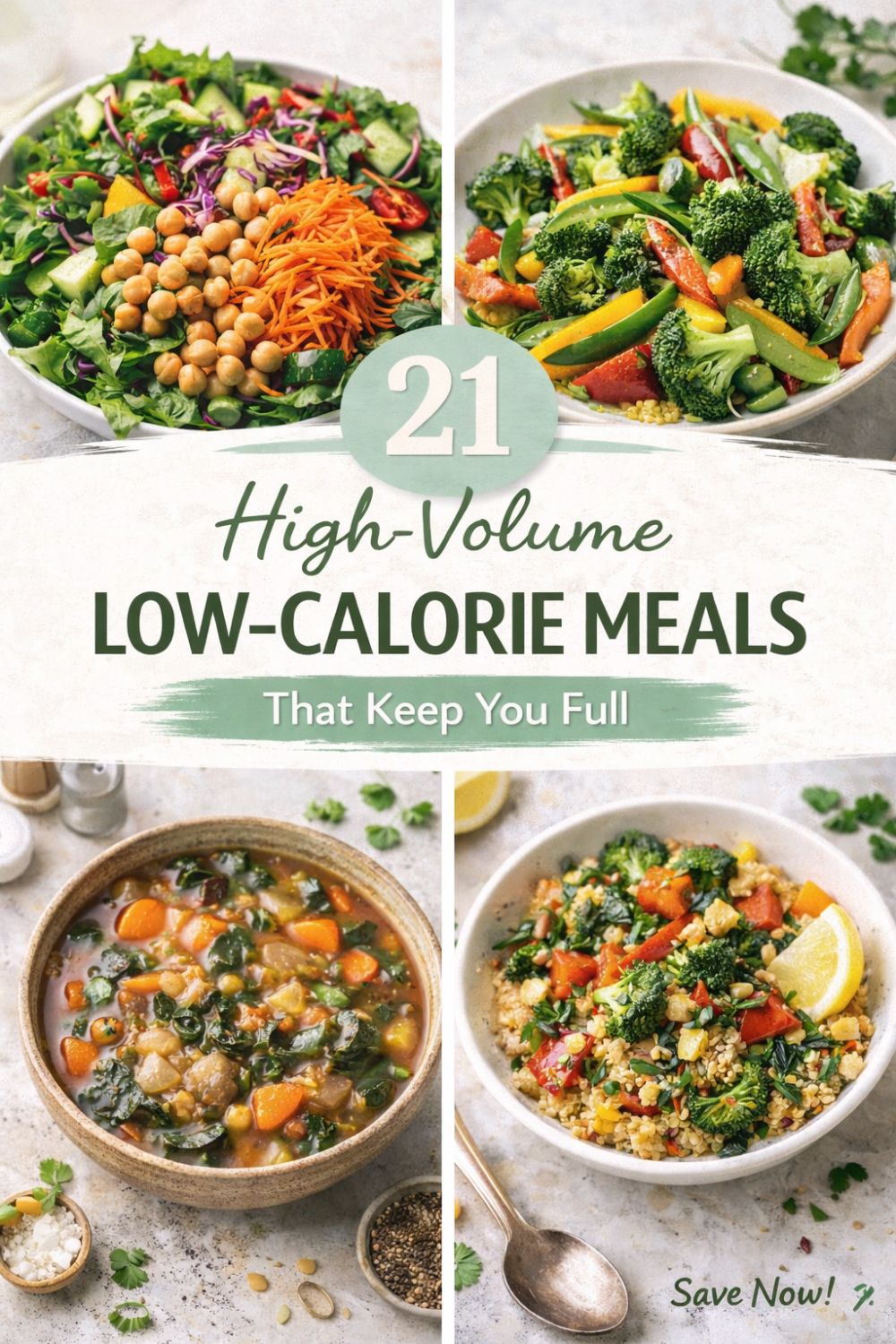
21 High-Volume Low-Calorie Meals That Keep You Full
Look, I’m going to be straight with you. If you’ve ever finished a tiny portion of something “healthy” only to find yourself raiding the fridge an hour later, you know the frustration. The secret isn’t eating less—it’s eating smarter.
High-volume, low-calorie meals completely changed how I approach food. We’re talking plates piled high with food that actually satisfies you, without the calorie bomb that comes with most “filling” meals. No more sad desk salads or portions that look like they’re meant for a toddler.
The whole concept is beautifully simple: fill your plate with foods that have lots of volume but fewer calories per bite. Think zucchini noodles instead of regular pasta, cauliflower rice instead of white rice, or a massive bowl of veggie-packed soup that’ll keep you full for hours. Research shows that consuming foods with lower energy density helps people reach satiety at nearly half the calorie intake compared to energy-dense foods.

Why Volume Eating Actually Works
Here’s the thing about your stomach: it doesn’t count calories. What it does recognize is stretch. When you eat a large volume of food, stretch receptors in your stomach wall send signals to your brain saying “hey, we’re full now.” This triggers the release of satiety hormones that tell you to stop eating.
The science backs this up hardcore. Studies on satiety mechanisms show that food volume plays a crucial role in determining how full you feel and how long that fullness lasts. Basically, your body responds to the physical presence of food in your stomach, not just the calorie content.
What makes high-volume foods so effective is their low energy density. Energy density is just a fancy way of saying how many calories are packed into each gram of food. Foods with high water content, lots of fiber, and minimal fat have low energy density—meaning you can eat more of them for fewer calories.
The beauty of this approach? You’re not starving yourself. You’re actually eating more food—just smarter food. No one wants to feel deprived, and honestly, deprivation diets never work long-term anyway.
21 High-Volume Low-Calorie Meals You’ll Actually Want to Eat
1. Massive Cauliflower Fried Rice
Swap regular rice for riced cauliflower and you’ve instantly created a dish you can eat by the bowlful. Load it up with scrambled eggs, tons of veggies like carrots, peas, and bell peppers, and season it right. I use this food processor with a ricing attachment that makes cauliflower rice in seconds—seriously cuts down on prep time.
One cup of white rice has around 200 calories. The same volume of cauliflower rice? About 25 calories. That’s massive. You can literally eat four times as much for the same calories.
2. Zucchini Noodle Pasta Bowls
Zoodles changed my life, I’m not even joking. A spiralizer is one of those tools you don’t know you need until you have it. Toss your zucchini noodles with marinara sauce, lean ground turkey or chicken, and pile on the veggies. The volume you can eat compared to regular pasta is insane.
Regular spaghetti packs about 220 calories per cooked cup. Zucchini noodles? Around 20 calories for the same volume. Top with a good tomato sauce and protein, and you’ve got a filling meal under 300 calories that looks restaurant-worthy.
3. Egg White Veggie Scramble with Volume Boosters
Egg whites are your best friend for high-volume, high-protein breakfasts. I typically use three whole eggs plus four egg whites, then add what feels like a ridiculous amount of veggies—mushrooms, spinach, tomatoes, onions, bell peppers. The final plate looks huge.
You can batch-prep chopped veggies on Sunday using these glass meal prep containers, so morning scrambles take literally five minutes. The protein keeps you full, the veggie volume tricks your brain into thinking you ate way more than you did.
Speaking of protein-packed breakfasts, check out these low-calorie breakfast ideas that jumpstart weight loss. They pair perfectly with the volume eating approach.
4. Giant Greek Salad with Grilled Chicken
Salads get a bad rep for being boring, but only if you make them boring. A proper Greek salad is anything but sad—cucumbers, tomatoes, red onion, olives, feta cheese, and grilled chicken breast over a mountain of romaine.
The trick is getting the ratios right. Heavy on the veggies, moderate protein, light on the feta and dressing. You want a salad bowl so big it looks ridiculous. Two cups of mixed greens have about 10 calories. Build from there and you can create a massive, satisfying meal for under 350 calories.
5. Shirataki Noodle Stir-Fry
Shirataki noodles are basically magic. Made from konjac root, they’re almost entirely fiber and water, which means they have practically zero digestible calories. They’re a bit gelatinous at first, but once you rinse them well and dry-roast them in a hot pan, they take on the flavors of whatever sauce you use.
Load them up with stir-fried vegetables, your choice of lean protein, and a flavorful sauce. You can eat an enormous portion that fills you up completely. I keep this wok on my stove because stir-frying is my go-to quick dinner method.
6. Spaghetti Squash with Turkey Meat Sauce
Spaghetti squash is another game-changer. Roast it, scrape out the flesh with a fork, and you get these pasta-like strands. One cup of spaghetti squash has about 40 calories versus 220 for regular pasta.
Top it with a hearty meat sauce made from lean ground turkey, crushed tomatoes, garlic, and Italian herbs. The volume of food you can eat makes this feel like comfort food, not diet food. Get full recipe
7. Loaded Veggie Omelet
Similar to the egg white scramble but flipped into omelet form. Use three eggs, stuff it with every vegetable you can find, add a tiny sprinkle of cheese for flavor, and fold it over. The omelet ends up so packed with veggies that it’s massive.
The combination of protein from eggs and the sheer volume of vegetables means you’re satisfied for hours. I meal-prep chopped peppers, onions, and mushrooms so I can throw these together on busy mornings.
8. Massive Minestrone Soup
Broth-based soups are volume eating royalty. A huge bowl of minestrone loaded with beans, vegetables, and a small amount of pasta fills you up on minimal calories. The liquid volume alone helps trigger fullness.
I make a giant pot on Sunday using this Dutch oven, portion it out, and have ready-made lunches all week. Each serving comes in around 150-200 calories but feels like a full meal. The fiber from the beans and veggies keeps you satisfied way longer than you’d expect.
9. Cauliflower Pizza Crust Loaded with Veggies
Cauliflower crust gets you that pizza experience without the calorie explosion. Yes, it tastes different from regular pizza—but different doesn’t mean bad. Top it with tomato sauce, lots of mushrooms, peppers, onions, spinach, and a reasonable amount of part-skim mozzarella.
The vegetable toppings add volume and nutrients while keeping calories reasonable. You can eat multiple slices and still stay within your calorie goals. Some nights, that matters.
10. Cucumber and Tuna Lettuce Wraps
These are stupidly simple but surprisingly filling. Mix canned tuna (in water, obviously) with diced cucumber, a bit of Greek yogurt or light mayo, mustard, and spices. Wrap it all in big lettuce leaves.
Cucumbers are 96% water, so they add tons of volume and crunch with virtually no calories. The tuna provides protein that keeps you full. You can eat like six of these wraps and barely hit 200 calories.
For more ways to incorporate volume eating into your weekly routine, these low-calorie lunch ideas are perfect for meal planning.
11. Butternut Squash Soup with Crispy Chickpeas
Roasted butternut squash blended with vegetable broth, garlic, and spices creates this velvety, naturally sweet soup that’s incredibly filling. The volume of liquid fills your stomach, and the fiber from the squash keeps you satisfied.
Top it with crispy roasted chickpeas for crunch and extra protein. I roast chickpeas in bulk using this perforated baking pan—they get way crispier than on a regular sheet. The whole meal is probably 250 calories but feels substantial.
12. Asian-Inspired Cabbage Stir-Fry
Cabbage is criminally underrated for volume eating. It’s cheap, it cooks down but still maintains good volume, and it soaks up whatever flavors you throw at it. Shred up half a head of cabbage, stir-fry it with ginger, garlic, soy sauce, and your choice of protein.
The finished dish looks massive on your plate but cabbage is so low in calories that you’re getting huge portions for minimal calorie impact. Add some edamame for extra protein and you’ve got a restaurant-quality meal for under 300 calories.
13. Stuffed Bell Peppers with Cauliflower Rice
Traditional stuffed peppers use regular rice, but swap that for cauliflower rice and you can eat way more. Mix the cauliflower rice with lean ground turkey or beef, diced tomatoes, onions, and seasonings. Stuff it into bell peppers and bake.
The bell peppers themselves add volume and sweetness. You can eat two whole stuffed peppers for roughly the same calories as one traditional version. Get full recipe
14. Greek Yogurt Protein Bowl with Berries
Plain nonfat Greek yogurt is a volume eater’s dream. It’s high in protein, which promotes satiety, and you can bulk it up with tons of berries. Strawberries, blueberries, raspberries—they’re all mostly water and fiber with relatively few calories.
Add a sprinkle of granola for crunch (measure this one, though—granola calories add up fast) and maybe a drizzle of honey. The whole bowl feels indulgent but typically comes in under 250 calories. I keep these portion control bowls around so I can eyeball serving sizes without obsessing.
15. Roasted Vegetable Buddha Bowl
Buddha bowls are basically an excuse to pile every vegetable you own into one bowl. Start with a base of mixed greens or zucchini noodles, add roasted vegetables (Brussels sprouts, sweet potato, broccoli, cauliflower), top with chickpeas or grilled chicken, and drizzle with a light tahini dressing.
The variety of textures and flavors keeps it interesting. The vegetable volume is substantial but the calories stay reasonable. These bowls look gorgeous, which honestly makes healthy eating easier. If your food looks good, you want to eat it.
If you love the variety in Buddha bowls, you’ll want to explore these easy low-calorie dinner ideas that rotate beautifully throughout the week.
16. Zoodles with Shrimp and Cherry Tomatoes
Shrimp is another volume eating MVP—high protein, low calorie, cooks in minutes. Sauté shrimp with garlic, cherry tomatoes, and zucchini noodles. The tomatoes burst and create this light, fresh sauce that coats everything.
Finish with fresh basil and a squeeze of lemon. The whole dish is probably 250-300 calories but looks and tastes like something from an Italian restaurant. The combination of protein and veggie volume keeps hunger at bay for hours.
17. Egg Drop Soup Loaded with Vegetables
Traditional egg drop soup is already pretty low-calorie, but you can turn it into a full meal by adding tons of vegetables—mushrooms, bok choy, carrots, zucchini. The hot broth volume fills you up immediately.
Eggs add protein without many calories. You can eat an enormous bowl for under 200 calories. It’s one of those meals that feels almost too easy for how satisfying it is.
18. Chicken and Vegetable Kebabs
Threading chicken and vegetables onto skewers and grilling them creates these beautiful, colorful meals that are naturally portion-controlled but feel abundant. Use chicken breast, bell peppers, zucchini, mushrooms, cherry tomatoes, and red onion.
The grilling adds flavor without calories. Serve with a side of cauliflower rice or a big salad. Two full skewers plus sides come in around 350 calories but provide serious satisfaction. I use these reusable metal skewers because I got tired of wooden ones burning.
19. Cottage Cheese and Cucumber Salad
This sounds weird until you try it. Low-fat cottage cheese mixed with diced cucumber, cherry tomatoes, a bit of red onion, and everything bagel seasoning creates this creamy, crunchy, protein-packed bowl.
Cottage cheese is incredibly high in protein for its calorie count. The cucumbers and tomatoes add massive volume. You can eat a huge serving for maybe 150-200 calories and feel completely satisfied. It’s one of my go-to quick lunches.
20. Ratatouille with Chickpeas
Classic ratatouille is already vegetable-forward, but adding chickpeas gives you protein and makes it more substantial. Layer sliced zucchini, eggplant, tomatoes, and bell peppers in a baking dish, season with herbs, and roast until tender.
The vegetables cook down but still provide good volume. The chickpeas add substance. Serve over cauliflower rice or with a slice of crusty bread if you want. The meal looks impressive but won’t derail your calorie goals. Get full recipe
21. Turkey and Veggie Stuffed Zucchini Boats
Hollow out zucchini halves and stuff them with a mixture of lean ground turkey, diced tomatoes, onions, garlic, and Italian seasonings. Top with a small amount of mozzarella and bake until the zucchini is tender.
You’re eating two whole zucchini halves plus all the filling, which looks like a huge portion but typically stays under 350 calories. The protein from the turkey keeps you full, the zucchini adds volume, and the cheese provides just enough richness to satisfy cravings.
For even more variety in your dinner rotation, check out these low-calorie dinners under 350 calories that complement your volume eating goals perfectly.
Game-Changer Tool: Vegetable Spiralizer
Honestly, this changed how I meal prep forever. Turns zucchini, carrots, sweet potatoes—basically any vegetable—into noodles in under 30 seconds. No more excuses about zoodles being “too much work.” I use mine 3-4 times a week minimum, and it’s hands-down the best $25 I’ve spent on kitchen gear.
Check out the spiralizer I use here
Making Volume Eating Work in Real Life
Here’s what nobody tells you about volume eating: meal prep becomes your best friend. Chopping vegetables takes time, and if you’re not prepared, you’ll default to whatever’s easiest when you’re hungry.
I spend maybe two hours on Sunday prepping vegetables. Spiralize zucchini, rice cauliflower, chop bell peppers and onions, wash and portion lettuce. Store everything in containers so it’s grab-and-go during the week. The initial time investment pays off massively when you’re making dinner at 7 PM on a Wednesday and everything’s already prepped.
Also, seasonings matter way more when you’re eating simpler, lower-calorie foods. Stock your spice cabinet well. Garlic powder, onion powder, smoked paprika, cumin, Italian seasoning, everything bagel seasoning, hot sauce—these turn bland vegetables into something you actually want to eat.
Don’t be afraid of frozen vegetables either. Frozen cauliflower rice, frozen butternut squash, frozen stir-fry mixes—they’re nutritionally comparable to fresh, often cheaper, and require zero prep. I use frozen veggies constantly and have zero shame about it.
Some people swear by smoothies for volume, but honestly, I find that drinking my calories leaves me less satisfied than eating them. Chewing matters for satiety. If you love smoothies, try making them thick enough to eat with a spoon and adding high-volume ingredients like frozen cauliflower (you can’t taste it, I promise) or frozen zucchini.
📱 Digital Resource: 30-Day Volume Eating Meal Plan Bundle
Stop guessing what to eat every single day. This downloadable meal plan gives you 30 days of high-volume, low-calorie meals with full shopping lists, prep instructions, and calorie breakdowns. Everything is pre-calculated so you can focus on cooking, not counting. People who follow structured plans lose 3x more weight than those who wing it—this takes all the mental work out of the equation.
Download the meal plan bundle instantly
For structured meal planning that incorporates volume eating principles, these 1200-calorie meal plans and 1500-calorie meal plans take the guesswork out while keeping you full and satisfied.
The Protein and Fiber Factor
Volume alone isn’t enough. You need protein and fiber to make the satiety last. Research on dietary energy density consistently shows that combining low-energy-density foods with adequate protein creates the strongest satiety response.
Protein is crucial because it takes longer to digest than carbohydrates, which means it keeps you feeling full longer. It also helps preserve muscle mass when you’re in a calorie deficit. Aim for at least 20-30 grams of protein per meal.
Fiber slows digestion, stabilizes blood sugar, and adds volume without calories. Most high-volume vegetables are naturally high in fiber. Beans, lentils, and chickpeas are particularly good for combining protein and fiber in one ingredient.
The magic happens when you combine all three: volume, protein, and fiber. That’s when you get meals that truly keep you satisfied for hours without the calorie overload.
📊 Digital Tool: Volume Eating Food Swap Guide (PDF)
This is the cheat sheet I wish I had when I started. It’s a comprehensive guide showing exactly what to swap for what—complete with calorie comparisons, volume differences, and cooking tips. Think of it as your quick-reference bible: “I want pasta” → here are your 4 high-volume options with exact measurements. Print it, save it on your phone, stick it on your fridge. Makes decision-making instant.
Get the food swap guide now
When you’re increasing fiber intake, do it gradually. If you suddenly jump from eating minimal vegetables to having massive salads at every meal, your digestive system will revolt. Trust me on this. Increase slowly, drink plenty of water, and give your body time to adjust.
Looking for more high-protein options? These low-calorie high-protein meals and this 7-day high-protein meal plan provide the perfect balance of volume and protein for lasting fullness.
Must-Have: Glass Meal Prep Containers Set
If you’re serious about volume eating, you need proper storage. These glass containers are microwave-safe, don’t stain like plastic, and actually seal properly so your cauliflower rice doesn’t smell up the whole fridge. I have 12 of them and use every single one each week. They stack beautifully and make your meal prep look Instagram-worthy, which weirdly motivates you to actually eat the food.
Grab the container set here
Tools That Actually Help
You don’t need a kitchen full of gadgets, but a few key tools make volume eating way easier. A good spiralizer turns vegetables into noodles in seconds. A food processor with a ricing blade makes cauliflower rice effortless. These basic prep tools eliminate the excuse of “it takes too long.”
Quality meal prep containers matter more than you’d think. Get ones that don’t leak, that you can see through, and that stack well in the fridge. When your prepped meals look organized and appealing, you’re more likely to eat them. I learned this after years of cramming random containers into my fridge and finding science experiments in the back.
A kitchen scale helps initially to get a sense of portion sizes, but you won’t need it forever. After a few weeks, you’ll know what appropriate portions look like. Volume eating is more forgiving than precise calorie counting anyway since you’re naturally eating fewer calories through food choice.
Secret Weapon: Compact Food Processor
This little beast does cauliflower rice, onion dicing, veggie chopping, and even makes quick sauces. It sits on my counter permanently because I use it almost daily. The difference between “ugh, I have to chop all these vegetables” and “I’ll just throw this in the food processor” is the difference between ordering takeout and actually cooking. Worth every penny for the time it saves alone.
See the food processor here
Related Recipes You’ll Love
Looking for more meal planning inspiration and variety? Here are some recipes and resources that pair perfectly with high-volume, low-calorie eating:
Complete Meal Plans:
- 1200-Calorie Meal Plan for Beginners – Perfect starting point with balanced, filling meals
- 7-Day 1400-Calorie Plan That Keeps You Full – Proven volume eating strategies built in
- 30-Day Low-Calorie Meal Plan – Long-term approach with sustainable portions
Specific Meal Categories:
- Low-Calorie Meals Under 300 Calories – More filling options that won’t break your calorie bank
- Low-Calorie Comfort Foods That Fill You Up – Satisfy cravings without sacrificing volume
- Low-Calorie Crockpot Meals – Set-it-and-forget-it volume eating
Quick Additions:
- Low-Calorie Snacks Under 150 Calories – Bridge the gap between meals without overdoing it
- Low-Calorie Pasta Recipes – Yes, you can still eat pasta with volume eating strategies
Frequently Asked Questions
Will volume eating stretch my stomach and make me hungrier over time?
No, this is a myth. Your stomach is incredibly elastic and returns to its normal size between meals. Eating larger volumes of low-calorie foods won’t permanently stretch your stomach. What actually happens is you train your satiety signals to recognize fullness from nutrient-dense, high-volume foods rather than calorie-dense ones.
Can I still lose weight if I’m eating such large portions?
Absolutely. The point of volume eating is that you’re consuming fewer calories while eating more food by weight. Studies show that people who adopt lower-energy-density diets naturally consume fewer calories without feeling restricted. The large portions are an advantage, not a problem—they keep you satisfied while maintaining a calorie deficit.
Do I have to give up all high-calorie foods to make volume eating work?
Not at all. Volume eating isn’t about elimination; it’s about proportion. You can include moderate amounts of higher-calorie foods you love—just balance them with high-volume, low-calorie options. Think of it as the 80/20 rule: make 80% of your plate high-volume foods, and you’ve got plenty of room for that cheese or olive oil or whatever else you enjoy.
How long does it take to see results with volume eating?
Most people notice reduced hunger and better satiety within the first week. Weight loss results vary depending on your starting point and calorie deficit, but the sustainable nature of volume eating means you’re more likely to stick with it long-term compared to restrictive diets. The lack of constant hunger makes consistency much easier.
What’s the biggest mistake people make when starting volume eating?
Jumping in too fast with fiber. If you’re not used to eating lots of vegetables, dramatically increasing your intake overnight will cause digestive discomfort. Increase gradually over a couple weeks to let your system adjust. Also, many people forget about protein—volume alone won’t keep you satisfied. You need adequate protein at each meal for lasting fullness.
🎯 Digital Course: Volume Eating Masterclass
Want to go deeper? This video course walks you through everything: the science behind satiety, how to build your own high-volume meals, restaurant ordering strategies, and how to handle social situations without derailing your progress. Includes printable worksheets, recipe templates, and a private community for questions. It’s like having a nutritionist in your pocket minus the $200/hour fee.
Enroll in the masterclass here
The Bottom Line on Volume Eating
High-volume, low-calorie meals aren’t a temporary diet hack—they’re a sustainable way to eat that actually works with your body’s natural hunger signals instead of against them. You get to eat satisfying amounts of food, you don’t feel deprived, and you can maintain a calorie deficit without the constant mental battle.
The meals I’ve shared here are starting points. Once you understand the principle—load up on vegetables, include lean protein, use low-calorie swaps for high-calorie staples—you can apply it to virtually any type of cuisine. Mexican food, Asian food, Italian food—all of it can be adapted for volume eating.
Will every meal be perfect? No. Some nights you’ll want pizza or pasta made the traditional way, and that’s completely fine. Volume eating isn’t about perfection or restriction—it’s about having strategies that work most of the time so you can enjoy food without constantly feeling hungry or guilty.
The real win here is sustainability. You’re not white-knuckling your way through another restrictive diet that you’ll abandon in three weeks. You’re eating real food in satisfying amounts. That’s something you can actually maintain long-term, which is the whole point. Quick fixes don’t work. Sustainable habits do.
Start with a few of these meals that sound good to you. See how your body responds. Pay attention to how long you stay full. Adjust the recipes to match your preferences. The goal isn’t to follow some rigid meal plan—it’s to find an approach to eating that makes you feel good and supports your health goals without making you miserable in the process.
IMO, that’s the only kind of “diet” worth doing.