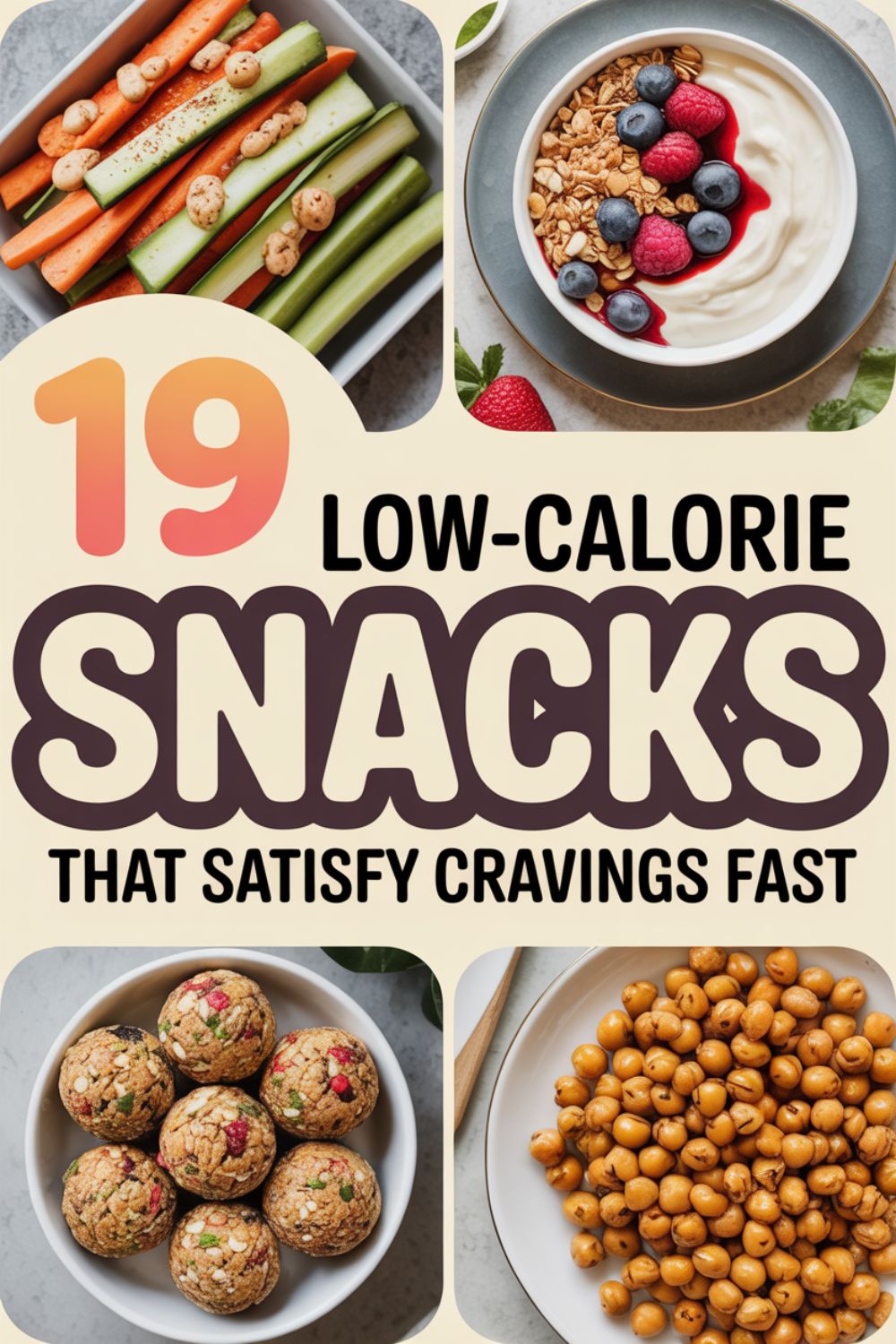
19 Low-Calorie Snacks That Satisfy Cravings Fast
You know that 3 PM feeling when your stomach starts making weird noises and suddenly that candy bar in the vending machine looks like a reasonable life choice? Yeah, I’ve been there. The thing is, cravings don’t care about your meal plan, and hunger doesn’t wait for permission.
Here’s what I’ve learned after years of trying to manage my weight without feeling like I’m living on cardboard and sadness: the right snacks can actually save your entire day. We’re talking about foods that shut down cravings without derailing your progress—snacks that taste good enough that you won’t feel deprived but smart enough that you can eat them guilt-free.
I’ve rounded up 19 low-calorie snacks that actually work. No weird ingredients you can’t pronounce, no recipes that require a culinary degree, and definitely no snacks that leave you hungrier than when you started. Just real food that fits into real life.
Why Low-Calorie Snacks Actually Matter
Let’s talk about why we even need snacks in the first place. Research from Harvard Health shows that eating nutrient-rich snacks between meals can help stabilize your energy and prevent cravings for unhealthy foods. The key word here is “nutrient-rich”—because a 100-calorie pack of cookies might technically be low-calorie, but it’s not doing you any favors.
Your body needs a combination of protein, fiber, and healthy fats to feel satisfied. When you skip one of these, you’re basically setting yourself up to raid the kitchen an hour later. That’s not willpower—that’s biology.
I used to think snacking was the enemy of weight loss. Turns out, strategic snacking is actually one of the smartest things you can do. When you let yourself get too hungry, you’re way more likely to overeat at meals or make impulsive choices. A well-timed snack keeps your metabolism steady and prevents that “I could eat a horse” desperation.
Understanding What Makes a Snack Actually Filling
Not all 150-calorie snacks are created equal. You could eat 150 calories of pretzels and be hungry again in 20 minutes, or you could eat 150 calories of Greek yogurt with berries and stay satisfied for hours. The difference? Macronutrients.
Protein is your best friend here. It takes longer to digest, which means you stay fuller longer. According to WebMD’s nutrition experts, protein-rich snacks help keep hunger at bay more effectively than carb-heavy options alone.
Fiber is the other secret weapon. High-fiber foods add bulk without adding calories, and they slow down digestion. That’s why an apple with peanut butter beats apple juice every single time.
Healthy fats round out the trifecta. A little bit of fat makes food more satisfying and helps your body absorb fat-soluble vitamins. Plus, let’s be honest—food tastes better with a little fat in it.
The sweet spot for snacks is usually between 100-200 calories. Less than that and you’re just teasing yourself. More than that and you’re basically eating a small meal. For anyone following structured meal plans, these snacks work perfectly alongside options like a 7-day 1200 calorie meal plan or a 14-day 1500 calorie meal plan.
19 Low-Calorie Snacks That Actually Satisfy
1. Greek Yogurt with Berries
Half a cup of plain, nonfat Greek yogurt topped with a handful of berries clocks in around 120 calories and delivers about 12 grams of protein. The yogurt gives you that creamy satisfaction while the berries add natural sweetness and fiber.
I like to use frozen berries because they’re cheaper and last forever. Just let them thaw for a few minutes or eat them semi-frozen for a more ice cream-like experience. You can also add a drizzle of honey if you need a touch more sweetness, but honestly, once the berries break down, they’re plenty sweet on their own.
2. Apple Slices with Almond Butter
One medium apple sliced up with a tablespoon of almond butter is around 165 calories of pure satisfaction. The apple gives you fiber and that satisfying crunch, while the almond butter brings healthy fats and protein.
Here’s my hack: slice the apple ahead of time and squeeze a little lemon juice on it so it doesn’t turn brown. I keep portions of almond butter in small silicone containers so I’m not tempted to eat half the jar. Trust me on this one—portion control matters with nut butters.
3. Cottage Cheese with Cherry Tomatoes
Half a cup of low-fat cottage cheese has about 14 grams of protein packed into roughly 90 calories. Add a cup of cherry tomatoes and you’ve got yourself a savory snack that’s loaded with lycopene and other antioxidants.
I know cottage cheese gets a bad rap for being boring, but hear me out. Sprinkle some everything bagel seasoning on it and suddenly it’s actually interesting. You can also add a drizzle of olive oil and fresh basil if you’re feeling fancy.
4. Hard-Boiled Eggs with Everything Seasoning
Two hard-boiled eggs give you about 140 calories and 12 grams of protein. They’re portable, they last in the fridge for a week, and they’re one of the most complete protein sources you can find.
The trick to perfect hard-boiled eggs? Use an egg cooker if you’re as impatient as I am, or just boil them for exactly 10 minutes, then immediately transfer to ice water. The ice bath stops the cooking and makes them easier to peel. Season with everything bagel seasoning or just salt and pepper.
5. Edamame with Sea Salt
One cup of edamame packs 18 grams of protein and 8 grams of fiber into about 190 calories. It’s basically the MVP of the snack world. You can buy it frozen and just microwave it when you need a quick fix.
Sprinkle it with coarse sea salt or try it with a little garlic powder and chili flakes for extra flavor. The best part? It takes a while to eat because you have to pop each bean out of its pod, which means you’re less likely to mindlessly inhale the whole thing.
Speaking of protein-packed options, if you’re looking for more substantial meal ideas, check out these 18 low-calorie high-protein meals or explore 30 high-protein low-calorie meals that actually keep you full.
6. Veggies with Hummus
Two tablespoons of hummus with a cup of raw veggies—carrots, bell peppers, cucumber, whatever you’ve got—comes in around 100 calories. The hummus brings protein and healthy fats, while the veggies give you that crunch factor and loads of vitamins.
I’m partial to roasted red pepper hummus because it has more flavor than plain, but any variety works. Cut your veggies on Sunday and store them in water in the fridge so they stay crisp all week.
7. Rice Cake with Avocado
One rice cake topped with a quarter of an avocado (sliced or mashed) and a sprinkle of sea salt runs about 110 calories. The avocado gives you healthy fats and fiber, while the rice cake provides that satisfying crunch.
Add a squeeze of lime and some red pepper flakes if you want to get fancy. Or throw on a few cherry tomatoes. I use whole grain rice cakes because they have more fiber than the plain white ones.
8. String Cheese with Whole Grain Crackers
One stick of low-fat string cheese plus five whole grain crackers gives you around 150 calories with a nice balance of protein and complex carbs. It’s portable, it doesn’t require refrigeration for a few hours, and it’s actually satisfying.
The key is choosing crackers with at least 3 grams of fiber per serving. I’m a fan of multigrain crackers that actually taste good and don’t crumble into dust the second you look at them.
9. Popcorn (Air-Popped)
Three cups of air-popped popcorn has only about 90 calories and gives you 4 grams of fiber. It’s one of those rare snacks where you can eat a huge volume without blowing your calorie budget.
I use an air popper because it’s faster than the microwave and you can control exactly what goes on it. Season it with nutritional yeast for a cheesy flavor, or try cinnamon and a tiny bit of sweetener for a dessert-ish version.
10. Cucumber Rounds with Cream Cheese
Half a cucumber sliced into rounds with two tablespoons of whipped cream cheese is around 90 calories. The cucumber is basically water with a crunch, and the cream cheese gives you that creamy satisfaction.
Use whipped cream cheese instead of regular—it has air incorporated, which means you get more volume for fewer calories. Season with dill, garlic powder, or everything bagel seasoning.
11. Frozen Grapes
One cup of frozen grapes is about 100 calories and feels like you’re eating candy. Freeze them on a baking sheet first so they don’t stick together, then transfer to a container.
They take forever to eat because they’re frozen, which is actually a good thing. It forces you to slow down and actually enjoy your snack instead of inhaling it in 30 seconds. Red or green grapes both work—I usually buy whatever’s on sale.
12. Turkey and Cheese Roll-Ups
Two slices of deli turkey wrapped around two thin slices of cheese gives you about 120 calories and 14 grams of protein. It’s like a sandwich without the bread, and honestly, once you get used to it, you won’t miss the carbs.
Add some mustard, a pickle, or even a lettuce leaf for extra volume. I buy my deli meat fresh from the counter instead of pre-packaged because it tastes better and usually has less sodium.
For more ideas that keep you satisfied throughout the day, you might enjoy these 30 low-calorie lunch ideas or these 21 low-calorie dinners under 350 calories.
13. Roasted Chickpeas
A quarter cup of roasted chickpeas has about 120 calories and gives you fiber, protein, and that satisfying crunch you crave from chips. You can buy them pre-made or roast your own.
If you’re making them yourself, rinse and dry a can of chickpeas, toss them with a tiny bit of avocado oil and your favorite spices, then roast at 400°F for 30-40 minutes. They’re infinitely better than store-bought chips and way more nutritious.
14. Celery with Peanut Butter
Three celery sticks with a tablespoon of peanut butter is around 130 calories. Yeah, it’s basically a childhood classic, but there’s a reason this combo has stood the test of time.
The celery is mostly water and fiber, which means you can eat a lot of it for very few calories. The peanut butter provides protein and healthy fats. If you want to get weird with it, add a few raisins on top—ants on a log style.
15. Chia Pudding
Two tablespoons of chia seeds mixed with half a cup of unsweetened almond milk, left overnight in the fridge, gives you about 110 calories of pudding-like goodness. Chia seeds absorb liquid and expand, so a little goes a long way.
Top with a few berries or a sprinkle of cinnamon. I make mine in small mason jars so I can just grab one from the fridge. Add a drop of vanilla extract to make it taste less “healthy” and more like an actual treat.
Meal Prep Essentials Used in This Plan
Making these snacks easier starts with having the right tools on hand. Here’s what I actually use:
Physical Products:
- Glass meal prep containers – Perfect for portioning snacks ahead of time
- Digital food scale – Takes the guesswork out of portions
- Silicone baking mat – Essential for roasting chickpeas without sticking
Digital Resources:
- Complete Low-Calorie Meal Prep Guide (digital download)
- Printable Snack Portion Chart (PDF)
- 50 Snack Combinations Cheat Sheet (instant access)
Want to connect with others on the same journey? Join our WhatsApp community for daily tips, recipe swaps, and support.
16. Watermelon Cubes
Two cups of cubed watermelon has only about 80 calories but feels like a lot of food. It’s over 90% water, which means you’re getting hydration along with natural sweetness.
Freeze the cubes for a slushie-like treat, or eat them fresh. Add a squeeze of lime and a sprinkle of chili powder if you want to get adventurous. I cut up a whole watermelon at once and keep it in airtight containers in the fridge.
17. Tuna Salad on Cucumber Slices
A small can of tuna (in water, drained) mixed with a tablespoon of Greek yogurt instead of mayo, served on cucumber slices, is around 140 calories. The tuna gives you protein and omega-3s, while the cucumber adds volume and crunch.
Season with lemon juice, dill, and a little black pepper. This is way more interesting than a plain can of tuna and doesn’t require any bread. If you’re watching your budget, check out these 25 cheap low-calorie meals for meal prep for more cost-effective ideas.
18. Protein Smoothie (Small)
One scoop of protein powder blended with a cup of unsweetened almond milk and a handful of spinach (you won’t taste it, I promise) comes in around 130 calories. Add ice to make it more filling and smoothie-like.
I use a personal blender because cleaning a full-size blender for one smoothie is annoying. Throw in a few berries if you need more sweetness, but watch the calorie creep—berries add up faster than you think.
19. Almonds (Portion Controlled)
Fourteen almonds—yes, I count them—gives you about 100 calories with healthy fats, protein, and fiber. The key word here is “portion controlled” because it’s very easy to eat half a bag without realizing it.
I portion them out into small snack bags ahead of time. Once the bag is empty, I’m done. No negotiating with myself about whether “just a few more” is okay. This strategy works for any nut, by the way—almonds, cashews, pistachios, whatever you prefer.
How to Actually Stick with Low-Calorie Snacking
Having a list of healthy snacks is great, but let’s talk about making this work in real life. The main reason people fall off the wagon isn’t lack of willpower—it’s lack of preparation.
Meal prep your snacks. Seriously, this is the single most important thing you can do. Spend 30 minutes on Sunday washing, chopping, and portioning. When you’re hungry on Wednesday afternoon, you’ll grab what’s easiest. Make the healthy choice the easy choice.
Keep snacks visible. Put your prepped veggies at eye level in the fridge. Keep a bowl of fruit on the counter. Store portion-controlled nuts in your desk drawer. Out of sight really is out of mind, so don’t hide your healthy options behind the leftover pizza.
Learn what a portion looks like. Most people wildly underestimate portion sizes. Get a food scale and measure things for a week or two until you’ve trained your eye. A tablespoon of peanut butter is a lot smaller than you think. A serving of cheese is not “however much fits in my hand.”
Have backup options. Keep some shelf-stable snacks around for emergencies—protein bars, individual nut packs, that kind of thing. Life happens, and sometimes you don’t have time to prep. Having a decent backup beats hitting the vending machine.
Want more structured guidance? These resources can help: 7-day 1400 calorie meal plan that keeps you full or 21-day low-calorie meal plan for busy women.
Common Mistakes to Avoid
Let me save you from the mistakes I made when I first started paying attention to snacks.
Mistake #1: Going too low on calories. A 50-calorie snack isn’t going to cut it. You’ll just be hungry again in 20 minutes and end up eating more overall. Aim for that 100-200 calorie sweet spot.
Mistake #2: Skipping the protein. Carbs alone won’t keep you satisfied. You need protein, fat, or preferably both alongside those carbs. That’s why crackers alone don’t work, but crackers with cheese do.
Mistake #3: Eating straight from the container. I don’t care how much self-control you think you have—portion it out first. Period. It’s way too easy to eat half a jar of almond butter or half a bag of trail mix when you’re eating directly from the source.
Mistake #4: Relying on processed “diet” foods. Those 100-calorie snack packs of cookies or chips? Yeah, they’re portion-controlled, but they’re nutritionally empty. You’re better off eating real food that actually nourishes your body. Check out what GoodRx nutritionists recommend about choosing nutrient-dense snacks over processed options.
Mistake #5: Forgetting about hydration. Sometimes what feels like hunger is actually thirst. Drink a glass of water first, wait 10 minutes, then reassess. You’d be surprised how often that “need a snack” feeling disappears.
Making It Work Long-Term
The goal isn’t perfection. The goal is progress and finding a rhythm that works for your life. Some days you’ll nail it with perfectly portioned, nutrient-dense snacks. Other days you’ll end up eating crackers straight from the box while standing in front of the pantry. That’s called being human.
What matters is having more good days than chaotic ones. Build systems that make healthy choices easier. Keep your kitchen stocked with good options. Prep what you can when you have time. And give yourself grace when things don’t go according to plan.
These snacks work because they’re realistic. They use ingredients you can find at any grocery store, they don’t require complicated recipes, and they actually taste good. You can stick with them for months or years, not just until your next moment of weakness.
For more practical approaches to weight management, explore how to lose weight on 1200-1500 calories without starving or see what I eat in a 1200 calorie day for realistic meal ideas.
Tools & Resources That Make Snacking Easier
Setting yourself up for success is half the battle. These are my go-to tools that make healthy snacking actually convenient:
Kitchen Essentials:
- Portion control containers set – Color-coded for different food groups
- Mandoline slicer – Makes vegetable prep ridiculously fast
- Insulated lunch bag – Keeps your prepped snacks fresh all day
Digital Guides:
- Weekly Snack Prep Template (printable planner)
- Macro-Balanced Snack Calculator (Excel sheet)
- Grocery Shopping List for Low-Calorie Snacking (PDF)
Connect with our community for recipe swaps and motivation: Join our WhatsApp group
Frequently Asked Questions
How many snacks should I eat per day?
Most people do well with 1-2 snacks per day, depending on your meal timing and activity level. If you eat breakfast at 7 AM and lunch isn’t until 1 PM, a mid-morning snack makes sense. Same goes for that gap between lunch and dinner. Listen to your actual hunger cues instead of eating on autopilot.
Can I still lose weight if I’m snacking?
Absolutely. The total number of calories you eat in a day matters more than whether those calories come from three meals or three meals plus snacks. Strategic snacking can actually help with weight loss by preventing excessive hunger that leads to overeating at meals. The key is choosing nutrient-dense snacks and watching your portions.
What’s the best time to eat a snack?
Eat a snack when you’re genuinely hungry—usually 2-3 hours after a meal. If you’re eating dinner at 6 PM and going to bed at 10 PM, you might not need an evening snack. But if you’re working out in the afternoon or have a long gap between lunch and dinner, that’s when a snack becomes helpful.
Are protein bars a good low-calorie snack option?
They can be, but read the labels carefully. Many protein bars are basically candy bars in disguise with 300+ calories and loads of added sugar. Look for bars with at least 10 grams of protein, less than 10 grams of sugar, and around 150-200 calories. Real food is usually better, but a quality protein bar works as a convenient backup option.
How do I stop mindless snacking at night?
First, figure out if you’re actually hungry or just bored. If you’re genuinely hungry, you probably didn’t eat enough during the day—add more protein and fiber to your meals. If it’s boredom or habit, try drinking herbal tea, going for a walk, or setting a “kitchen closed” time. Also, brush your teeth after dinner. It sounds silly, but it works.
Final Thoughts
Smart snacking isn’t about deprivation—it’s about being strategic. These 19 snacks prove you can satisfy cravings, stay within your calorie goals, and actually enjoy what you’re eating. No cardboard-flavored protein bars required.
Start with the snacks that appeal to you most. Maybe it’s the Greek yogurt and berries, maybe it’s the edamame. Prep a few options this weekend and see how they work for you. Adjust based on your preferences, your schedule, and what actually keeps you satisfied.
The best snack is the one you’ll actually eat consistently. It doesn’t matter if almonds are nutritionally perfect if you hate them. Find your favorites from this list, rotate them to keep things interesting, and remember that progress beats perfection every single time.
Now go forth and snack wisely. Your 3 PM self will thank you.
Similar Posts
20 Low-Calorie Salty Snacks to Keep You Full
20 Low-Calorie Salty Snacks to Keep You Full – Purely Chic Life 20 Low-Calorie Salty Snacks to Keep You Full Your guide to guilt-free snacking that actually satisfies those cravings Let’s be real for a second. When that 3 PM slump hits and you’re staring into the office vending machine like it holds all the…
20 Low-Calorie Snacks Under 150 Calories
20 Low-Calorie Snacks Under 150 Calories 20 Low-Calorie Snacks Under 150 Calories Look, I get it. You’re starving between meals, your energy is tanking faster than your motivation to meal prep, and you’re about three seconds away from demolishing an entire bag of chips. Been there, done that, got the crumb-covered keyboard to prove it….
15 Low-Calorie Sweet Snacks Under 120 Calories
15 Low-Calorie Sweet Snacks Under 120 Calories 15 Low-Calorie Sweet Snacks Under 120 Calories Look, I get it. You want something sweet that won’t completely blow your calorie budget for the day. You’re tired of eating the same boring apple slices, and let’s be honest, those rice cakes taste like cardboard no matter how you…