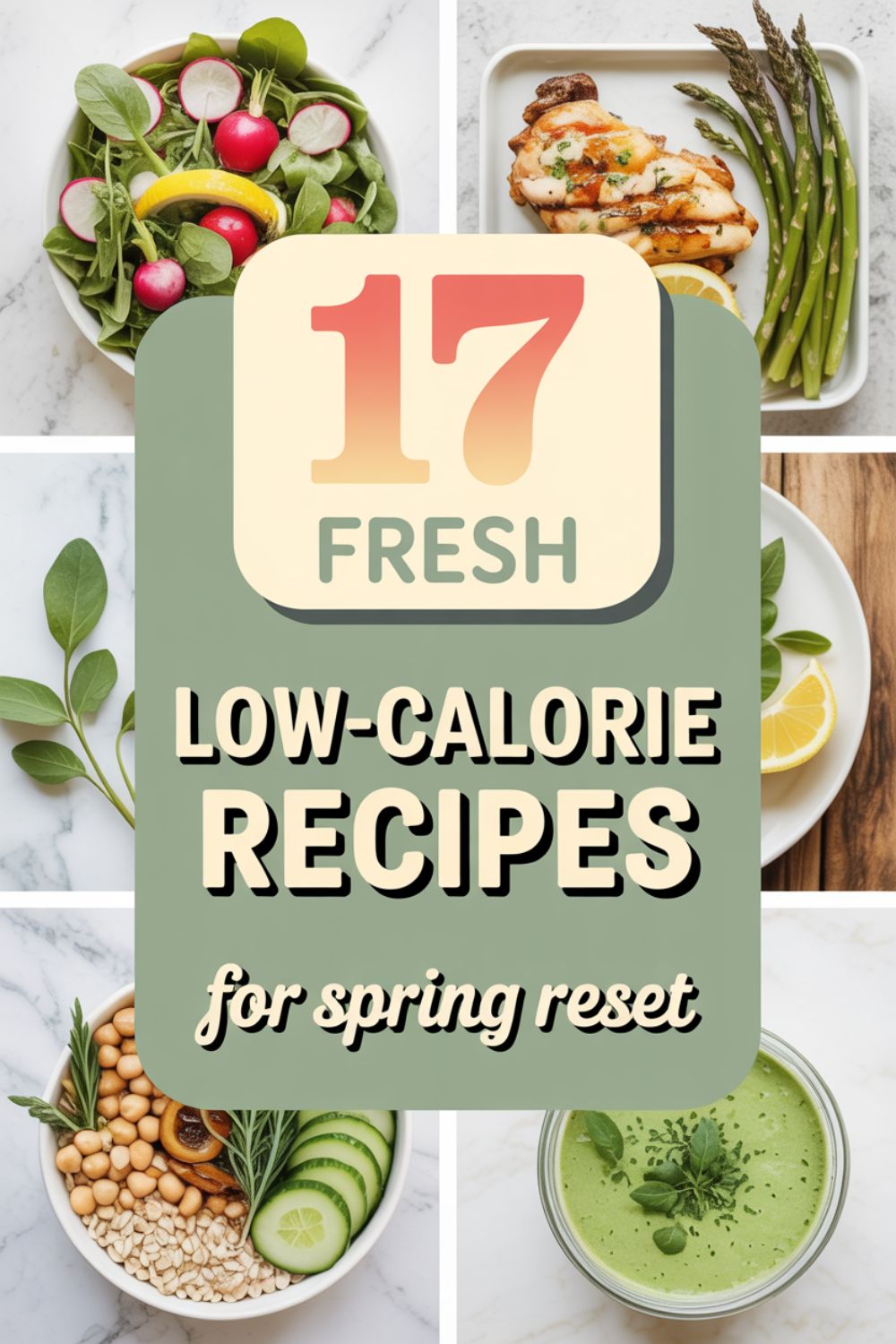
17 Fresh Low-Calorie Recipes for Spring Reset
Spring is finally here, and if you’re anything like me, you’re ready to shake off the comfort food haze and eat something that doesn’t make you want to nap for three hours afterward. I’m talking about food that’s light, vibrant, and actually makes you feel good without the calorie guilt trip.
These 17 recipes aren’t about deprivation—they’re about eating smart, fresh, and colorful. Think crisp veggies, lean proteins, and meals that won’t leave you staring into the fridge an hour later wondering why you’re still hungry. I’ve rounded up breakfast, lunch, dinner, and snack options that clock in low on calories but high on flavor and satisfaction.
Whether you’re trying to reset after winter indulgence or just want recipes that don’t require a calculator to track, you’re in the right place. Let’s get into it.
Why a Spring Reset Makes Sense
Let’s be real—winter eating is a whole different vibe. You’re layering on sweaters, justifying seconds of mac and cheese, and pretending soup with half a baguette counts as balanced. No judgment here. But spring? Spring practically begs you to eat lighter.
The produce is better, the weather is warmer, and honestly, your body is probably craving something that doesn’t require elastic waistbands. A spring reset isn’t about crash dieting or surviving on celery sticks. It’s about recalibrating your eating habits with fresh, seasonal ingredients that naturally support weight management and energy.
According to Harvard Health, increasing your intake of fiber-rich vegetables and fruits can support weight loss efforts while keeping you fuller longer. That’s exactly what these recipes do—they pack in volume, nutrients, and flavor without the calorie overload.
Plus, spring veggies like asparagus, snap peas, and radishes are at their peak. You’re getting better taste and nutritional value compared to the sad winter produce that’s been sitting in cold storage since October. Win-win.
Pro Tip: Prep your veggies on Sunday night and thank yourself all week. Washed greens, chopped bell peppers, and portioned berries make weekday cooking so much easier.
Breakfast Recipes That Don’t Feel Like Diet Food
1. Greek Yogurt Parfait with Honey and Berries (180 calories)
I make this almost every morning because it’s stupid simple and genuinely delicious. Layer non-fat Greek yogurt with fresh strawberries, blueberries, and a drizzle of honey. Toss in some chia seeds if you’re feeling fancy—they add omega-3s and a little crunch.
The protein from the yogurt keeps you full, and the berries give you that natural sweetness without refined sugar. I use these small glass jars to prep a few at a time. Makes mornings less chaotic.
2. Veggie-Loaded Egg White Scramble (150 calories)
If you think egg whites are boring, you’re not using enough vegetables. I’m talking spinach, cherry tomatoes, mushrooms, and a handful of diced bell peppers. Season with garlic powder, black pepper, and a pinch of smoked paprika.
This is one of those low-calorie breakfasts that actually keeps you satisfied until lunch. No mid-morning snack attacks. Get Full Recipe
3. Overnight Oats with Cinnamon and Apple (220 calories)
Overnight oats are the ultimate lazy breakfast, and I mean that as a compliment. Mix rolled oats, unsweetened almond milk, diced apple, cinnamon, and a tiny bit of maple syrup. Let it sit in the fridge overnight, and you wake up to breakfast already done.
I meal prep these in mason jars every Sunday. Five jars, five mornings covered. FYI, you can swap the apple for any fruit—berries, peaches, whatever’s on sale. For more morning inspiration, check out these low-calorie breakfast recipes or these quick breakfasts under 300 calories.
4. Spinach and Feta Egg Muffins (120 calories each)
These little guys are perfect for grab-and-go mornings. Whisk eggs with chopped spinach, crumbled feta, and diced tomatoes. Pour into a silicone muffin pan and bake. Store them in the fridge and reheat as needed.
They’re like mini crustless quiches but without the calorie damage. Great for meal prep, great for busy people who still want real food for breakfast.
Light Lunches That Actually Fill You Up
5. Shrimp and Avocado Salad (280 calories)
This salad tastes way more indulgent than it is. Grilled shrimp, diced avocado, cherry tomatoes, cucumber, and mixed greens. Dress it with lime juice, olive oil, and a pinch of salt. That’s it.
The shrimp gives you lean protein, and the avocado adds healthy fats that keep you full. I usually make extra shrimp and keep it in the fridge for quick salads throughout the week. If you’re looking for more quick options, these low-calorie lunch ideas are solid.
6. Zucchini Noodles with Pesto and Chicken (290 calories)
Zucchini noodles used to seem gimmicky to me until I realized they’re just a vehicle for sauce, like regular pasta. Spiralize zucchini, toss with homemade or store-bought pesto, and top with grilled chicken strips.
I use this handheld spiralizer because the big countertop ones take up too much space. Quick, fresh, and you don’t feel heavy afterward. Get Full Recipe
Quick Win: Buy pre-cooked rotisserie chicken and shred it for the week. Saves time and keeps you from ordering takeout on busy nights.
7. Cauliflower Fried Rice (200 calories)
Real talk—cauliflower rice isn’t rice. But when you season it right with soy sauce, garlic, ginger, peas, carrots, and scrambled egg, it’s a pretty solid lunch. High volume, low calories, and surprisingly filling.
You can buy pre-riced cauliflower or make your own in a food processor. Either way works. This is one of those meals that tricks your brain into thinking you ate way more than you did.
8. Turkey and Veggie Lettuce Wraps (190 calories)
Swap the tortilla for butter lettuce and suddenly you’re eating a low-calorie wrap that doesn’t make you sleepy at 2 PM. Fill with lean ground turkey, shredded carrots, cucumber, and a drizzle of sriracha mayo.
These are crunchy, flavorful, and honestly more satisfying than the bread version. Plus, they’re easier to digest if you’re sensitive to wheat or gluten.
Meal Prep Essentials Used in This Plan
Physical Products:
- Glass Meal Prep Containers (3-compartment set) – Keeps everything separated and fresh. Microwave and dishwasher safe.
- Spiralizer (handheld version) – Makes zucchini noodles in under 2 minutes. No bulky equipment needed.
- Silicone Baking Mats (set of 2) – Nothing sticks. Ever. Saves parchment paper and cleanup time.
Digital Products:
- 7-Day 1200 Calorie Meal Plan – Complete guide with shopping lists and calorie breakdowns
- 30-Day Low-Calorie Meal Plan – Month-long reset with variety and structure
- Low-Calorie Recipe eBook Bundle – Over 100 recipes organized by meal type
Join Our WhatsApp Community: Get daily meal prep tips, recipe swaps, and support from people actually doing this—not just talking about it. Real feedback, zero fluff.
Dinners That Won’t Wreck Your Progress
9. Baked Lemon Herb Salmon with Asparagus (320 calories)
Salmon is one of those proteins that feels fancy but requires almost zero effort. Season with lemon juice, dill, garlic, and olive oil. Bake on a sheet pan with asparagus spears.
The asparagus roasts at the same temp and time as the salmon, so you’ve got a complete meal with minimal cleanup. I use parchment paper on the pan for even easier cleanup. This pairs well with other low-calorie dinners that fill you up.
10. Chicken Fajita Bowl (295 calories)
Skip the tortilla and build a bowl instead. Grilled chicken, bell peppers, onions, and a small scoop of black beans over cauliflower rice. Top with salsa, a dollop of Greek yogurt (instead of sour cream), and fresh cilantro.
This hits all the fajita notes without the calorie bomb. You still get the seasoning, the veggies, the protein—just a smarter setup. Get Full Recipe
11. Turkey Meatballs with Marinara and Zoodles (310 calories)
Ground turkey mixed with breadcrumbs, garlic, parsley, and a little Parmesan. Roll into balls, bake, and serve over zucchini noodles with marinara sauce.
These are lighter than beef meatballs but still satisfying. Make a big batch and freeze half for lazy weeknights. You’ll thank yourself later. If you’re into meal prep, these meal prep ideas are gold.
12. Teriyaki Tofu Stir-Fry (260 calories)
Press your tofu, cube it, and pan-fry until crispy. Toss with broccoli, snap peas, carrots, and a simple teriyaki sauce. Serve over a small portion of brown rice or skip the rice entirely.
Tofu gets a bad rap, but when it’s crispy and coated in sauce, it’s genuinely good. This is one of those low-calorie vegetarian recipes that even non-vegetarians enjoy.
Pro Tip: Double your dinner proteins and use the leftovers for lunch the next day. Meal planning becomes way less stressful when you cook once, eat twice.
13. Stuffed Bell Peppers with Ground Turkey (275 calories)
Cut bell peppers in half, remove the seeds, and stuff with a mixture of ground turkey, diced tomatoes, onions, and Italian seasoning. Top with a sprinkle of mozzarella and bake.
These are colorful, filling, and perfect for meal prep. You can make six at once and eat them throughout the week. One of my favorite easy dinner ideas that I genuinely look forward to.
Snacks and Lighter Bites
14. Cucumber Slices with Hummus (80 calories)
This is almost too simple to call a recipe, but it’s one of those snacks that works. Thick cucumber slices dipped in hummus. Crunchy, creamy, and surprisingly filling.
I keep pre-sliced cucumbers in the fridge so I’m not tempted to grab chips when I’m mindlessly hungry. Small habit, big difference. Check out more options in these low-calorie snacks under 150 calories.
15. Strawberry Banana Smoothie (140 calories)
Frozen strawberries, half a banana, unsweetened almond milk, and a handful of spinach (you won’t taste it, I promise). Blend until smooth.
This is my go-to afternoon pick-me-up when I need something sweet but don’t want to blow my calorie budget. Plus, it’s naturally sweet—no added sugar needed. For more smoothie ideas, try these low-calorie smoothies.
16. Hard-Boiled Eggs with Everything Bagel Seasoning (70 calories each)
Boil a batch of eggs at the start of the week and keep them in the fridge. When you need a quick snack, sprinkle with everything bagel seasoning.
Protein-packed, portable, and weirdly satisfying. I use this egg cooker because I’m terrible at timing stovetop eggs and always end up with green yolks.
17. Air-Popped Popcorn with Nutritional Yeast (100 calories for 3 cups)
If you need volume snacking, popcorn is your friend. Air-pop it, skip the butter, and toss with nutritional yeast for a cheesy, savory flavor.
Three cups is a lot of popcorn for very few calories. It’s one of those snacks that keeps your hands busy and your stomach happy without derailing anything. IMO, it’s better than the microwave bags loaded with mystery ingredients.
Tools and Resources That Make Cooking Easier
Kitchen Tools:
- Digital Food Scale – Takes the guesswork out of portion control. Super helpful when you’re starting out.
- Herb Scissors – Chop fresh herbs in seconds without a cutting board. Game changer for lazy cooks.
- Avocado Slicer Tool – Pits, slices, and scoops in one motion. Saves time and prevents avocado hand injuries.
Helpful Guides:
- How to Lose Weight on 1200-1500 Calories Without Starving – Realistic strategies that actually work long-term
- 12 Low-Calorie Grocery Items I Always Buy – Shopping list staples that keep your fridge stocked smart
- 30 Low-Calorie Foods to Help Reduce Belly Fat – Science-backed food choices for targeted fat loss
What Makes These Recipes Work
These 17 recipes aren’t magic, but they’re built on a few key principles that make low-calorie eating sustainable. First, they’re all high in volume. You’re eating plenty of food—vegetables, lean proteins, and fiber-rich ingredients that fill you up without packing in calories.
Second, they focus on whole, minimally processed foods. You won’t find weird substitutes or fake versions of real food here. Just fresh ingredients prepared in simple, flavorful ways.
Third, they’re flexible. Don’t like salmon? Swap in chicken or tofu. Hate zucchini? Use spaghetti squash. These recipes are frameworks, not rigid rules. The goal is to find what works for you and stick with it.
According to research from the National Institutes of Health, sustainable weight loss comes from creating eating patterns you can maintain long-term—not from extreme restriction. That’s exactly what this spring reset is designed to do.
Sarah from our community tried these recipes for three weeks and lost 8 pounds without feeling deprived. She mentioned that having variety made all the difference—she didn’t get bored or start craving takeout by day four like she usually does.
How to Use This Recipe Collection
You don’t need to make all 17 recipes in one week. That’s insane and unrealistic. Instead, pick 2-3 breakfasts you like, rotate through 3-4 lunches, and choose 4-5 dinners. Keep 2-3 snack options on hand.
Meal prep what you can on Sundays—chop veggies, cook proteins, prep overnight oats. The more you prep ahead, the less you’ll rely on willpower during the week. Willpower is overrated. Preparation is where it’s at.
Use these recipes as a starting point and adjust based on your preferences and calorie goals. If you’re following a 1200 calorie meal plan, you’ll want to be strategic about portions. If you’re aiming for 1500 calories, you have a bit more flexibility.
The point isn’t perfection. It’s progress. Even if you only use five of these recipes regularly, that’s five meals you’re not winging or ordering in. That adds up fast.
Frequently Asked Questions
Can I meal prep all of these recipes?
Most of them, yes. The egg muffins, overnight oats, stuffed peppers, and turkey meatballs all meal prep beautifully. Salads and zucchini noodles are best made fresh, but you can prep the components ahead and assemble when you’re ready to eat. I typically prep proteins and chopped veggies on Sunday and build meals throughout the week.
Are these recipes suitable for beginners?
Absolutely. None of these require advanced cooking skills or fancy techniques. If you can chop vegetables, season protein, and use an oven or stovetop, you’re good to go. The whole point is to keep things simple and sustainable, not intimidating.
How long will these recipes keep me full?
Because they’re high in protein, fiber, and volume, most people find they stay satisfied for 3-4 hours. The key is pairing lean protein with fiber-rich vegetables and some healthy fats. If you’re still hungry, drink more water and add an extra serving of non-starchy vegetables—they’re filling without adding many calories.
Can I adjust the recipes for different calorie goals?
Definitely. These recipes are flexible. If you need more calories, add a small portion of quinoa, sweet potato, or extra avocado. If you need fewer, reduce the portion sizes or skip optional toppings. The recipes are templates—adjust them to fit your specific needs.
Do I need special equipment for these recipes?
Not really. A spiralizer is helpful for zucchini noodles, but you can also buy pre-spiralized zucchini at most grocery stores. Everything else uses basic kitchen tools—pots, pans, baking sheets, and a blender for smoothies. No fancy gadgets required unless you want them.
Final Thoughts
Spring is the perfect time to reset your eating habits without feeling like you’re punishing yourself. These 17 recipes give you variety, flavor, and satisfaction—all while keeping calories in check and nutrition on point.
You don’t need complicated meal plans or expensive ingredients. You just need simple, fresh recipes that fit into real life. Make a few favorites on repeat, prep what you can ahead of time, and give yourself permission to adjust as you go.
This isn’t about eating perfectly. It’s about eating better, feeling lighter, and actually enjoying your food. Spring reset? Consider it done.