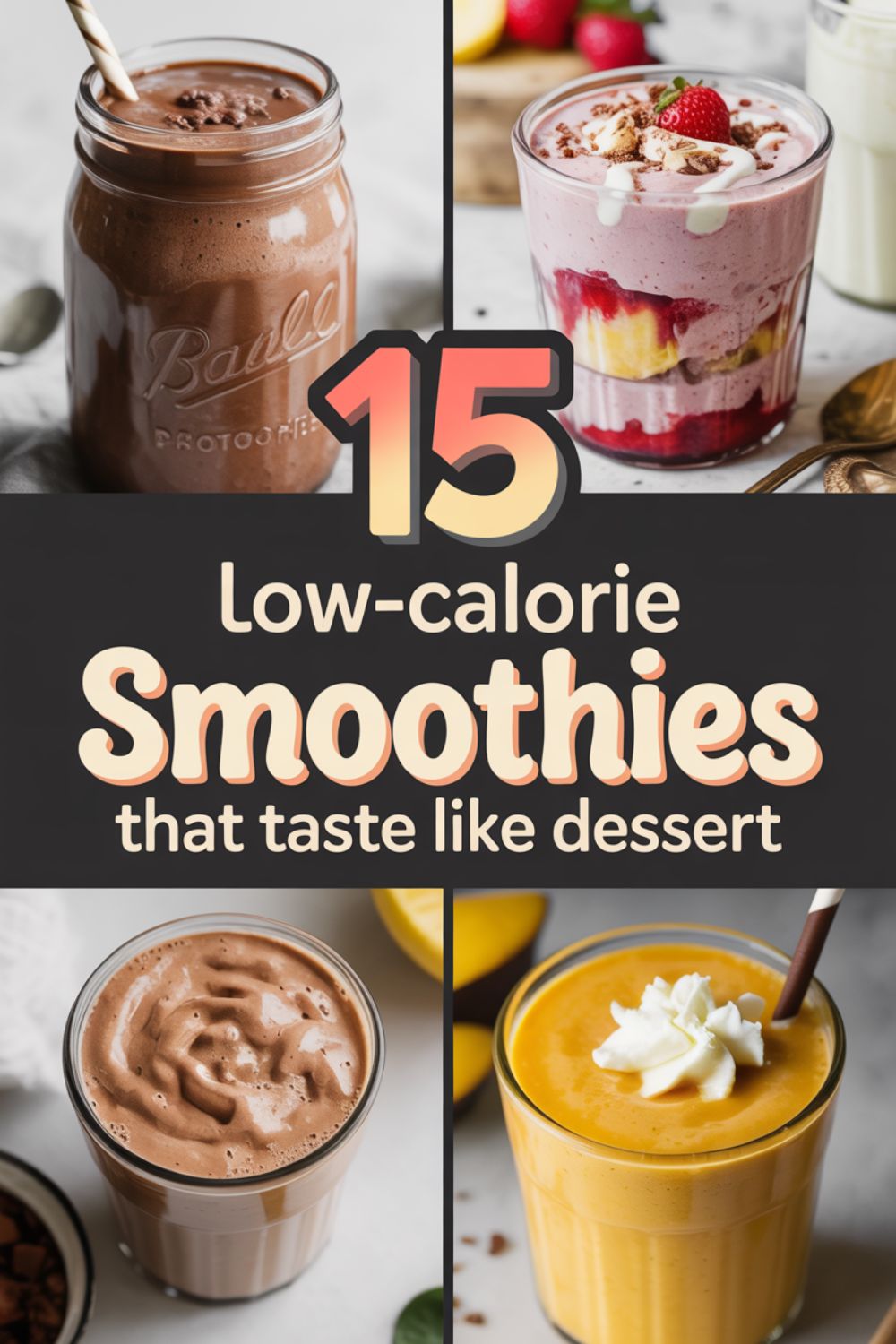
15 Low-Calorie Smoothies That Taste Like Dessert
Look, I’m not going to pretend that drinking a spinach smoothie feels the same as eating a hot fudge sundae. But what if I told you that you could absolutely have a creamy, sweet, dessert-like smoothie without blowing through 600 calories before lunch? Because here’s the truth: most smoothies marketed as “healthy” are basically milkshakes in disguise, loaded with fruit juice, sweetened yogurt, and enough banana to fuel a small primate colony.
These 15 smoothies? They’re different. They clock in at under 250 calories, taste legitimately indulgent, and won’t leave you hungry 20 minutes later wondering why you bothered. I’ve made every single one of these multiple times, tweaked the ratios, and accidentally created some truly questionable flavor combinations along the way. So yeah, you’re getting the refined versions here.
Whether you’re trying to stick to a 7-day 1200-calorie meal plan or just want something sweet that doesn’t derail your entire day, these smoothies deliver. Let’s get into it.
Why Most “Healthy” Smoothies Are Calorie Bombs
Ever ordered a smoothie at one of those juice bars and felt virtuous, only to realize later you just drank 500 calories? Yeah, me too. The problem is that most commercial smoothies treat fruit like it’s a free food. Spoiler: it’s not. A medium banana has about 105 calories. Add mango, pineapple, orange juice, and some “natural” honey, and you’re looking at a drink that has more sugar than a candy bar.
Then there’s the whole “add protein powder for $3 extra” upsell. I’m not anti-protein powder, but a lot of these places dump in sweetened versions that add another 150-200 calories without you realizing it. The Harvard School of Public Health notes that added sugars contribute to weight gain and metabolic issues, which is exactly what you’re trying to avoid.
The smoothies I’m sharing use smart swaps: unsweetened almond milk instead of juice, frozen cauliflower for creaminess without the carbs, and natural sweetness from a small amount of fruit paired with extracts and spices. You still get that dessert vibe, but without the blood sugar crash an hour later.
The Formula for Low-Calorie Smoothies That Actually Satisfy
Here’s what I’ve learned after making literally hundreds of smoothies: you need four key elements to make them feel like a treat instead of punishment.
Creaminess is non-negotiable. Nobody wants to drink watery sadness. I use frozen banana (just half), Greek yogurt, or a small amount of avocado to get that thick, spoonable texture. Some people swear by frozen cauliflower, which sounds insane but genuinely works.
Sweetness needs to come from the right places. A tiny bit of honey or maple syrup goes a long way when you pair it with vanilla extract, cinnamon, or cocoa powder. These ingredients trick your brain into thinking something is way sweeter than it actually is. It’s basically flavor psychology.
Protein keeps you full. This is where high-protein low-calorie meals become your best friend. Adding protein powder, Greek yogurt, or even silken tofu makes a smoothie stick with you for hours instead of leaving you ravenous before your next meal.
Texture variety matters. A sprinkle of granola, some chia seeds, or crushed nuts on top makes it feel more like eating than drinking. This small mental shift actually helps with satiety.
15 Low-Calorie Smoothies You’ll Actually Want to Make
1. Chocolate Peanut Butter Cup Smoothie
This one tastes like a Reese’s cup in liquid form. I use unsweetened cocoa powder, a tablespoon of natural peanut butter, half a frozen banana, and unsweetened almond milk. A scoop of chocolate protein powder bumps it up to about 220 calories and keeps me full until lunch. The trick is using really good cocoa powder because cheap stuff tastes chalky and bitter.
If you’re meal prepping, this pairs incredibly well with low-calorie breakfasts for a calorie deficit since it clocks in at under 250 calories but feels substantial.
2. Strawberry Cheesecake Smoothie
I’m obsessed with this one. You blend frozen strawberries, a quarter cup of low-fat cottage cheese (trust me on this), a splash of vanilla extract, and a tiny drizzle of honey. The cottage cheese gives it that tangy cheesecake flavor without the 400 calories of actual cheesecake. Top it with a few graham cracker crumbs, and honestly, you won’t believe it’s only 180 calories.
3. Mint Chocolate Chip Smoothie
This is basically a shamrock shake but without the food coloring and regret. Blend spinach (you won’t taste it, I promise), fresh mint leaves, cocoa powder, Greek yogurt, and a touch of honey. I throw in some mini dark chocolate chips at the end because life’s too short to skip chocolate entirely. Comes in around 200 calories.
4. Vanilla Cinnamon Roll Smoothie
This one makes me feel like I’m cheating even though I’m definitely not. You need vanilla protein powder, a half teaspoon of cinnamon, a quarter teaspoon of vanilla extract, frozen cauliflower (seriously), and unsweetened almond milk. The cauliflower adds creaminess and bulk without any noticeable flavor. It’s weird science, but it works. Around 190 calories depending on your protein powder.
For more breakfast ideas that won’t sabotage your goals, check out these low-calorie breakfast recipes that pair perfectly with these smoothies.
5. Blueberry Muffin Smoothie
Frozen blueberries, a tablespoon of old-fashioned oats, vanilla Greek yogurt, cinnamon, and almond milk. The oats give it that baked-good texture and help it stick with you longer. I sometimes add a tiny pinch of nutmeg because apparently I’m fancy now. This one sits around 210 calories.
6. Salted Caramel Smoothie
Okay, this sounds bougie, but hear me out. You make a “caramel” base by blending Medjool dates (just two), a pinch of sea salt, vanilla protein powder, and unsweetened cashew milk. It tastes shockingly close to actual caramel, and dates bring natural sweetness plus fiber. The sea salt is crucial because it enhances the sweetness without adding calories. Around 230 calories.
7. Raspberry White Chocolate Smoothie
Frozen raspberries, vanilla protein powder, unsweetened almond milk, and white chocolate extract (not white chocolate syrup, which is basically sugar water). The extract is key here because a quarter teaspoon gives you all the flavor without the calorie bomb. I blend in some frozen cauliflower to make it extra thick. Roughly 195 calories.
8. Pumpkin Pie Smoothie
This is a fall favorite but honestly works year-round. Canned pumpkin (not pumpkin pie filling, which is loaded with sugar), pumpkin pie spice, a frozen banana, vanilla protein powder, and almond milk. Sometimes I add a tablespoon of pecans for crunch. It’s like Thanksgiving in a glass but without the food coma. About 215 calories.
Looking for more ways to incorporate these smoothies into your routine? These low-calorie smoothies under 250 calories offer even more variety.
9. Cookies and Cream Smoothie
I use a vanilla protein shake as the base, add frozen cauliflower (again with the cauliflower, I know), and blend in two crushed Oreo thins. Yes, real Oreos. Two thins add about 70 calories but make this taste legitimate. You can also use chocolate protein powder and vanilla extract if you want to skip the cookies entirely, but where’s the fun in that? Total: 225 calories with the cookies.
10. Chocolate Cherry Smoothie
Frozen dark cherries, unsweetened cocoa powder, Greek yogurt, and almond milk. This combo has serious Black Forest cake vibes. Cherries are naturally sweet and packed with antioxidants, according to Healthline’s research on cherry nutrition. I use a high-speed blender for this one because cherries can be tough to pulverize. Around 200 calories.
Tools & Resources That Make Smoothie Prep Easier
After making smoothies nearly every day for two years, these are the things that actually make my life easier:
Physical Products:- High-Speed Blender – I tried the budget versions. They burned out. Just get a decent one with a strong motor that can crush frozen fruit without sounding like a jet engine.
- Mason Jars with Lids (16 oz) – Perfect for prepping smoothies the night before or storing individual portions of ingredients. The lids actually seal, unlike every other container I’ve tried.
- Silicone Ice Cube Trays – I freeze leftover almond milk, coconut milk, or even coffee in these. Pop a couple cubes into your smoothie instead of ice, and you get extra creaminess without diluting the flavor.
- Meal Prep Template Bundle – Includes weekly smoothie prep checklists, grocery lists organized by recipe, and a calorie-tracking spreadsheet that doesn’t make you want to cry.
- 30-Day Smoothie Challenge Guide – Daily recipes with shopping lists and tips for avoiding smoothie burnout. Also includes dairy-free and vegan modifications for every recipe.
- Macro Calculator & Recipe Customizer – Lets you adjust any smoothie recipe based on your specific calorie and macro goals. Game-changer if you’re tracking.
Join our WhatsApp community for daily smoothie tips, recipe swaps, and real talk about making this sustainable long-term.
11. Banana Cream Pie Smoothie
Frozen banana (a whole one this time), vanilla extract, a tablespoon of instant sugar-free vanilla pudding mix, Greek yogurt, and almond milk. The pudding mix is the secret weapon here because it thickens everything up and adds massive flavor for minimal calories. Top with a sprinkle of crushed vanilla wafers if you’re feeling it. Around 235 calories.
12. Mocha Frappuccino Smoothie
Cold brew coffee (or strongly brewed regular coffee, cooled), chocolate protein powder, a splash of vanilla extract, and ice. I make this when I need both caffeine and breakfast in one go. Sometimes I add a tablespoon of sugar-free chocolate syrup if I’m really craving something sweet. The coffee flavor is strong, so if you’re not a coffee person, skip this one. About 180 calories.
13. Key Lime Pie Smoothie
This one’s tangy and refreshing. You need Greek yogurt, fresh lime juice (bottled doesn’t taste the same), a tiny bit of lime zest, vanilla protein powder, and a couple of graham crackers blended in. The zest is what makes it taste authentic, so don’t skip it. Around 205 calories and surprisingly filling.
If you’re working on sustainable weight loss, pairing these smoothies with solid meals like these low-calorie dinners under 350 calories creates a balanced approach that actually works.
14. Almond Joy Smoothie
Unsweetened cocoa powder, coconut extract, shredded unsweetened coconut, a tablespoon of almond butter, and almond milk. This tastes exactly like the candy bar but won’t send your blood sugar on a roller coaster ride. I sometimes throw in a few dark chocolate chips because I’m not a complete masochist. Roughly 240 calories.
15. Peach Cobbler Smoothie
Frozen peaches, a pinch of cinnamon, a quarter teaspoon of vanilla extract, Greek yogurt, and a tablespoon of oats. The oats give it that cobbler-like texture, and honestly, this one tastes like summer regardless of what month it is. I top mine with a tiny sprinkle of granola for crunch. About 220 calories.
Sarah from our community made this smoothie her go-to breakfast for three months and said it completely changed her relationship with morning meals. She went from skipping breakfast entirely to actually looking forward to it, which helped her lose 18 pounds without feeling deprived.
Common Mistakes That Sabotage Low-Calorie Smoothies
I’ve made every single one of these mistakes, so learn from my failures.
Using too much fruit. Yes, fruit is healthy. But three bananas, a cup of mango, and a handful of dates is not a low-calorie smoothie—it’s a sugar bomb. Stick to one serving of fruit max, and use vegetables or ice to add volume instead.
Forgetting about liquid calories. Switching from water or unsweetened almond milk to orange juice or coconut milk (the full-fat canned kind) can add 200+ calories without changing the fullness factor. Not worth it, IMO.
Adding too many “healthy” fats at once. Chia seeds, flax seeds, nut butter, avocado—all great. But if you add all of them to one smoothie, you’re looking at an extra 300 calories. Pick one or two max.
Not using enough protein. A smoothie with just fruit and almond milk will spike your blood sugar and leave you starving in an hour. Protein powder, Greek yogurt, or cottage cheese keeps everything stable. If you’re following a high-protein 1200-calorie meal plan, this becomes even more critical.
Making them too complicated. Listen, if a smoothie requires 17 ingredients and a trip to three different stores, you’re not going to make it consistently. Keep it simple.
How to Make These Smoothies Part of Your Routine
Here’s the thing about smoothies: they’re only helpful if you actually make them. I’ve had weeks where I buy all the ingredients with the best intentions, and then they sit in my fridge until everything goes bad and I feel guilty about wasted money.
The system that works for me is stupid simple. Every Sunday, I prep five smoothie bags. Each bag gets the dry and frozen ingredients for one smoothie—frozen fruit, protein powder, any add-ins. I label them with a Sharpie directly on the bag (because I will definitely forget which one is which). In the morning, I dump one bag in the blender, add liquid, blend, done.
This approach pairs perfectly with low-calorie meal plans for busy women because it removes the decision fatigue that kills healthy eating habits.
Another trick: make smoothie bowls instead of drinks a couple times a week. Use less liquid so it’s thicker, pour it in a bowl, and add toppings like fresh fruit, granola, or coconut flakes. It takes longer to eat, which helps with satiety, and honestly feels more satisfying than just chugging something.
FYI, if you’re someone who needs variety to stay interested, rotate through 5-7 favorites instead of trying to make all 15 regularly. Decision fatigue is real, and having too many options actually makes it harder to stick with anything.
Meal Prep Essentials for Smoothie Success
These are the products and resources that turned smoothie-making from a chaotic daily scramble into something I can actually maintain:
Physical Products:- Reusable Freezer Bags – Regular plastic bags split and leak in the freezer. These thick silicone ones survive multiple uses and don’t contribute to plastic waste guilt.
- Label Maker – Sounds extra, but when you have five identical bags of frozen ingredients, you’ll appreciate knowing which one is chocolate peanut butter versus mint chip without having to guess.
- Collapsible Silicone Funnels – For getting protein powder into bottles or bags without creating a kitchen disaster. Folds flat for storage, which is huge if you don’t have endless cabinet space.
- Printable Smoothie Prep Planner – Weekly layout where you can plan which smoothies you’re making, check off ingredients you have, and note what you need to buy. Keeps you organized without an app.
- Calorie-Counted Smoothie Recipe eBook – 50+ recipes with full nutritional breakdowns, ingredient substitution guides, and meal prep instructions. Every recipe under 250 calories.
- Smoothie Troubleshooting Guide – Fixes for common problems like smoothies that are too thick, too thin, too sweet, not sweet enough, or separate after sitting. Saves you from dumping failed experiments down the drain.
Our WhatsApp group is where people share their weekly smoothie prep setups, post photos of their organized freezers, and vent when things don’t go as planned. It’s helpful and weirdly motivating.
Making Smoothies Work for Weight Loss
I’m not going to promise that drinking smoothies will automatically make you lose weight. That’s not how any of this works. But here’s what I will say: having a reliable, low-calorie breakfast option that you actually enjoy makes it way easier to stick to your calorie goals without feeling like you’re suffering.
The biggest benefit of these smoothies is that they’re portion-controlled. When you make them yourself, you know exactly what’s going in and can track calories accurately. Compare that to eyeballing portion sizes for solid food, where it’s incredibly easy to underestimate how much you’re eating.
Research from the Mayo Clinic shows that people who track their food intake consistently lose more weight than those who don’t. Smoothies make tracking almost effortless because you’re measuring everything as you blend.
That said, don’t fall into the trap of replacing every meal with smoothies. I did that for about a week, felt miserable, and then ate an entire pizza out of spite. Balance matters. One smoothie a day as breakfast or a snack? Great. Three smoothies a day with no solid food? Recipe for burnout and potentially some digestive issues you don’t want to discuss at parties.
The key is incorporating these into a larger plan. If you’re following something structured like a 1200-calorie meal plan for beginners, these smoothies slot in perfectly as a 200-250 calorie meal that doesn’t require cooking.
Dairy-Free and Vegan Modifications
Almost all of these smoothies can be made dairy-free with simple swaps. Greek yogurt becomes coconut yogurt or cashew yogurt. Regular milk becomes any plant-based milk—almond, oat, soy, whatever you prefer. Just check labels because some plant milks have added sugar that bumps up the calories.
For protein without dairy, you’ve got options. Pea protein, hemp protein, or rice protein all work fine. I personally think pea protein has the best texture, but some people hate the taste, so it’s worth trying a few samples before committing to a giant tub.
Silken tofu is also underrated for adding creaminess and protein. It’s flavorless when blended with other ingredients and gives you that thick texture without any dairy. A quarter cup adds about 45 calories and 5 grams of protein.
The hardest part about going completely plant-based with these recipes is finding a good substitute for cottage cheese in the cheesecake smoothie. Cashew cream works but requires soaking cashews overnight, which defeats the whole “quick and easy” purpose. I’d probably just skip that particular recipe if you’re avoiding dairy entirely.
Related Recipes You’ll Love
Frequently Asked Questions
Can I meal prep smoothies for the whole week?
You can prep the ingredients and freeze them in individual bags, absolutely. But I wouldn’t blend them all at once because they separate and get weird after 24 hours. Prepping bags takes maybe 20 minutes on Sunday and saves you tons of time during the week. Some people do blend and freeze them in jars, then thaw overnight in the fridge, but honestly the texture suffers and it’s not worth it to me.
Do these smoothies actually keep you full?
The ones with adequate protein (15+ grams) definitely do. The fruit-heavy ones without protein? Not so much. That’s why I always include Greek yogurt, protein powder, or another protein source. Pair a high-protein smoothie with a handful of nuts or a hard-boiled egg if you need more staying power. Everyone’s different, but protein is usually the key to lasting fullness.
Are smoothies better than eating whole foods for weight loss?
Not necessarily better, just different. Smoothies are convenient, portion-controlled, and easy to track. But whole foods require more chewing, which slows you down and can help with satiety. I use smoothies for convenience about 4-5 times a week and eat regular food the rest of the time. It’s about finding what works for your schedule and preferences, not declaring one universally superior.
Can I use fresh fruit instead of frozen?
Sure, but you’ll need to add ice to get that thick, cold texture. Frozen fruit is honestly easier and often cheaper because it doesn’t go bad quickly. Plus it’s usually frozen at peak ripeness, so the flavor is solid. I keep both on hand—fresh for eating, frozen for smoothies.
What’s the best protein powder for smoothies?
Depends on your preferences and dietary restrictions. Whey protein blends smoothly and tastes good but isn’t vegan. Pea protein is plant-based and works well but has a distinct taste some people don’t love. I rotate between vanilla whey and chocolate pea protein depending on the smoothie. Buy small containers of a few types and test them before committing to a giant tub.
Final Thoughts
Here’s what nobody tells you about making smoothies part of your routine: it’s not about perfection. Some days you’ll nail the perfect ratio and feel like a genius. Other days you’ll create something that tastes vaguely like grass clippings and wonder what went wrong. That’s normal.
The smoothies that work for you long-term are the ones you’ll actually make consistently. Maybe that’s three favorites you rotate through endlessly. Maybe you’re the type who needs constant variety and makes all 15 of these in rotation. Either way is fine as long as you’re not making yourself miserable in pursuit of some Instagram-worthy smoothie bowl that requires 30 minutes of prep.
These recipes gave me a way to have something sweet for breakfast without blowing my calorie budget before 9 AM. They’re not magic, and they won’t fix everything, but they solve one very specific problem: wanting dessert when you’re trying to lose weight. And sometimes that’s enough.
Start with one or two that sound appealing. Keep the ingredients simple. Don’t stress about making them look perfect. Just make them, drink them, and see how you feel. If they work for you, great. If not, at least you tried something new and now you know.