1200 Calorie Meal Plan for Women Over 40 (Free Printable)
Listen, hitting 40 doesn’t mean your metabolism went on permanent vacation—but it definitely stopped returning your calls as quickly as it used to. I get it. You’ve probably noticed that the same eating habits that kept you lean in your 30s now seem to add pounds like your body’s running some kind of reverse lottery where you always win (and by win, I mean gain weight).
The good news? A well-structured 1200 calorie meal plan can absolutely work for women over 40, but it needs to be smarter than your average crash diet. We’re talking strategic nutrition that supports your changing hormones, maintains muscle mass, and doesn’t leave you hangry enough to bite someone’s head off during your afternoon meeting.
Why Your Body After 40 Needs a Different Approach
Your metabolism didn’t just decide to betray you for fun. Starting around age 40, women experience a metabolic slowdown of about 5% per decade. Combine that with declining estrogen levels, loss of muscle mass, and the stress of juggling approximately seventeen thousand responsibilities, and you’ve got the perfect storm for weight gain.
But here’s what most diet plans ignore: your body after 40 needs MORE of certain nutrients, not less of everything. You need adequate protein to maintain muscle mass. You need healthy fats for hormone production. You need calcium and vitamin D for bone health. A poorly designed 1200 calorie plan can leave you deficient in all of these.
According to research from the North American Menopause Society, hormonal changes during perimenopause and menopause significantly impact how and where your body stores fat. This isn’t about willpower—it’s about biology.
The solution? A 1200 calorie plan specifically designed for your age group, with macros optimized for hormone balance, muscle preservation, and sustained energy.
Is 1200 Calories Right for You?
Before we go any further, let’s address the elephant in the room: 1200 calories isn’t some magic number that works for everyone. It’s actually on the lower end of calorie intake, and you need to make sure it’s appropriate for your situation.
You might be a good candidate for 1200 calories if:
- You’re under 5’4″ with a sedentary or lightly active lifestyle
- Your TDEE (total daily energy expenditure) is genuinely low
- You’re looking to lose 10-20 pounds under guidance
- You have the time and commitment to meal prep religiously
You should probably skip 1200 and go higher if:
- You work out intensely more than 3 times per week
- You’re taller than 5’6″ or have significant muscle mass
- You have a history of disordered eating
- You’re experiencing high stress levels (your body needs more fuel during stress)
FYI, if you’re not sure about your TDEE, there are plenty of online calculators that can give you a ballpark estimate. Just search “TDEE calculator for women over 40” and answer honestly about your activity level.
The Macro Breakdown That Actually Works
Here’s where most 1200 calorie plans for women over 40 completely miss the mark—they don’t prioritize protein nearly enough. After 40, you need MORE protein, not less, to prevent muscle loss.
Your ideal macro split on 1200 calories:
- Protein: 100-120 grams (35-40% of calories)
- Fat: 40-50 grams (30-35% of calories)
- Carbs: 90-110 grams (30-35% of calories)
Notice that protein is your top priority. This is non-negotiable. Research published in the American Journal of Clinical Nutrition shows that women over 40 need approximately 0.8-1.0 grams of protein per pound of goal body weight to maintain muscle mass during weight loss.
Your carbs are lower than standard recommendations, which helps manage insulin sensitivity (something that often declines after 40). Your fats are moderate because you need them for hormone production—especially important during perimenopause and menopause.
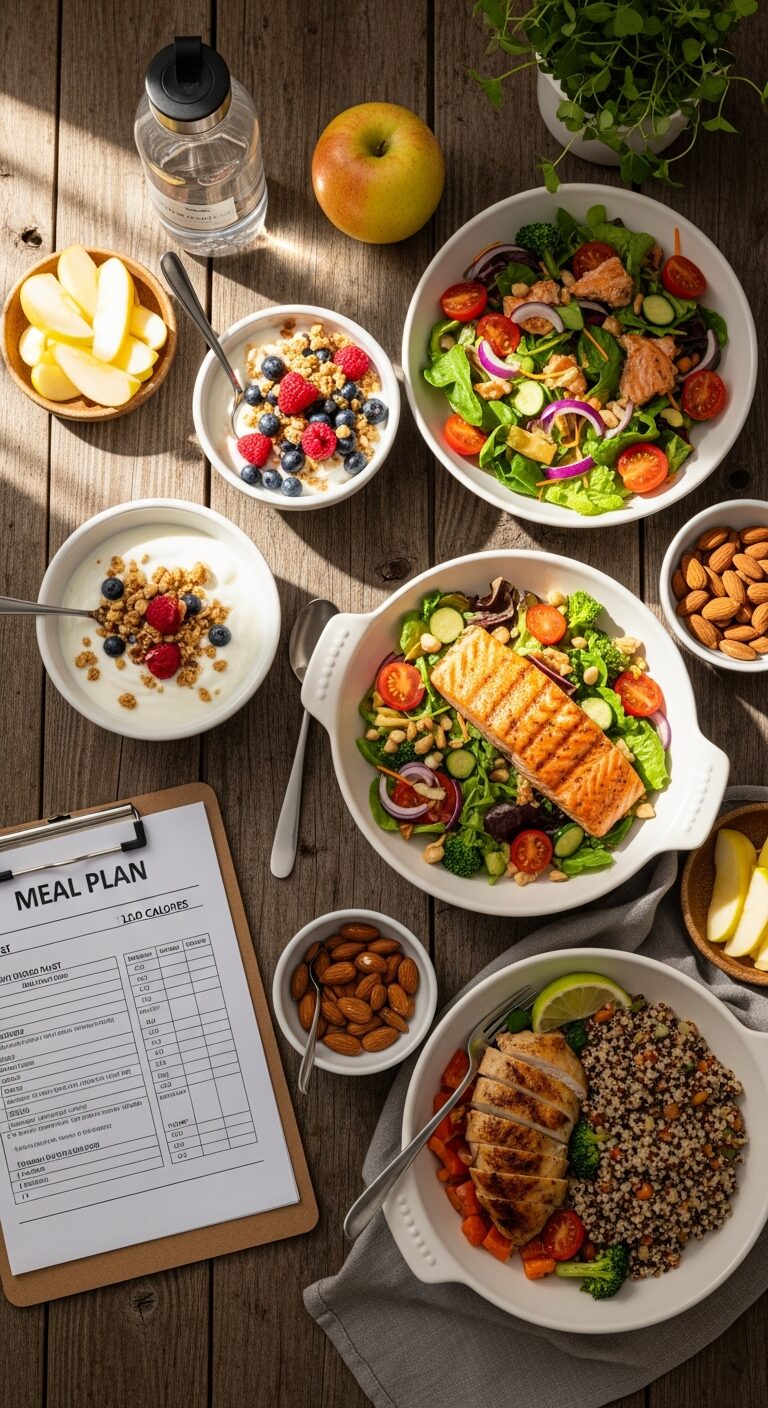
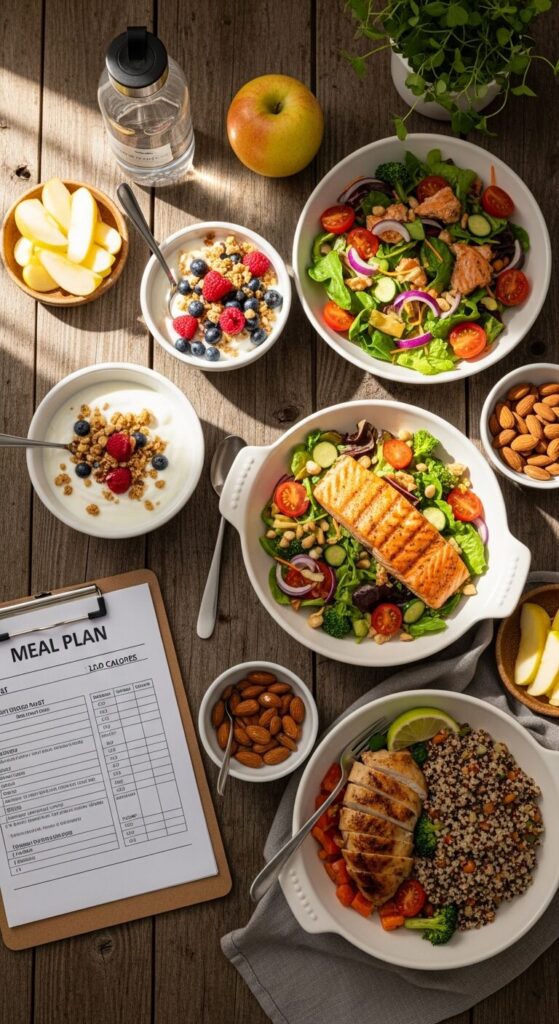
Building Your Perfect 1200 Calorie Day
Let me walk you through what a well-structured day actually looks like. This isn’t about deprivation; it’s about strategic eating.
Breakfast: 300-350 Calories
Start with protein. Always. This stabilizes blood sugar and keeps you full until lunch.
Option 1: Two-egg veggie scramble with spinach, mushrooms, and tomatoes, plus a slice of whole grain toast. Total: about 320 calories, 22g protein.
Option 2: Greek yogurt parfait with 6 ounces of plain Greek yogurt, half cup of berries, and a tablespoon of ground flaxseed for omega-3s and fiber. Get Full Recipe. Total: about 310 calories, 20g protein.
Option 3: Protein smoothie made with unsweetened almond milk (or regular milk if dairy works for you—both have similar calories but dairy milk packs more protein), half a banana, protein powder, and a handful of spinach. Total: about 330 calories, 28g protein.
I prep my smoothie ingredients in individual freezer bags on Sunday nights—just dump, blend, and go. Game changer for busy mornings.
Mid-Morning Snack: 100-150 Calories
You might not need this every day, but having it in your back pocket helps prevent lunch overeating.
Best options:
- Small apple with a tablespoon of almond butter (150 calories)
- String cheese with 10 grape tomatoes (110 calories)
- Hard-boiled egg with cucumber slices (85 calories)
Keep your snacks prepped and visible. I use these compartmented glass containers for grab-and-go snacks throughout the week—keeps everything portioned and prevents mindless munching.
Lunch: 350-400 Calories
This is your largest meal, giving you energy for the afternoon without the post-lunch coma.
Option 1: Large mixed greens salad with 4 ounces grilled chicken breast, tons of non-starchy vegetables, and 2 tablespoons of balsamic vinaigrette. Total: about 380 calories, 35g protein.
Option 2: Turkey and avocado lettuce wraps with bell pepper strips and hummus on the side. Total: about 370 calories, 28g protein.
Option 3: Veggie-packed tuna salad (made with Greek yogurt instead of mayo) served over mixed greens with whole grain crackers. Total: about 390 calories, 32g protein.
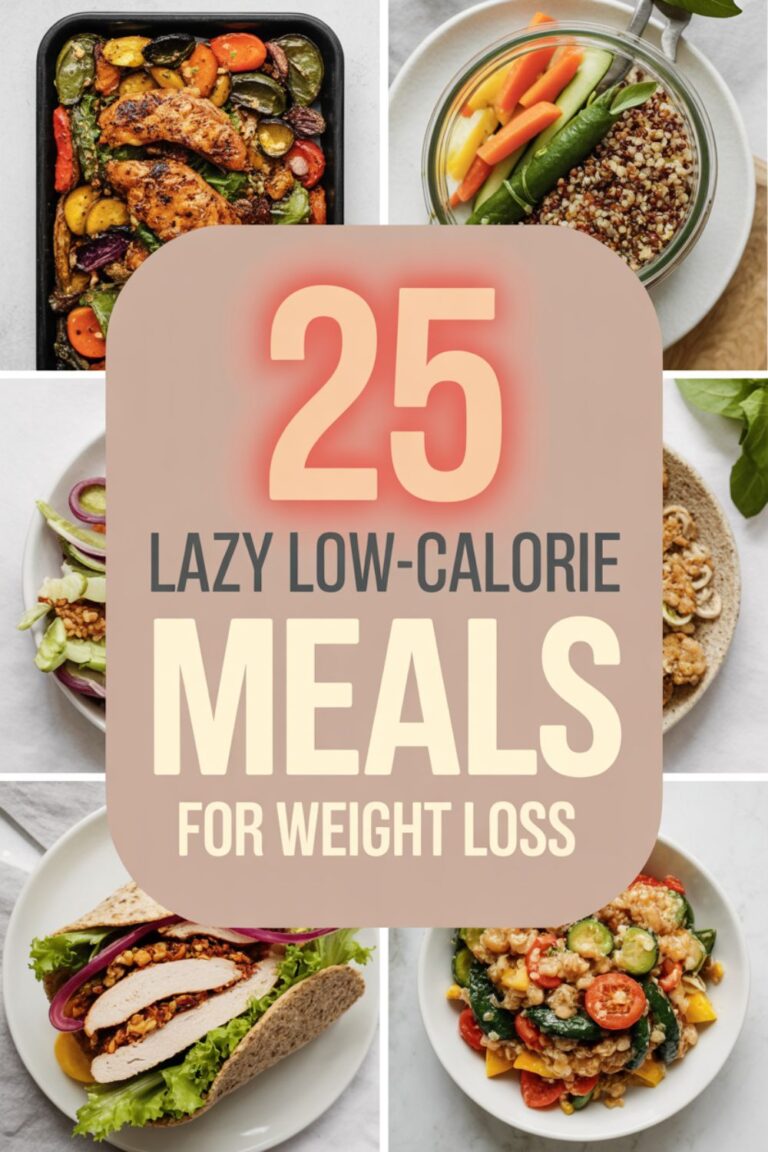
Meal prep is critical here. I roast a huge batch of vegetables every Sunday using this rimmed baking sheet that’s big enough to actually fit everything without crowding. Overcrowding = steaming instead of roasting, and nobody wants sad, soggy vegetables.
Speaking of lunch ideas, if you’re tired of salads (and let’s be honest, we all get there), try these Mason jar salads or these protein-packed lunch bowls that stay fresh all week and actually taste good on day five.
Afternoon Snack: 100-150 Calories
This bridges the gap between lunch and dinner, preventing that 4 PM raid on the office snack drawer.
Smart choices:
- Raw veggies with 2 tablespoons hummus (120 calories)
- Small handful of mixed nuts—about 15 almonds (110 calories)
- Rice cake with 1 tablespoon natural peanut butter (130 calories)
A good food scale is essential for portion control here. Nuts are healthy but calorie-dense, and it’s shockingly easy to eat 300 calories of almonds while standing at the counter convincing yourself it’s “just a few.”
Dinner: 350-400 Calories
Keep dinner protein-forward with plenty of vegetables. This meal should satisfy you without feeling heavy.
Option 1: 4 ounces baked salmon with roasted Brussels sprouts and half a medium sweet potato. Total: about 390 calories, 32g protein.
Option 2: Stir-fry with 4 ounces lean beef, tons of mixed vegetables, and cauliflower rice with low-sodium soy sauce. Total: about 370 calories, 30g protein.
Option 3: Grilled chicken breast over zucchini noodles with marinara sauce and a side salad. Get Full Recipe. Total: about 360 calories, 35g protein.
I make zucchini noodles so much easier with this simple spiralizer—takes about 30 seconds per zucchini and doesn’t require half your kitchen counter like those massive contraptions.
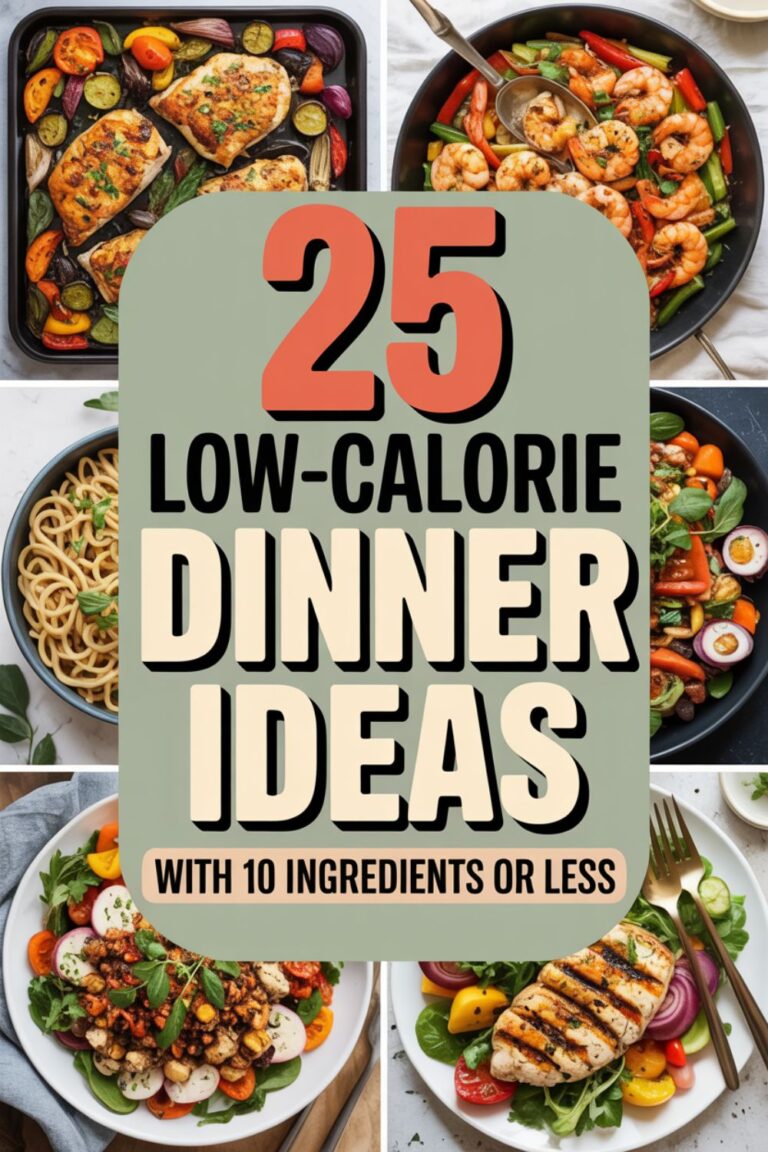
For more dinner inspiration that won’t blow your calorie budget, check out these sheet pan dinners or these one-pot meals that make cleanup almost as easy as ordering takeout.
The Weekly Meal Plan Template
Here’s a realistic seven-day framework you can actually follow. Notice I’ve built in variety because eating the same thing every day is a fast track to giving up entirely.
Monday
- Breakfast: Greek yogurt parfait with berries and flaxseed
- Snack: Apple with almond butter
- Lunch: Chicken salad over mixed greens
- Snack: Veggies with hummus
- Dinner: Baked salmon with roasted vegetables
Tuesday
- Breakfast: Veggie scramble with whole grain toast
- Snack: Hard-boiled egg and cucumber
- Lunch: Turkey lettuce wraps with bell peppers
- Snack: String cheese with cherry tomatoes
- Dinner: Beef stir-fry with cauliflower rice
Wednesday
- Breakfast: Protein smoothie with greens
- Snack: Mixed nuts (measured!)
- Lunch: Tuna salad over greens with crackers
- Snack: Rice cake with peanut butter
- Dinner: Grilled chicken with zucchini noodles
Thursday
- Breakfast: Greek yogurt parfait (same as Monday)
- Snack: Veggies with hummus
- Lunch: Leftover dinner from Wednesday
- Snack: Apple with almond butter
- Dinner: Shrimp with roasted Brussels sprouts and quinoa
Friday
- Breakfast: Veggie scramble variation
- Snack: String cheese and tomatoes
- Lunch: Big salad with grilled chicken
- Snack: Hard-boiled egg
- Dinner: Baked cod with asparagus and sweet potato
Saturday
- Breakfast: Protein smoothie
- Snack: Mixed nuts
- Lunch: Turkey and avocado lettuce wraps
- Snack: Veggies with hummus
- Dinner: Lean beef with roasted vegetables
Sunday
- Breakfast: Greek yogurt parfait
- Snack: Apple with almond butter
- Lunch: Chicken over mixed greens
- Snack: Rice cake with peanut butter
- Dinner: Grilled salmon with cauliflower rice stir-fry
Print this out and stick it on your fridge. Or better yet, use a magnetic weekly meal planner board where you can swap things around without creating seventeen crumpled pieces of paper.
Navigating Hormonal Challenges After 40
Let’s talk about the thing nobody warned you about: how much harder weight loss becomes when your hormones start doing whatever the hell they want.
Estrogen and Weight Gain
Declining estrogen doesn’t just give you hot flashes—it also changes where your body stores fat. You might notice more accumulation around your midsection even if you haven’t changed your eating habits. Frustrating? Absolutely. Impossible to overcome? Definitely not.
Focus on foods that support hormone balance: cruciferous vegetables (broccoli, cauliflower, Brussels sprouts), flaxseeds, fatty fish rich in omega-3s, and adequate protein at every meal.
Insulin Resistance
After 40, your cells become less responsive to insulin, making blood sugar management trickier. This is why your carb tolerance might be lower than it was in your 20s.
Combat this by:
- Pairing carbs with protein and fat
- Choosing complex carbs over simple sugars
- Timing your carbs around physical activity
- Including fiber at every meal (aim for 25-30 grams daily)
Thyroid Function
Your thyroid can slow down after 40, impacting your metabolic rate. While a 1200 calorie plan can work, you need to ensure you’re getting enough iodine, selenium, and zinc—all crucial for thyroid health.
Include iodine-rich foods like eggs, fish, and dairy. Brazil nuts are excellent for selenium (just 2-3 per day). Pumpkin seeds and lean meats provide zinc.
If you’re dealing with diagnosed thyroid issues or suspect something’s off, these thyroid-supporting recipes and metabolism-boosting meal ideas might help support your treatment plan (but always work with your doctor).
The Supplement Strategy for Women Over 40
IMO, supplements shouldn’t replace food, but they can fill gaps when you’re on a lower calorie plan. Here’s what actually matters:
Vitamin D: Most women over 40 are deficient. Get tested and supplement accordingly (usually 1000-2000 IU daily).
Omega-3s: If you’re not eating fatty fish 2-3 times weekly, consider a quality fish oil supplement. Look for one with at least 500mg combined EPA and DHA.
Calcium: You need 1200mg daily after 40. Food sources are best, but if you’re falling short, supplement the difference.
Magnesium: Helps with sleep, muscle recovery, and insulin sensitivity. Many women are deficient. Around 300-400mg daily is ideal.
Protein Powder: Not technically a supplement, but incredibly helpful for hitting protein goals on 1200 calories. I keep unflavored whey protein (or plant-based if dairy’s not your thing) on hand for smoothies and Greek yogurt mixing.
A weekly pill organizer keeps me on track with supplements. Sounds grandma-ish, but it works.
Meal Prep Like Your Success Depends on It
Because honestly, it does. You will not stick with 1200 calories if you’re winging it and hoping for the best.
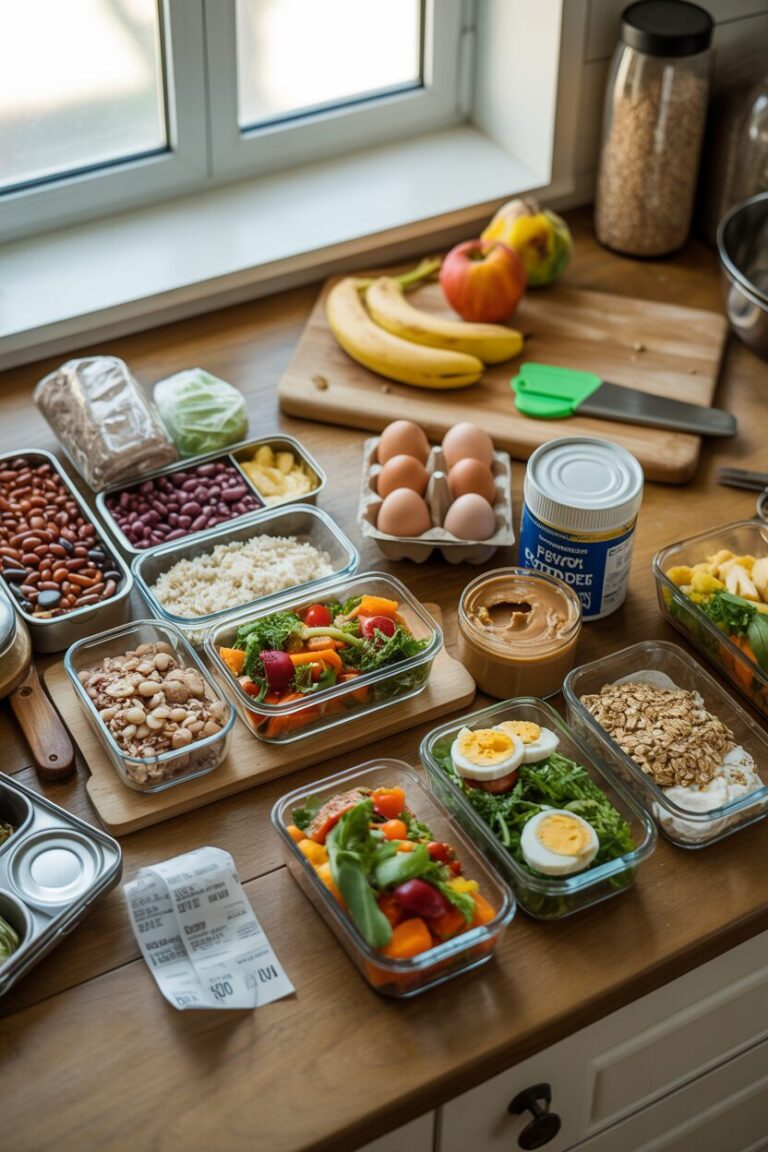
Sunday Prep Session (2-3 hours)
Proteins: Grill or bake 2-3 pounds of chicken breast, make hard-boiled eggs, cook ground turkey for various uses.
Vegetables: Roast two sheet pans of mixed vegetables, chop raw veggies for snacks, make a big batch of cauliflower rice.
Bases: Cook quinoa or brown rice, prep mason jar salads for the week.
Snacks: Portion out nuts, slice fruits and vegetables, make protein balls if you’re feeling ambitious.
I store everything in these airtight glass containers that stack beautifully and don’t stain like plastic. Being able to see everything at a glance makes grabbing the right portions so much easier.
The Freezer Is Your Friend
Make double batches of proteins and freeze half. Future you will be incredibly grateful when you’re exhausted on Wednesday and don’t have to cook.
A vacuum sealer is worth every penny for freezer meal prep—prevents freezer burn and keeps everything fresh for months.
What About Restaurants and Social Events?
Living on 1200 calories doesn’t mean becoming a hermit who brings Tupperware everywhere (though honestly, no judgment if you do).
Restaurant strategies:
- Check the menu online beforehand
- Order protein-forward dishes with double vegetables
- Ask for dressing and sauces on the side
- Skip the bread basket (or have one piece and be done)
- Split an entree or take half home immediately
Social event tactics:
- Eat a protein-rich snack before you go
- Bring a dish you know fits your plan
- Fill your plate with vegetables first
- Choose wine over cocktails if drinking (fewer calories)
- Don’t hover near the food table
The key is planning ahead. Spontaneity is great for vacations, not so much for sticking to a calorie deficit.
Exercise: The Missing Piece
A 1200 calorie meal plan works better when paired with the right exercise approach. After 40, your focus should shift from endless cardio to strength training.
Why strength training matters more now:
- Preserves muscle mass during weight loss
- Boosts metabolism more than cardio alone
- Improves bone density (crucial for preventing osteoporosis)
- Enhances insulin sensitivity
- Gives you functional strength for daily life
Aim for 3-4 strength training sessions weekly, plus 2-3 days of moderate cardio or active recovery like walking or yoga.
If you’re new to strength training, adjustable dumbbells are a space-saving game-changer. I use this compact set that goes from 5-52.5 pounds and replaces an entire rack of weights.
For workout-friendly meal timing and recovery nutrition, check out these pre-workout snack ideas and post-workout protein meals designed specifically for women over 40.
Common Mistakes That Sabotage Your Progress
I’ve seen these mistakes derail perfectly good intentions more times than I can count:
Underestimating portion sizes. That chicken breast is probably 6 ounces, not 4. Your “tablespoon” of olive oil is closer to 3. Get a food scale and use it.
Drinking your calories. That vanilla latte is 300 calories. The “healthy” smoothie from your local juice bar? Try 500. Make your own or stick with black coffee and tea.
Not tracking weekends. Friday night through Sunday counts. You can’t eat 1200 Monday through Thursday, then eat 2500 Friday through Sunday and expect progress.
Ignoring liquid calories. Alcohol, juice, fancy coffee drinks—they all count and provide zero satiety.
Going too long without eating. Skipping meals to “save calories” backfires when you’re ravenous and make poor choices later.
Forgetting to adjust as you lose weight. As you get smaller, your calorie needs decrease. What created a deficit at 170 pounds might be maintenance at 140 pounds.
Related Recipes You’ll Love
Looking for more meal ideas that fit perfectly into your 1200 calorie plan? Here are some favorites designed specifically for women over 40:
Breakfast Options:
- High-Protein Egg Muffins for Meal Prep
- Greek Yogurt Power Bowls
Lunch Ideas:
- Make-Ahead Mason Jar Salads
- Protein-Packed Buddha Bowls
Dinner Favorites:
- Sheet Pan Chicken with Roasted Vegetables
- One-Pan Salmon with Asparagus
Snacks and Sides:
- Portion-Controlled Snack Packs
- Roasted Chickpeas with Spices
Tracking Your Progress Beyond the Scale
The scale is a lying liar that lies. Seriously. It measures water retention, glycogen stores, whether you’ve pooped recently, and oh yeah, sometimes fat loss too.
Better progress indicators:
- How your clothes fit
- Progress photos (take them weekly in the same lighting)
- Body measurements (waist, hips, thighs, arms)
- Energy levels throughout the day
- Quality of sleep
- Workout performance
- How you feel mentally and emotionally
Take measurements every two weeks. Take photos every week. Weigh yourself if you want, but don’t let it be your only metric.
A smart measuring tape that records measurements digitally can help you track changes over time without keeping messy notebooks.
When to Adjust Your Approach
Pay attention to these signs that you might need to modify your plan:
Red flags to watch for:
- Constant fatigue and brain fog
- Hair loss or brittle nails
- Irregular periods (if you’re still menstruating)
- Extreme mood swings or depression
- Inability to recover from workouts
- Obsessive thoughts about food
- Binge eating episodes
If you experience any of these, bump your calories up by 200-300 and reassess. Slow, sustainable progress beats rapid weight loss that destroys your health.
The Printable Meal Plan Template
I’ve created a simple template you can print and fill in weekly. It includes:
- Daily meal and snack sections with calorie targets
- Macro tracking boxes (protein, fat, carbs)
- Grocery list section
- Weekly prep checklist
- Progress tracking area
Pin it to your fridge, keep it in your planner, or stick it on your bathroom mirror—whatever keeps it visible and top of mind.
You can create your own template using a laminated chart and dry-erase markers, allowing you to customize and reuse it week after week without waste.
The Bottom Line: Sustainability Over Speed
Here’s what I need you to understand: 1200 calories is a tool, not a life sentence. You use it strategically to create a deficit, lose the weight you want to lose, and then you transition to a higher maintenance calorie level.
The goal isn’t to eat 1200 calories forever. The goal is to use this structured approach to reset your relationship with portions, learn what proper fuel looks like for your body after 40, and create habits that serve you long-term.
Give yourself at least 6-8 weeks on this plan. Track everything honestly. Take your measurements and photos. Adjust as needed based on how you feel and your progress.
And remember—you’re not just trying to lose weight. You’re trying to feel strong, energized, and confident in your body after 40. That requires more than just a number on the scale or a calorie target. It requires patience, consistency, and enough self-compassion to know that some days will be perfect and others will be gloriously imperfect.
Now stop overthinking it and start implementing. Download the template, prep your meals, and get to work. Your future self is waiting, and she’s going to be so proud of the commitment you’re making today.